
Lieferung heute & morgen

Qualitätsgarantie

Willkommens-Angebote freischalten: KOSTENLOSE Lieferung | Bis zu 80 % RABATT | Kostenlose 30-Tage-JoyPlus-Testphase
App herunterladen
A personal blender should be quick to use in everyday life, take up little space and prepare drinks directly in the right container. A compact smoothie maker is therefore practical for professionals, commuters, sports enthusiasts and small kitchens. However, impressive wattage figures, supposedly leakproof cups and battery promises do not automatically mean you will get the right appliance.
A high power rating sounds convincing, but it does not describe the appliance’s actual performance on its own. Speed, blade design, container size, ingredient quantity and operating time are also important. A 300-watt appliance can achieve good results when filled appropriately, while a more powerful motor may reach its limits if the container is overfilled or the ingredients are layered incorrectly.
For this reason, look for specific manufacturer information on ice, frozen fruit and hard ingredients. An appliance with a pulse function also allows you to blend in short intervals without placing continuous strain on the motor.
Some compact blenders are corded countertop appliances supplied with a to-go cup. Others are genuine battery-powered blenders that can be charged via USB-C. This distinction is important for commuting, the office or travelling. Check the following:
A portable blender also needs safe storage for the blade. With some models, the blade unit is replaced with a drinking lid after blending.
“Dishwasher-safe” often applies only to the cups and lids. The motor base must never be immersed in water. Depending on the model, blade units may also only be rinsed or cleaned in the top rack. It is worth checking the care instructions before buying.
Rinse away any residue immediately after preparation. This is particularly important for protein powder, nut butter and thick shakes. A blender with a drinking cup is only practical for everyday use if the seals, lid and blades can be cleaned without unnecessary extra steps.
For soft fruit, yoghurt and liquids, a compact motor is often sufficient for a mini blender. If you regularly want to process ice or frozen ingredients, look for an explicitly stated ice-crushing function and short pulse intervals. Hard ingredients such as coffee beans or spices may require a separate grinding cup.
The HoninJoy Smoothie Blender is listed with a 650-watt peak motor, a pulse function and an additional grinding cup. According to the manufacturer’s description, it is suitable not only for smoothies but also for grinding dry ingredients. However, the permitted quantities and operating times in the instruction manual must still be observed.
A single drinking container with a capacity of around 500 to 600 millilitres is suitable for one portion. Larger cups can be useful for more generous shakes, but they require more storage space. Also check whether the containers are made from BPA-free plastic, Tritan or stainless steel, and whether a drinking lid is included.
According to the manufacturer, insulated stainless-steel cups keep their contents cold for longer. This does not mean, however, that a drink will remain hygienic or fresh indefinitely. If it is stored for longer, take the relevant food-safety and cooling guidance into account.
A suitable smoothie blender should only start when the cup and blade unit are correctly locked in place. Micro-switches, locking mechanisms and non-slip feet help to reduce the risk of incorrect operation. Nevertheless, the following points remain important:
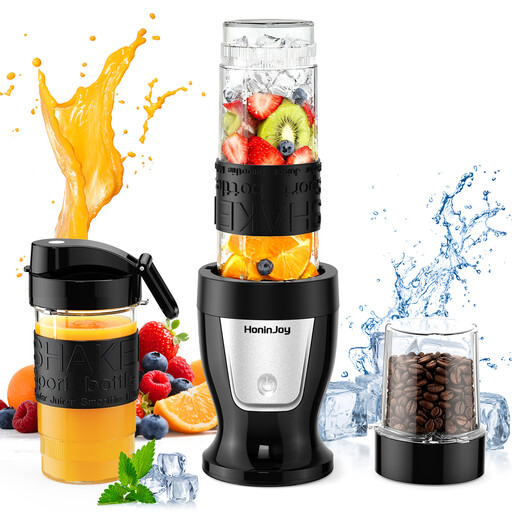
Why this product suits the profile: This compact countertop blender for smoothies comes with two portable cups measuring 20 and 14 oz, as well as a separate grinding cup for coffee or spices.
The description mentions a locking system with three micro-switches, non-slip silicone feet and overheat protection. According to the manufacturer, the cups, lids and grinding cup are dishwasher-safe.
650-watt peak motor, pulse function and two BPA-free to-go cups for individual portions.
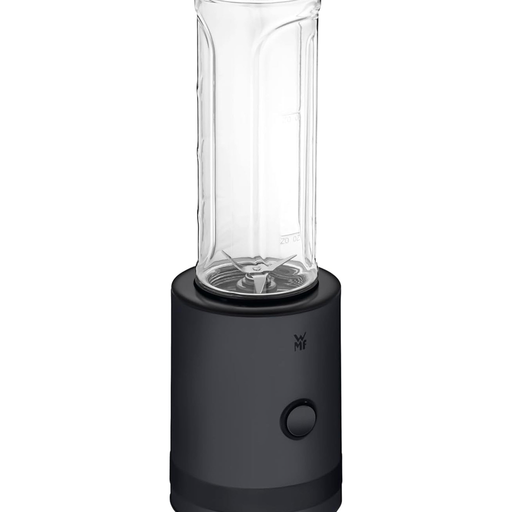
Why this product suits the profile: This appliance combines a matt stainless-steel housing with two 0.6-litre Tritan containers and leakproof screw-top lids.
The automatic safety cut-off prevents operation without a container in place. The instructions specify pulse movements, a maximum fill level of 600 ml and an operating limit of one minute.
300 watts, 23,000 revolutions per minute, four-blade knife and dishwasher-safe containers.
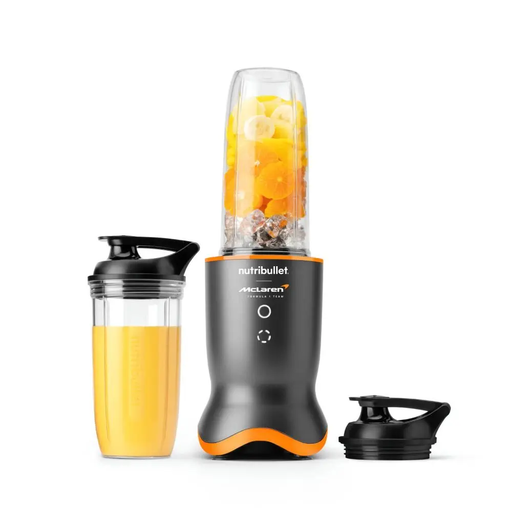
Why this product suits the profile: The combination of a 1,200-watt motor, pulse function and two Tritan Renew cups measuring 700 and 900 ml is designed for frequent preparation and larger individual portions.
The manufacturer’s specifications mention a non-slip base, an illuminated control panel and a limit of 60 seconds per cycle followed by a cooling period.
Two cup sizes, BPA-free Tritan Renew material and, according to the product details, titanium-coated extraction blades.
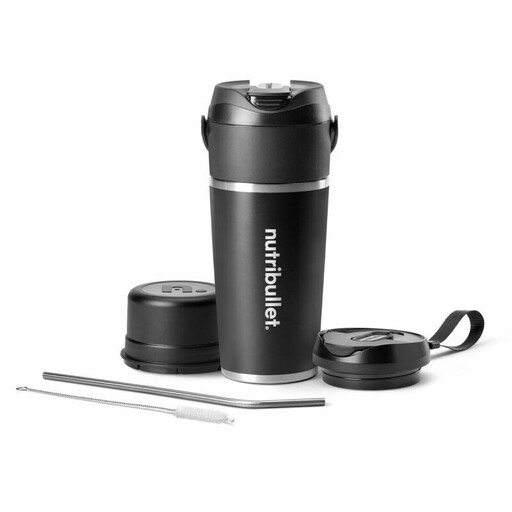
Why this product suits the profile: This battery-powered blender charges via USB-C and combines a 590-ml insulated bottle with an integrated blending lid and drinking opening.
The product details specify more than 14 blending cycles of 30 seconds each per charge. A separate blade storage box and a cleaning brush are listed among the accessories.
11.1-volt battery, USB-C charging port, insulated stainless-steel cup and carry handle.
We have put together a complete, regularly updated list of products that fully meet these strict selection criteria and the safety regulations applicable in the EU.
That depends on the model and its instruction manual. According to the product details, appliances such as the WMF Smoothie-to-Go Blender, the nutribullet Flip and the nutribullet Ultra are suitable for ice or frozen ingredients. Only use the approved quantities and process hard ingredients in short pulse intervals.
There is no reliable one-size-fits-all answer. Its lifespan depends on how often it is used, the ingredients, cleaning and whether cooling times are observed. Overfilling, continuous operation and processing hard objects that are not approved for use can put strain on the motor and blades. Before buying, check the warranty terms and the availability of replacement parts.
A battery-powered blender only requires a limited amount of energy each time it is charged, but its actual consumption depends on battery capacity, charging losses and usage. For regular preparation at home, a corded mini blender is often more straightforward. For the office, gym or travel, a battery-powered model offers greater independence from power sockets.