
Lieferung heute & morgen

Qualitätsgarantie

Willkommens-Angebote freischalten: KOSTENLOSE Lieferung | Bis zu 80 % RABATT | Kostenlose 30-Tage-JoyPlus-Testphase
App herunterladen
A personal blender can be highly practical for everyday use: add your ingredients, blend them and take the drinking cup with you. However, not every compact appliance is the right choice. With smoothie makers, portable blenders and mini blenders in particular, performance figures, battery life and accessories are often described too vaguely.
Before placing your order, check these three common purchasing and marketing pitfalls:
The wattage describes the appliance’s electrical power consumption, not automatically the quality of the blending. A compact kitchen blender with moderate power may be sufficient for soft fruit and liquids. If you regularly process frozen fruit, ice, nuts or seeds, you should also consider the blade type and permitted operating time.
According to the product specifications, the nutribullet Pro NB907CP uses a 900-watt motor and a six-blade stainless-steel extraction blade. It is designed to be used in short intervals; continuous operation of more than 60 seconds should be avoided. Allow the motor to cool between several blending cycles.
A smoothie blender with 300 to 650 watts may be suitable for everyday individual portions. When comparing models, always ask yourself:
The right capacity depends on how you intend to use the blender. For a single portion, 500 to 700 ml is often sufficient. Larger containers are useful if you want to prepare several portions or make a shake for later.
The nutribullet Pro NB907CP comes with a 925-ml cup and a 700-ml cup. According to the product description, both cups are BPA-free and fitted with flip-top lids for transport. However, this model is designed for an earthed 220–240 V mains socket and is therefore not a battery-powered portable blender.
When choosing plastic cups, look for clear information about the material. ‘BPA-free’ refers to bisphenol A and should be expressly stated in the product specifications. With stainless-steel cups, weight, insulation and cleaning options are relevant. The nutribullet Flip NBP016B, for example, has a 590-ml insulated stainless-steel cup.
A personal blender operates with sharp blades. The cup should therefore only be used when the blade attachment is correctly locked and securely fitted onto the motor base. Safety mechanisms that prevent incorrect assembly are helpful in everyday use.
Follow these basic cleaning rules:
A hand blender is often more flexible for soups, purées and blending directly in a saucepan. A countertop smoothie blender, on the other hand, usually offers a larger container. If you want to make plant-based drinks from dry beans or grains, you may need a specialist soya milk maker with a heating function. These appliances should not be confused with a standard smoothie maker.
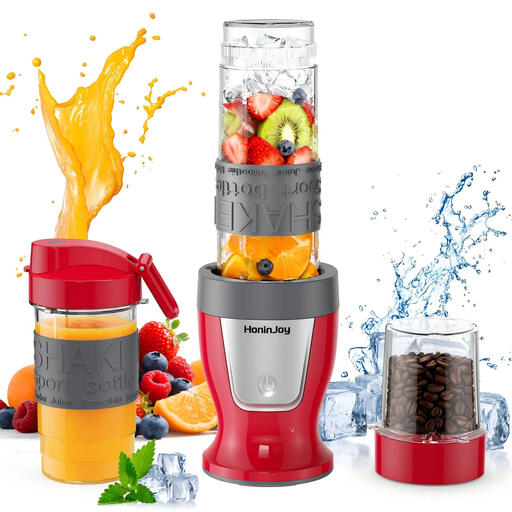
Why this product suits this profile: Two BPA-free portable cups measuring 20 and 14 oz, plus a separate grinding cup, cover the basics for smoothies, shakes, juices and dry ingredients.
The product specifications state 650 watts, a pulse function, overheating protection and a locking mechanism for the cup attachments. This makes it possible to assess the features more precisely than by looking at the wattage alone.
Two takeaway cups, a grinding cup, and dishwasher-safe cup and lid components.
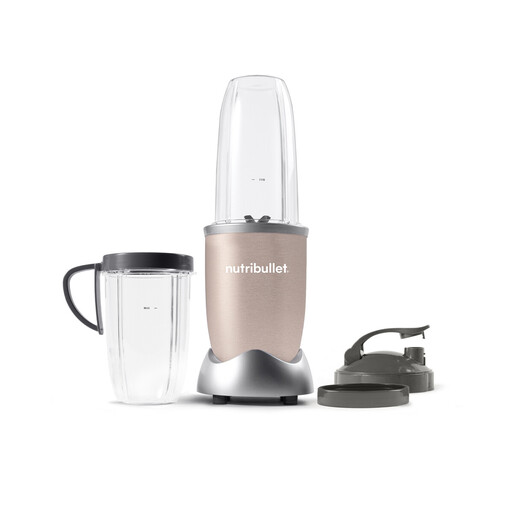
Why this product suits this profile: This mains-powered personal blender offers 900 watts, two cup sizes and a six-blade stainless-steel attachment for different portion sizes.
The specifications state the voltage, frequency, maximum operating time and exact cup capacities. This provides a clearer basis for using the appliance at home.
925-ml and 700-ml BPA-free cups; according to the product description, the cups, lids and blade attachment are suitable for the top rack of the dishwasher.
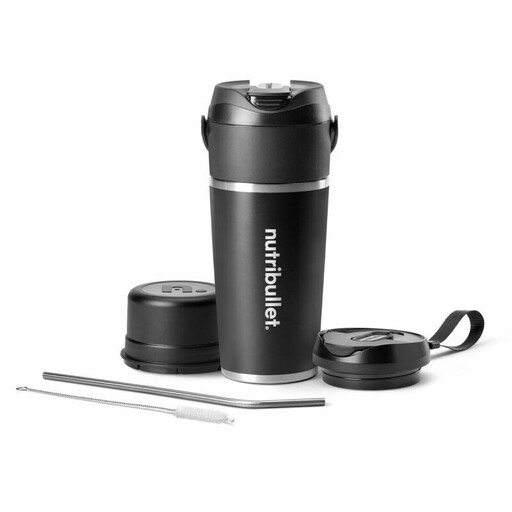
Why this product suits this profile: This rechargeable blender can be charged via USB-C and has a 590-ml insulated stainless-steel cup with a carry handle.
Its portability is clearly defined by the USB-C charging port, battery and stated capacity of more than 14 cycles per charge. The container can be used separately from the motor.
USB-C charging, 915 g net weight, stainless-steel cup and drinking lid with straw.
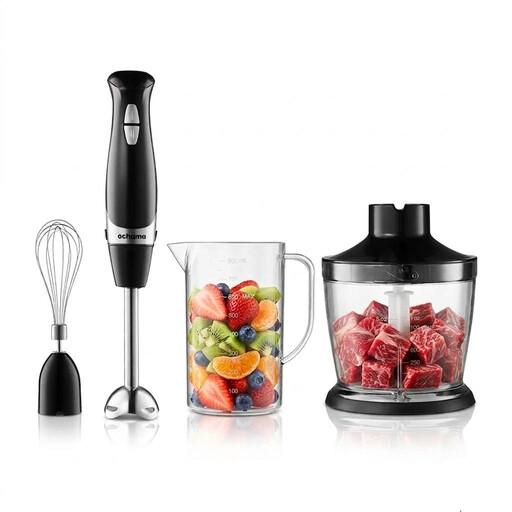
Why this product suits this profile: As a hand blender set, this appliance is suitable not only for blending but also for soups, purées, baby food, whipped cream and chopping tasks.
Its possible uses are defined by specific attachments and two speed settings. This means the set is not limited exclusively to takeaway drinks.
600-watt motor, whisk, chopper, 500-ml chopping cup and 800-ml measuring jug.
We have put together a complete, regularly updated list of products that fully meet these strict selection criteria and the safety regulations applicable in the EU.
That depends on the motor, blade attachment, quantity of ingredients and the manufacturer’s approval. Frozen fruit should be cut into smaller pieces and added with enough liquid. Observe the maximum fill level and permitted operating time. For very hard ingredients, a high-performance blender may be more suitable.
It is not possible to give a reliable general lifespan. Among other factors, it is affected by how frequently the blender is used, overloading, cleaning and storage. Short blending intervals, cooling breaks and following the operating instructions can reduce strain on the appliance. Worn parts such as seals or blades should not be used further if damaged.
Running costs depend on the appliance’s electrical power and the actual length of use. A 900-watt appliance that runs for only a short time may use less energy in everyday use than a less powerful model with a longer operating time. For comparison, you can multiply the power in kilowatts by the operating time in hours and your electricity price. With a battery or USB-C blender, you also need to take the charging requirement into account.