For a peach lassi during your afternoon break, a compact, mains-powered blender with a drinking cup is a sensible place to start if you have access to a plug socket and are making a single serving. If you’re using frozen ingredients, check that the specific model is approved for them. For blending without a plug socket, consider a cordless model, bearing in mind the battery charge and usable capacity. Also check which parts can actually go in the dishwasher after making a yoghurt drink.
Who is a personal blender suitable for?
A single serving for your break
You’re making a peach lassi for yourself and want to drink it straight from the blending cup rather than decanting it. According to their manufacturers, the Bosch and WMF models in this overview each come with a 0,6-l cup.
Less washing up after yoghurt
You make milk or yoghurt drinks and want to know which parts can be removed and put in the dishwasher. nutribullet cups are dishwasher-safe, but the manufacturer recommends washing the blades by hand.
Blending without a plug socket
You want to blend your drink when you get to your break and can work with a smaller serving and the need to charge the battery. The Ninja Blast BC151EUBK is described as a cordless blender; CHIP gives its capacity as 470 ml.
What should you look for when buying?
| What matters to you |
What to check before buying |
Who it matters to |
| A single serving with no decanting |
Check the cup size, fill marking and drinking lid against the amount in your usual recipe. Bosch and WMF each list a capacity of 0,6 l for their respective models. |
I want to drink my lassi straight from the blending cup and make my usual single serving without decanting it. Around 36 % of consumers put getting the right single-serving size first. |
| Cleaning up after a yoghurt drink |
Check the cleaning instructions for the cup, lid, seal and blade assembly separately. |
If easy clean-up matters to me after blending, I want to know whether each part can go in the dishwasher. Cleaning is a priority for around 29 % of consumers. |
| Frozen peach or ice |
Check the ingredients approved for use and the quantity guidance for the exact model. Philips lists frozen fruit and ice cubes for the HR2764/00; Bosch lists frozen fruit for the MMB2111T. |
I regularly use frozen ingredients and want to know before buying whether the specific model is designed for them. Around 21 % of consumers prioritise this. |
| Blending without a plug socket |
Check whether you really need to blend somewhere without a plug socket, and take capacity and battery charge into account. CHIP gives the cordless Ninja Blast BC151EUBK a capacity of 470 ml. |
If I can only blend when I get to my break, a model that works without a plug socket matters more than a larger capacity. Around 14 % of consumers prioritise cordless blending. |
Common buying and usage pitfalls
-
Assuming “dishwasher-safe” applies to the whole appliance
Cleaning instructions can vary from one component to another. nutribullet recommends washing the blades by hand, while the cups are dishwasher-safe.
Check the instructions separately for the cup, lid, seal and blade assembly.
-
Assuming the cup size is the same as the usable recipe capacity
The stated cup size doesn’t automatically tell you how much you can add for every recipe. CHIP gives the Ninja Blast BC151EUBK a capacity of 470 ml.
Follow the fill marking and usage instructions for the specific model when deciding on your serving size.
-
Assuming a secure drinking lid keeps your lassi chilled
A leak-proof lid won’t keep your lassi cool. The German Federal Institute for Risk Assessment recommends keeping perishable foods as cold as possible until they’re eaten or prepared.
If you’re not drinking your lassi straight away, make separate arrangements to keep it chilled, whatever blender you choose.
Key brands at a glance
Bosch
The VitaPower Serie 2 MMB2111T is a compact, mains-powered blender supplied with a 0,6-l to-go cup.
- Bosch lists 450 W, one speed setting and the ability to make smoothies with frozen fruit for the MMB2111T.
- This information applies to this model. It isn’t an independent test of the results and doesn’t confirm that it’s suitable for ice cubes.
WMF
According to the manufacturer, the Kult X Mix & Go 3200000022 combines a 0,6-l blending cup with a drinking lid.
- WMF lists 300 W and a leak-proof screw-top lid.
- This doesn’t confirm that the model is suitable for ice cubes. The lid doesn’t keep the drink chilled.
Philips
The 5000 Series HR2764/00 is a compact blender option for recipes with frozen ingredients.
- Philips lists frozen fruit, ice cubes and removable, dishwasher-safe parts.
- Check the instructions to see which parts can go in the dishwasher and what recipe quantities are permitted.
nutribullet
The Original 600 NB603DG is described as coming with a 700-ml to-go cup.
- The manufacturer lists a 600-W motor and an included 700-ml cup.
- nutribullet recommends washing the blades by hand. The cup size doesn’t automatically indicate the permitted capacity for every recipe.
Ninja
The models featured here meet different needs: the BlendBoss is a mains-powered blender, while the Blast is a cordless option.
- CHIP gives the Ninja Blast BC151EUBK a capacity of 470 ml.
- The information about the Blast applies to this model and doesn’t cover other Ninja blenders.
Joybuy products for lassi and smoothies
This selection includes blenders for individual smoothies or lassis, with a blending and drinking cup. Some can also be used without a plug socket.
 No image available
Ninja BlendBoss Portable Blender, 710 ml, Cyberspace
An option to consider if you’re looking for a portable blender with a travel cup for your break.
The product name lists a capacity of 710 ml, three automatic preset programmes and ice-crushing functionality. The removable parts are described as dishwasher-safe.
View at Joybuy
 No image available
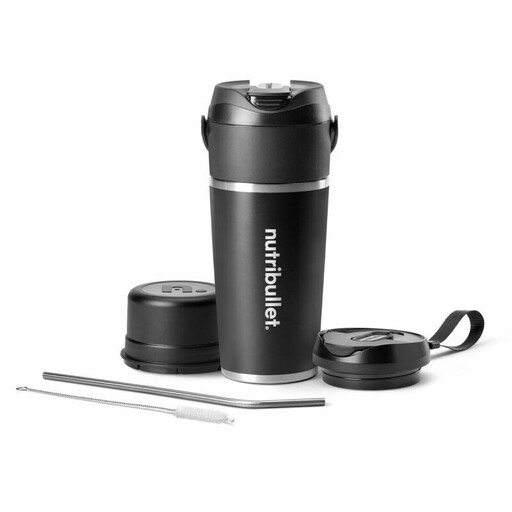
nutribullet Flip NBP016B Portable Blender, Black
A cordless blender is worth considering if you want to blend your drink at your break without access to a plug socket.
The battery needs to be charged for cordless use. The product description limits the quantity of ice cubes to 3–4 per use.
View at Joybuy
 No image available
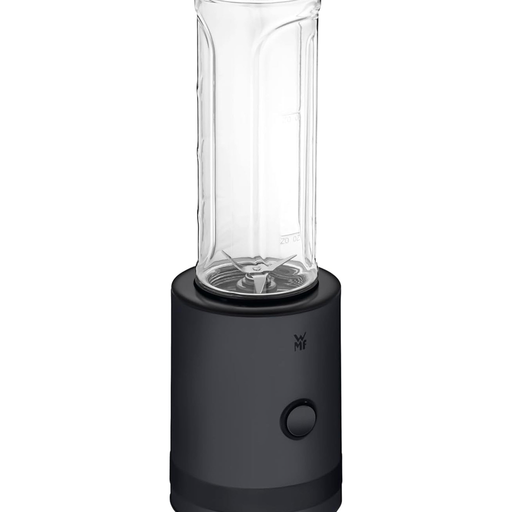
WMF Küchenminis Smoothie-to-Go Mini Blender, 0,6 l, 300 W
This mains-powered blender is a good fit for a break if you want to prepare your drink in the blending and drinking cup.
The product description lists two containers, each with a capacity of 0,6 l. It specifies a maximum fill line of 600 ml, a maximum continuous operating time of one minute and a maximum liquid temperature of 60 °C.
View at Joybuy
 No image available
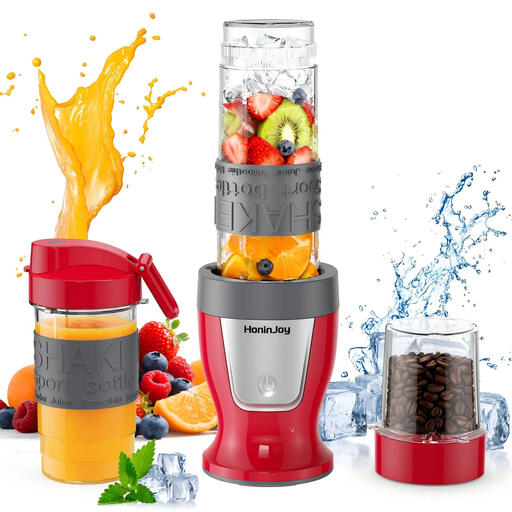
HoninJoy Smoothie Blender, 650 W, with grinder cup and two portable cups
The included portable cups are useful if you want to take your drink with you in a separate container.
The product name lists two cups with capacities of 20 oz and 14 oz, as well as a grinder cup. The cups and lids are described as dishwasher-safe.
View at Joybuy
Frequently asked questions
What size cup do I need for my peach lassi?
Compare your usual quantity of peach, yoghurt and other ingredients with the permitted fill marking, rather than relying on the advertised cup size alone. According to their manufacturers, the Bosch MMB2111T and WMF Kult X Mix & Go each have a capacity of 0,6 l; CHIP gives the Ninja Blast BC151EUBK a capacity of 470 ml.
Can I put the blades and blending cup in the dishwasher together?
Not necessarily. nutribullet recommends washing its blades by hand, while the cups and lids can go in the top rack of the dishwasher. Check the instructions for the model you’ve bought to confirm which parts are dishwasher-safe.
Can I keep a yoghurt lassi in the drinking cup until later without refrigerating it?
A drinking lid isn’t a substitute for refrigeration. The German Federal Institute for Risk Assessment recommends keeping perishable foods as cold as possible until they’re eaten or prepared. For dairy products, also follow the storage instructions on the packaging.
Which EU requirements apply to a blender cup?
EU rules on food-contact materials also cover food-processing equipment and set requirements for materials that come into contact with food. These rules apply to products being placed on the market; they don’t prove that a specific model has been individually tested. Your Europe describes CE marking as a manufacturer’s declaration for products covered by the relevant harmonised EU rules; it isn’t a general quality mark for blending performance.
Who should I contact if a product develops a fault after purchase in Germany?
The seller is generally responsible for the statutory warranty. The Verbraucherzentrale states that it lasts for two years from delivery. For purchase contracts from 31 July 2026, it also describes additional rights if you choose a repair when a product is faulty. A voluntary manufacturer’s guarantee is separate from this.


