What to look for when buying
In a shared office, it’s not just about choosing the right serving size: blending and cleaning up need to be practical, too.
Mains-powered personal blender with a to-go cup
A good fit if: there’s a suitable socket and an approved blending spot, and you want to blend straight into the cup and take it with you afterwards.
Things to consider: You’ll need a socket, and noise levels and cleaning requirements will depend on the model and your office.
Rechargeable personal blender
A good fit if: there’s no socket at your intended blending spot and you want to make a single serving.
Things to consider: The charge level and usable capacity need to suit your serving size; battery operation doesn’t prove that a blender is quieter.
| Priority |
What to check before buying |
Who it matters most to |
| Noise and consideration for others |
Check your office rules and where you can blend; compare noise figures only when they use the same measurement and comparable test conditions. |
If you don’t want to disrupt meetings or focused work, it’s particularly important to think carefully about when and where you blend. Around 33% of consumers would rank noise and consideration for others as their top priority. |
| Cleaning in a shared kitchen |
Check which parts are dishwasher-safe and how to clean the cup, seal and blade assembly. |
If you want to clean up quickly and thoroughly after blending, pay particular attention to hard-to-reach residue and how the individual parts are cleaned. Around 27% of consumers would rank cleaning as their top priority. |
| Serving size and recipe |
Check the usable capacity and fill line against your full serving; check the instructions for permitted ingredients. |
If you want avocado, other ingredients and liquid to fit in the cup together, the recipe and serving size are key. Around 20% of consumers would rank the blending task and suitable serving size as their top priority. |
| Power supply and portability |
Check for a socket or charging option, a cup lid and, for battery-powered models, the charge level. |
If there’s no socket at your blending spot or you want to take your drink with you in the same cup, this practical aspect will be your priority. Around 20% of consumers would rank power supply and portability as their top priority. |
Joybuy products
This selection includes portable blenders for single servings and to-go cups; some models are specifically described as rechargeable.
 No image available
Ninja BlendBoss Portable Blender with Removable Travel Cup, 710 ml, Cyberspace
For a serving you can blend straight in the travel cup and take with you afterwards.
The cup holds 710 ml; according to the product description, the blender has three automatic programmes and removable dishwasher-safe parts.
View at Joybuy
 No image available
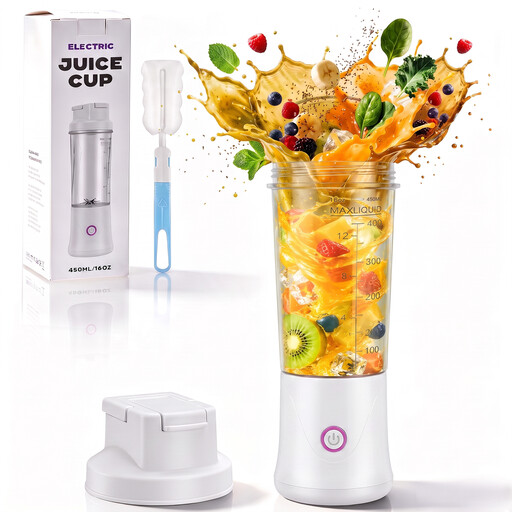
Portable blender for smoothies and shakes, 400 ml
For a single serving you can prepare in the blending cup and drink from the same container.
The product description gives the cup capacity as 400 ml; the removable parts can be cleaned separately. For the blending results described, cut ingredients into smaller pieces and add enough liquid.
View at Joybuy
 No image available
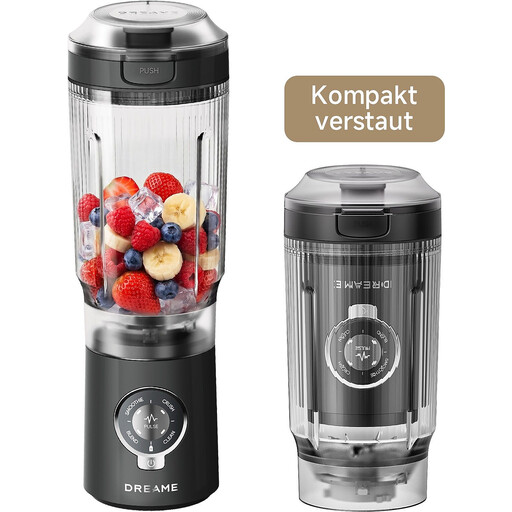
Dreame 3-in-1 Blender, 0,88 l, cordless
For making smoothies somewhere without a mains connection, provided you can charge the appliance beforehand.
The description lists a 0,88-l container, 120 W, USB-C charging, stainless steel blades and a drinking lid with a handle. Fully charge before use.
View at Joybuy
 No image available
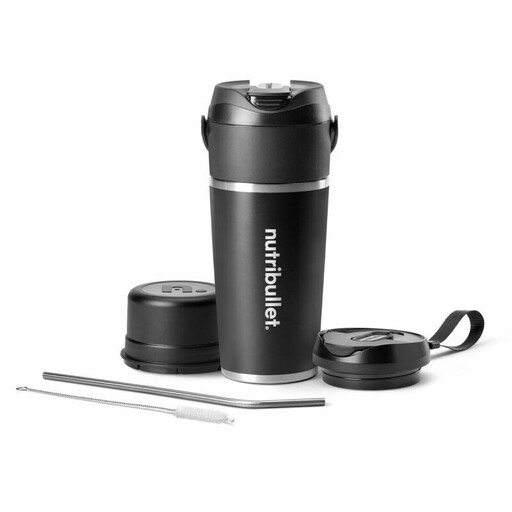
nutribullet Flip NBP016B Portable Blender, black
For a smoothie when there’s no socket at your blending spot, as long as the appliance is charged beforehand.
The description lists a rechargeable motor, USB-C charging and an insulated stainless steel cup with a 590 ml capacity. Don’t run it for more than one minute at a time or blend hot liquids.
View at Joybuy
 No image available
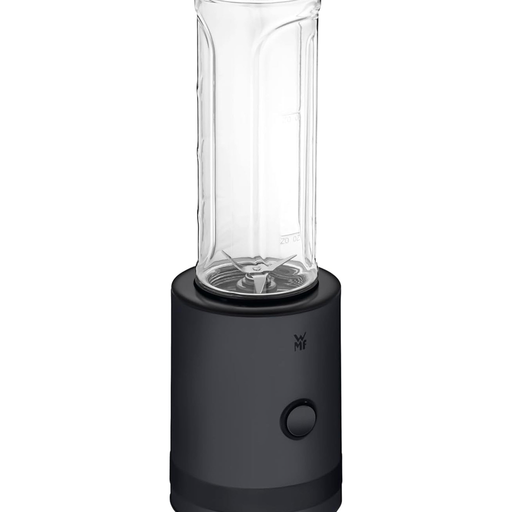
WMF Küchenminis Smoothie-to-Go Mini Blender, 0,6 l, with two containers
For smoothies you can blend and take with you in one of the two containers provided.
The description lists two 0,6-l containers, 300 W, and dishwasher-safe containers and lids. Cut fruit or vegetables into pieces of around 2 cm, don’t exceed the 600-ml fill line and don’t run the appliance for more than one minute at a time.
View at Joybuy
Frequently asked questions
Does an advertised Silence mode prove I can blend in a shared office?
No. Tefal advertises a Silence mode for the Blend Up BL19H4F0, but it doesn’t specify a universally applicable noise limit for offices. Check where and when you’re allowed to blend, and compare noise figures only if they use the same measurement and comparable test conditions.
What do I need to clean after blending?
Clean the parts that come into contact with food according to the appliance’s instructions, paying particular attention to hard-to-reach residue. The term “dishwasher-safe” applies only to the parts specifically listed; it doesn’t automatically include the motor base.
Can I make a smoothie in the morning and drink it later at the office?
For freshly made green smoothies, the German Federal Institute for Risk Assessment recommends drinking them as soon as possible; until then, it specifies a temperature of no more than 7 °C and consumption on the day they’re made. So if you prepare a smoothie in advance, access to refrigeration is important. This specific temperature guidance from the BfR applies to green smoothies.
Who can help if a product develops a fault, and is a manufacturer’s guarantee the same as a warranty?
No. Your statutory rights apply against the seller; a guarantee is an additional voluntary promise with its own terms and conditions. The Verbraucherzentrale (German consumer advice centre) makes this distinction clear. For accessories, replacement cups and blade assemblies, check that they fit the exact model number.
Which legal product information is relevant when buying in Germany?
The relevant EU product rules apply to the specific blender. CE marking is required only when an applicable EU rule requires it, and it isn’t an independent quality mark. Cups, lids and other parts that come into contact with food must meet the requirements for food contact materials. Your Europe, an information service provided by the European Union, explains when CE marking is required; the German Federal Office of Consumer Protection and Food Safety gives food-contact labelling or the glass-and-fork symbol as guidance. Check the exact model identity and its accompanying safety information.


