Single servings and limited space
If you usually blend for yourself, consider the footprint, cup size and whether it comes with a suitable lid. During a kitchen renovation, check that there’s a socket within reach of where you plan to use it.


For a single serving and limited worktop space, a compact blender with a drinking cup is a natural choice. For several glasses, a jug blender is a good fit if its usable capacity is enough for your recipe. When using frozen ingredients, the specific model’s approval for them matters more than its wattage. Frozen berries also raise a separate food-safety issue: the German Federal Institute for Risk Assessment recommends heating them evenly and thoroughly before eating.
If you usually blend for yourself, consider the footprint, cup size and whether it comes with a suitable lid. During a kitchen renovation, check that there’s a socket within reach of where you plan to use it.
If you use frozen berries or other hard ingredients, check that the specific model is explicitly suitable for them. Food safety is a separate consideration when it comes to frozen berries.
If you want to make several servings in one go, usable jug capacity is key. Compare it with the amount in your recipe rather than looking only at the jug’s total capacity.
| Consideration | What to check | Who it matters most to |
|---|---|---|
| Worktop space and power | Appliance dimensions, storage space and access to a socket or charging option. | If I only have a small worktop during the renovation, the blender needs to fit there and be ready to use. Around 31 % of consumers put space and power supply first. |
| Frozen ingredients | Whether the ingredients you plan to use are suitable, and the instructions for the exact model. | If I’m adding frozen berries to my smoothie, I want to know whether the appliance can handle them. Around 25 % of consumers prioritise suitability for frozen ingredients. |
| Cleaning | Which parts can be removed and which, according to the instructions, are dishwasher-safe. | With a limited kitchen, I want to clean the blades, cup and seals without any hassle. Around 25 % of consumers particularly value easy cleaning. |
| Serving size | Compare the recipe quantity with the permitted fill level; for jugs, check the usable capacity. | If I’m making several glasses at once, I want to avoid having to blend a second batch unnecessarily. Around 19 % of consumers prioritise the quantity made in one go. |
In CHIP’s practical test, blending results and cleaning effort varied between the models tested. A high rated power alone doesn’t guarantee a particular result.
Check which ingredients the blender is approved for and, if available, look for tests of the exact model using a similar recipe.
Tefal lists a total capacity of 2.6 l for the BL91HD, but a usable capacity of 1.75 l. For planning recipes, usable capacity is what counts.
Compare your batch size with the stated usable capacity or permitted fill level.
WMF doesn’t list a crushed-ice function for the KÜCHENminis Mix on the go. Being battery-powered doesn’t tell you which ingredients a particular model can handle.
Before buying, read the ingredient restrictions for the exact model variant.
The German Federal Institute for Risk Assessment recommends heating frozen berries thoroughly and evenly before eating. Blending doesn’t eliminate the risk described.
Follow this recommendation regardless of which blender you use.
WMF offers compact blenders with drinking cups as well as a separate cordless model. The models differ in capacity and features.
The InfinyMix BL91HD is a jug blender that also comes with a separate on-the-go container.
The VitaBoost MMBH6P6BDE is a larger jug blender with automatic programmes and a cleaning programme.
Ninja offers different types of blender: the Foodi 3-in-1 CB350EU and the cordless Blast BC151EUBK are separate models.
The product options below include personal blenders with drinking cups for single servings, a cordless model and jug blenders for larger quantities.
 No image available
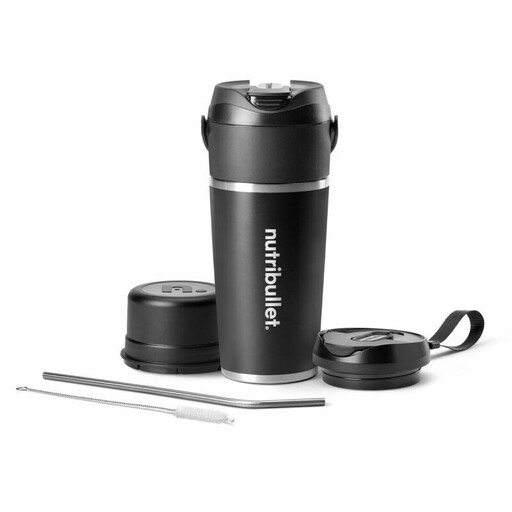
The travel cup is a handy option if you want to make your smoothie directly in the cup and take it with you; the product details list frozen fruit as a suitable ingredient.
The product name lists a 710 ml capacity, three automatic programmes and dishwasher-safe parts.
 No image available
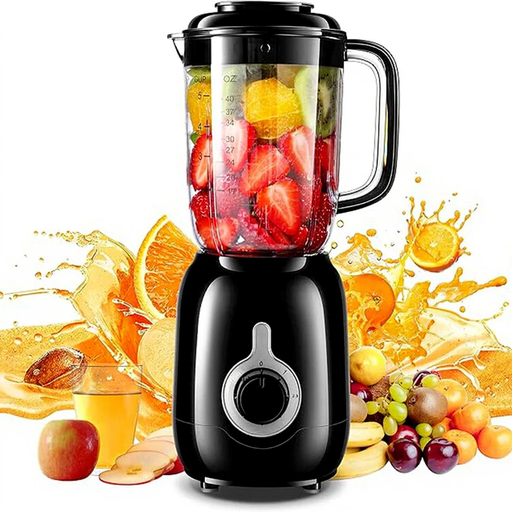
The jug is designed for making several servings in one batch; the product details also list frozen fruit as a suitable ingredient.
The product name lists 800 W, a 1,500-ml jug, a 600-ml drinking bottle and a 300-ml chopper cup.
 No image available
The 1.2-l container is an option for larger quantities; the product details list a pulse function for crushing ice.
The product name lists two speeds and four stainless-steel blades. The instructions state that at least 300 ml of liquid is required.
 No image available
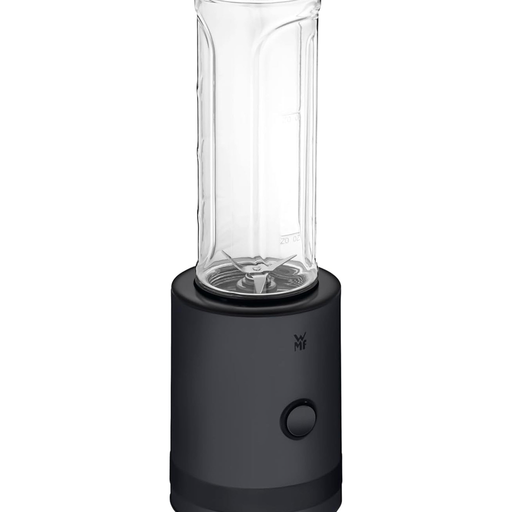
Battery power is useful if there’s no socket where you want to blend; this product is described as a portable blender with a drinking cup.
The product description limits ice crushing to 3–4 ice cubes per use. It also says the blade assembly must be washed by hand.
 No image available
Two blending and drinking containers are ideal for single servings that you can make directly in the container and take with you.
The product name lists two 0.6-l containers; the product details include an ice-crushing function.
Whether your blender can handle frozen berries doesn’t answer the food-safety question. The German Federal Institute for Risk Assessment recommends heating frozen berries thoroughly and evenly before eating, as they can carry norovirus; blending isn’t a substitute for heating. To make a cold smoothie, let the heated berries cool first or use suitable fresh fruit instead.
No. Just because some parts are dishwasher-safe doesn’t mean the whole appliance is. For the Tefal BL91HD, the manufacturer lists the jug without the blades among the dishwasher-safe parts. Check the cleaning instructions for your exact model.
Check the labelling and documentation for the specific product. Germany’s Federal Network Agency explains that the CE mark is the manufacturer’s declaration that the product meets the applicable requirements; it isn’t an independent quality mark. The agency also notes that accompanying documents, such as instructions and safety information in German, may be required.
No. If a product is faulty, your statutory warranty claim is against the seller. A guarantee is an additional voluntary commitment, subject to its own terms. Check the seller, guarantee terms and availability of spare parts separately.
In Germany, electrical waste must not be put in household rubbish. The Federal Environment Agency lists local collection points, such as recycling centres, as well as return options at retailers. Retail returns are subject to the relevant conditions.