Small batches
If you usually make pesto just for yourself, a suitably sized bowl matters more than a large capacity. Kenwood and KitchenAid offer compact choppers for smaller quantities.


For small batches of pesto, a compact chopper with easy-to-reach, removable parts is a sensible starting point. If you regularly prepare larger quantities or other dishes together, a larger appliance may suit you better. It will take up more space, and its stated capacity alone won’t tell you how well it handles a small amount of herbs.
If you usually make pesto just for yourself, a suitably sized bowl matters more than a large capacity. Kenwood and KitchenAid offer compact choppers for smaller quantities.
For appliances shared with others, removable parts that are easy to clean are important. The Federal Centre for Nutrition points out that microorganisms can pass from one food to another via shared kitchen equipment.
If you often prepare food for several people or make other dishes too, a larger container may be a good fit. Rommelsbacher gives the MZ 500 a capacity of 1.5 litres; still, check whether it can handle your smallest batch as well.
Start with the smallest batch of pesto you usually make. Then check how easy the parts are to clean between uses and where you’ll store the appliance and its accessories.
| Consideration | What to check before buying | Who it matters most to |
|---|---|---|
| Small batches of pesto | Compare your usual recipe quantity with the bowl size and guidance on small batches; check the pulse or speed controls. | If I usually make just a small batch, I don’t want herbs slipping past the blades. Around 36% of consumers prioritise small quantities. |
| Cleaning between uses | Check whether the blade and lid can be removed, and whether the specific model is dishwasher-safe. | When an appliance is shared, I want to be able to remove food residue thoroughly between uses. Around 29% of consumers consider cleaning their main priority. |
| Kitchen storage space | Compare the footprint, appliance height, cable and space needed for the blades and accessories with your available storage. | When several people share the worktop and cupboards, I want to know where the appliance and accessories will go. Around 21% of consumers put storage space first. |
| Larger quantities and other tasks | Compare the smallest and largest quantities you plan to prepare, the functions you need and the number of parts to clean. | If we regularly prepare food for several people as well as making pesto, a larger bowl may be more practical. Around 14% of consumers prioritise larger quantities or other tasks. |
A large stated capacity or power rating doesn’t prove that the blades will reach your smallest batch of pesto effectively.
Start with the quantity in your usual recipe, then check the bowl, controls and manufacturer’s guidance on small batches.
A large appliance may take up more worktop and washing-up space. You may also need to process small batches in several rounds.
The dishwasher-safe claim may apply to individual parts, not the motor unit or every accessory.
Check the instructions for each component and clean all parts that come into contact with food between uses.
Variants can have different model codes and features. For example, WMF lists a version as “Kult X Zerkleinerer Edition” with its own model code.
Before buying, compare the full model name, bowl, accessories and specific product description.
Depending on the variant, the Easy Chop models are designed for preparing smaller quantities.
The 5KFC3516 Mini Food Chopper has an 830 ml bowl and a drizzle basin in the lid.
The MMR08A1 is a universal food chopper with a momentary switch and plastic blending jug.
According to the manufacturer, the MZ 500 has a 1.5-litre glass bowl and is better suited to preparing larger quantities.
The MultiPractic 3 CH3011BK is a compact option with a plastic bowl.
This selection includes compact choppers for smaller batches and larger electric appliances for preparing food together. Pay particular attention to the smallest batch you plan to make, cleaning and available storage space.
 No image available
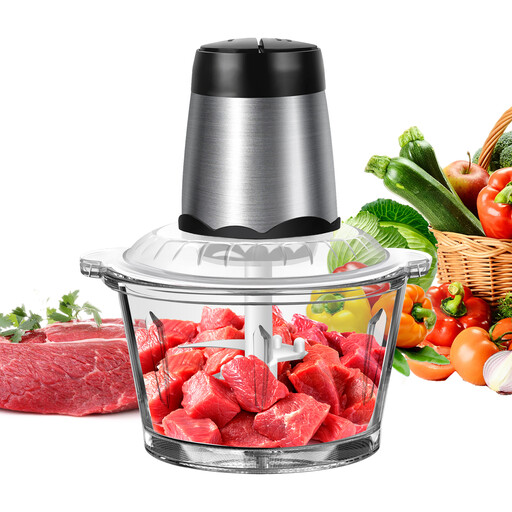
An option for preparing larger quantities together, if you have room to store a 2-litre bowl.
2-litre glass bowl, two speeds and a pulse function; removable parts are described as dishwasher-safe. Stainless steel blades.
 No image available
The two bowl sizes offer options for preparing smaller and larger quantities; check whether the smaller bowl suits the amount of pesto you usually make.
0.6- and 2-litre bowls, 300 W, two speeds and a safety lock. The glass bowls are described as dishwasher-safe. The bowls and lids are not heat-resistant or microwave-safe.
 No image available
The 2-litre bowl is an option for preparing larger quantities together; if you make small batches of pesto, check the minimum quantity separately.
300 W, two speeds and stainless steel blades. Run the appliance for no more than 40 seconds at a time, then leave it to rest for at least 2 minutes; after three cycles, allow it to cool for 15 minutes. Do not use it for dry ingredients such as coffee, grains or spices.
 No image available
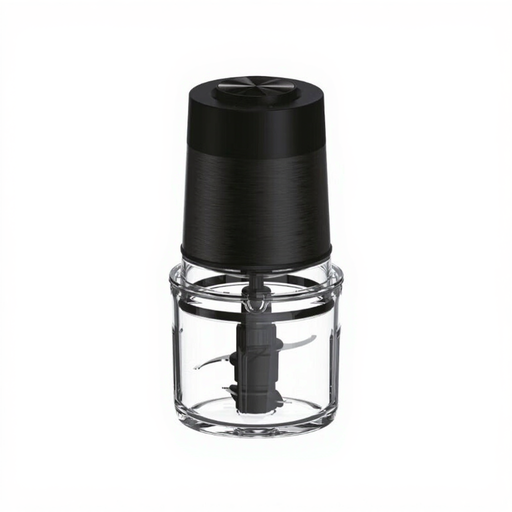
The 0.5-litre bowl is a size option for smaller preparations; check that it suits the quantity you need and refer to the instructions.
Glass bowl, four removable stainless steel blades, pulse function and two speeds. The bowl and blades are described as dishwasher-safe.
 No image available
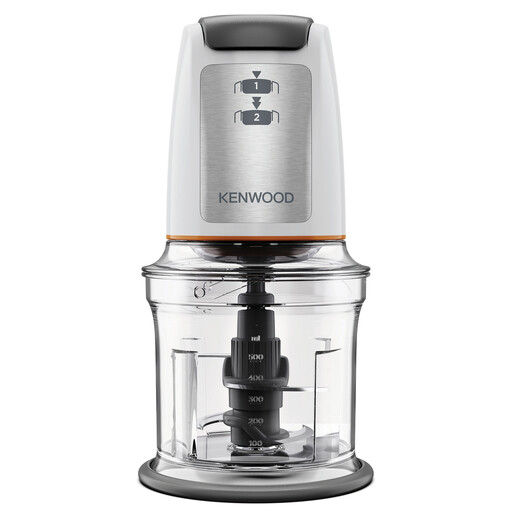
This model is described as a mini chopper suitable for making pesto too; its 0.5-litre bowl is a size option for smaller batches.
0.5-litre bowl, two speeds and 500 W.
Clean the parts that come into contact with food between preparations, following the appliance instructions. The Federal Centre for Nutrition explains that shared kitchen equipment can transfer microorganisms from one food to another. Dishwasher-safe claims apply only to the specified components and models.
No. In the preparation method described by the Federal Centre for Nutrition, you put the other ingredients in the chopper first, then add the olive oil and stir it in. A drizzle basin is an appliance feature, but it isn’t essential for this recipe.
CE marking is required for electrical appliances covered by the relevant harmonised EU rules. It is the manufacturer’s declaration of conformity, not an independent test mark. When considering a specific product, check the appliance’s identity, its markings and that its safety information is clear.
No. Your statutory rights are against the seller; a guarantee is an additional voluntary commitment with its own terms. Check who the seller is and which guarantee conditions apply to the specific variant.
For the pesto recipe described, the Federal Centre for Nutrition recommends storing it in a tightly sealed container in the fridge. For longer storage, it suggests covering the surface with olive oil. This doesn’t establish a general shelf life or mean the pesto can be stored at room temperature.