What should you look for when buying?
Mini chopper
A good fit if: small groups are making individual portions and a pulse function matters more than slicing or grating discs.
The trade-off: You may need several batches to make enough for the whole class. The recipe quantity cannot be worked out from the bowl capacity alone.
Larger food chopper
A good fit if: you’re processing herbs and nuts for larger batches, and the appliance’s stated capacity suits your recipe.
The trade-off: Rommelsbacher recommends a different appliance for small quantities of pesto. You’ll also need to follow the MZ 500’s specified short operating intervals.
Compact food processor
A good fit if: ingredients will regularly need slicing or grating as well as making pesto.
The trade-off: Extra attachments take more time to use and clean. For the FDP23.140GR, Kenwood gives a bowl capacity of 1.3 l and a working capacity of 0.75 l.
Hand blender set with chopper
A good fit if: you’d also like to use the hand blender for other class recipes and small batches of pesto are enough.
The trade-off: The Braun MQ7025X chopper is listed by the manufacturer as having a capacity of 350 ml. Check what’s included in the exact set variant.
First, decide how much each group will make per batch. Then check the working capacity and instructions for the specific appliance, before deciding whether you also need slicing or grating accessories. Appliances sold on the German market must also meet the requirements for food-contact parts and the relevant EU regulations. CE marking is only required where the applicable regulations specify it.
| Consideration |
What to check before buying |
Who it matters most to |
| Batch size |
Check that the recipe quantity for each group is within the permitted working capacity. Kenwood lists a 1.3 l bowl capacity and 0.75 l working capacity for the FDP23.140GR; Rommelsbacher gives the MZ 500 a 1.5-litre glass bowl. |
If I’m catering for several groups, the permitted quantity per batch needs to suit my recipe; around 36% of consumers consider batch size the most important factor. |
| Texture control |
Check whether the specific model has a pulse or momentary switch, and what operating intervals apply. For the MZ 500, Rommelsbacher specifies pulses of 2–3 seconds or a maximum of 20 seconds of continuous operation. |
I want to control the texture, from coarse to fine, with short pulses. Around 29% of consumers put texture control first. |
| Cleaning and changing between groups |
Check the instructions for each part to see whether it’s dishwasher-safe. Rommelsbacher describes the MZ 500’s removable parts as dishwasher-safe; extra discs mean more parts to clean. |
Between groups, I care about how quickly I can clean the parts I’ve used and get them ready again; around 21% of consumers prioritise changing between groups. |
| Additional functions |
Check what’s included against the full model code: a chopping blade is not a substitute for a slicing or grating disc. Braun lists a 350-ml chopper for the MQ7025X. |
If I regularly need to prepare things other than pesto, I want suitable slicing or grating accessories. Around 14% of consumers prioritise these extra functions. |
Joybuy products for preparing pesto
This selection includes choppers and food processors for making pesto and tackling other food preparation tasks in a cooking class.
 No image available
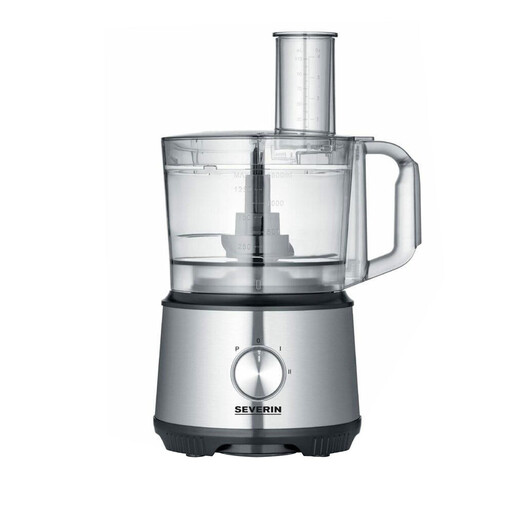
Severin KM 3892 food processor
Its stated chopping and emulsifying functions are useful for preparing pesto and sauces.
The bowl is listed as 1.5 l. Accessories include a blade attachment, an emulsifying disc and three disc inserts.
Joybuy
 No image available
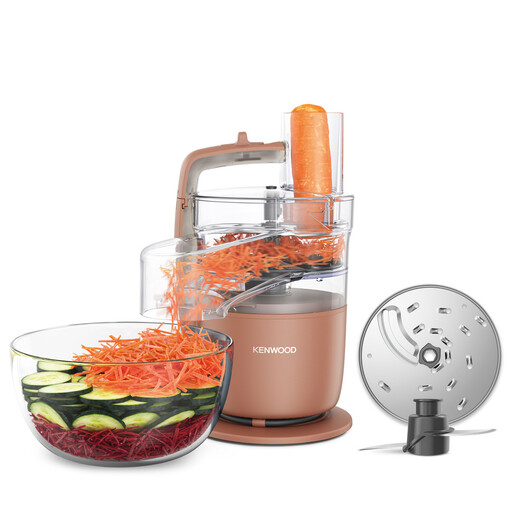
Kenwood MultiPro Go FDP22130RD, Clay Red
The pulse function and slicing/grating disc make this model a useful option for other food preparation tasks too.
The stated working capacity is 0.75 l; this is different from the 1.3 l bowl capacity. A blade attachment and reversible slicing/grating disc are listed.
Joybuy
 No image available
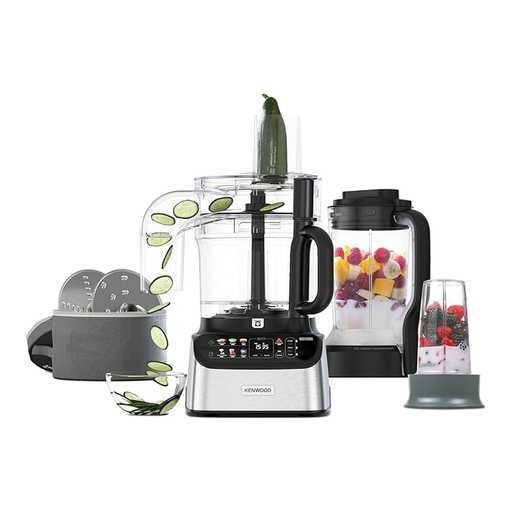
Kenwood MultiPro OneTouch FDM73850SS, Silver
This model is an option if you need to chop and purée ingredients, as well as slice and grate them, alongside making pesto.
The bowl is listed as 3 l. A blade attachment and slicing/grating discs are listed as accessories.
Joybuy
 No image available
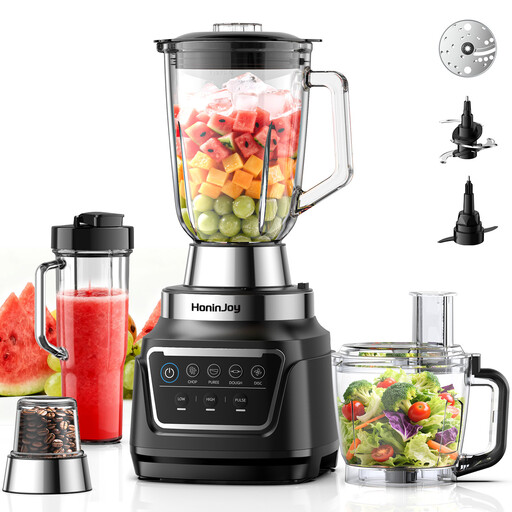
HoninJoy All-in-One Blender & Food Processor, 10-in-1
Its stated chopping and puréeing functions are suitable for pesto and other food preparation tasks.
The food processor bowl is listed as 2 l. According to the description, the appliance is for domestic use only.
Joybuy
 No image available
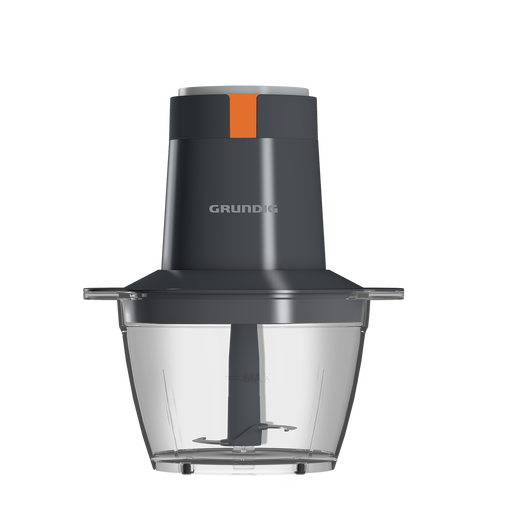
Grundig CH 5320 Multi-Cutter
This compact chopper is better suited to small portions than larger quantities for a class.
The glass bowl is listed as 0.5 l, with two stainless steel blades and two speed settings. Unplug the appliance before cleaning and handle the blades with care.
Joybuy
Frequently asked questions
Can I work out how much pesto I can make for the whole class from the bowl capacity?
No. Kenwood gives a bowl capacity of 1.3 l and a working capacity of 0.75 l for the FDP23.140GR. Work out the recipe quantity for each batch and check the instructions for the appliance you choose.
How should I use the Rommelsbacher MZ 500 for several batches?
Rommelsbacher specifies pulses of 2–3 seconds or a maximum of 20 seconds of continuous operation. Also follow the instructions on quantities and ingredients. These operating guidelines apply to the MZ 500 and don’t automatically apply to other appliances.
Can the bowl, blade and motor go in the dishwasher?
It depends on the part and model. Rommelsbacher describes the MZ 500’s removable parts as dishwasher-safe. Before cleaning, check the instructions for each part of the appliance you’ve bought.
Which product regulations apply to an electric pesto-making appliance in Germany?
Parts that come into contact with food must meet the requirements for food-contact materials, as explained by the German Federal Office of Consumer Protection and Food Safety. Electrical appliances must comply with the relevant EU regulations. CE marking is only required when the applicable regulations require it, and it doesn’t prove that an appliance is suitable for a particular pesto recipe.
What’s the difference between statutory consumer rights and a manufacturer’s guarantee?
For a consumer purchase, your statutory rights relating to defects are against the seller. A guarantee is an additional voluntary promise, subject to its own terms. The Verbraucherzentrale (German Consumer Advice Centre) clearly distinguishes between these two. Keep your proof of purchase and model details in case you need to make a claim.


