
Lieferung heute & morgen

Qualitätsgarantie

Willkommens-Angebote freischalten: KOSTENLOSE Lieferung | Bis zu 80 % RABATT | Kostenlose 30-Tage-JoyPlus-Testphase
App herunterladen
Choosing the right pet carrier is crucial for your pet's safety and well-being on the go. Whether it's for a trip to the vet, a long car ride, or air travel, the market offers a bewildering array of models. But not every carrier lives up to its promises. Many products have hidden defects that only become apparent with use, causing stress for both the pet and the owner.
This guide will help you recognise the common pitfalls and make an informed decision. We focus on the objective criteria that define a good transport solution, so you can make a durable and safe choice for your four-legged companion.
Many pet carriers look practical at first glance but quickly prove to be a poor choice. Pay close attention to these three weaknesses:
To find a safe and comfortable pet carrier, you should focus on verifiable features. The following three parameters are crucial.
The structure is the most critical safety feature. A high-quality carrier for a cat or small dog should have an integrated frame, often made of lightweight steel wire. This ensures the bag maintains its shape even when in motion. For a foldable pet carrier, it's important that the locking mechanisms are robust and cannot come undone on their own.
Look for materials like scratch-resistant nylon fabric or 600D Oxford fabric. These are not only durable but also easy to clean. The bottom of the carrier should be reinforced with a solid panel and ideally padded with a washable, soft liner.
Safety goes beyond just a stable structure. The following are essential:
When used as a car carrier, additional fastening options, such as for the seatbelt, are an important criterion for securing the carrier in accordance with road safety laws.
The right size is crucial for comfort. Your pet should be able to stand, turn around, and lie down comfortably inside the carrier. Measure your pet while standing (length from nose to base of tail, height from paw to head) and add a few centimetres as a buffer.
Different models are suitable for different purposes:
Based on the criteria mentioned, we have identified several models that are well-suited for different profiles and use cases.
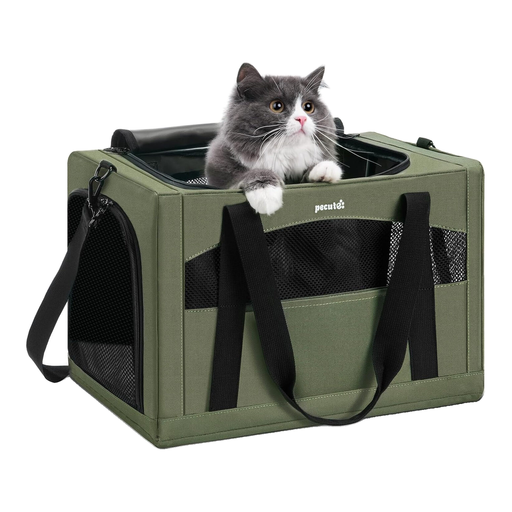
Why it's a good fit: This carrier for small dogs and cats is designed for routine use like vet visits. Its compact yet sturdy shape provides security for pets up to 5 kg without being bulky.
The integrated 5mm steel wire frame with honeycomb panel reinforcement prevents the bag from collapsing—a direct solution to the problem of unstable soft-sided carriers.
Dual escape protection with locking zippers and an internal safety leash. Seatbelt loops allow for secure fastening in a car.
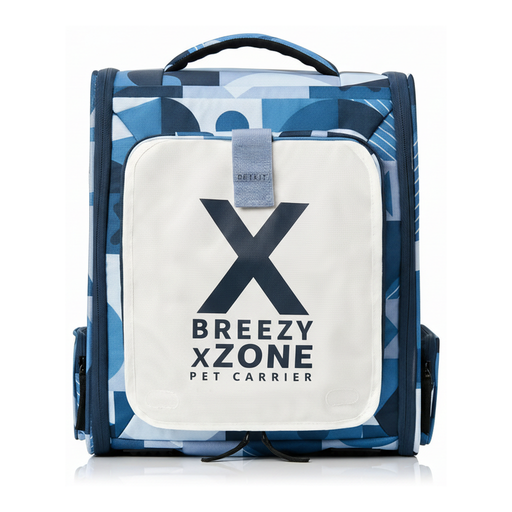
Why it's a good fit: This expandable carrier is a solution for longer journeys. The fold-out tent area significantly increases the available space, reducing stress and feelings of confinement.
The expandable design and privacy screen counteract the problems of limited space and sensory overload, which often trigger anxiety in pets.
2-in-1 function as a backpack and a small tent. Lightweight and foldable, ideal for storage while travelling. Generous mesh panels ensure good ventilation.
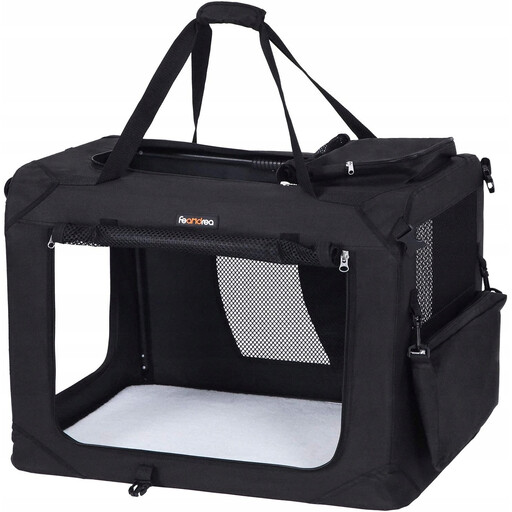
Why it's a good fit: This large and robust foldable pet carrier is designed for larger dog breeds up to 32 kg, offering a secure retreat in the car, at a hotel, or while camping.
It solves the problem of finding a sufficiently sized yet stable transport solution for large dogs, avoiding the risk of a carrier that is too small or flimsy.
A sturdy steel frame combined with durable Oxford fabric. It folds flat for space-saving storage when not in use.
We have compiled a complete, up-to-date list of products that fully meet these strict selection criteria and safety regulations.
1. How do I get my pet used to the new carrier? Place the open carrier in your home a few days before its first use. Put a familiar blanket, toy, or treats inside so your pet learns to see the carrier as a safe and positive space. Start with short periods with the carrier closed inside the home before taking your first trip.
2. How do I properly clean a pet carrier? Most fabric carriers can be wiped down with a damp cloth and a mild soap solution. Removable liners are often machine-washable (check the manufacturer's instructions). Allow the carrier to air-dry completely after cleaning to prevent mould growth. Hard-shell carriers are easier to clean with a disinfectant.
3. What are the regulations for using a pet carrier in a car? In many regions, pets are legally considered cargo. According to local traffic laws, "cargo" must be secured in such a way that it cannot shift, fall over, or be thrown about during full braking or sudden evasive manoeuvres. A secured carrier in the boot or footwell, or a special harness for the back seat, are common methods to comply with this requirement. A hard-sided carrier offers greater protection than a soft-sided bag.