
Lieferung heute & morgen

Qualitätsgarantie

Willkommens-Angebote freischalten: KOSTENLOSE Lieferung | Bis zu 80 % RABATT | Kostenlose 30-Tage-JoyPlus-Testphase
App herunterladen
Whether for a trip to the vet, a long car journey, or a vacation together—a suitable pet carrier is essential. The market offers a plethora of models, from dog carrier bags to cat backpacks. But not every solution delivers what it promises. Many products have hidden flaws that only become apparent after purchase, compromising both the animal's safety and the owner's comfort.
This guide will help you identify common pitfalls and make an informed decision. We'll show you which critical features to look for to find a safe, durable, and practical transport solution for your dog or cat.
Many pet owners invest in a carrier that quickly proves to be impractical or unsafe. Watch out for these three common problems:
To find a suitable and safe pet carrier, you should check three central criteria. These objective features will help you evaluate a product's quality, independent of marketing promises.
The durability and safety of a carrier depend directly on its material and construction.
Your pet's comfort and safety during transport are crucial.
The right size is critical for your pet's well-being. It should be able to stand, turn around, and lie down comfortably inside the carrier.
Based on the objective criteria above, we have identified a few models that are well-suited for specific user profiles.
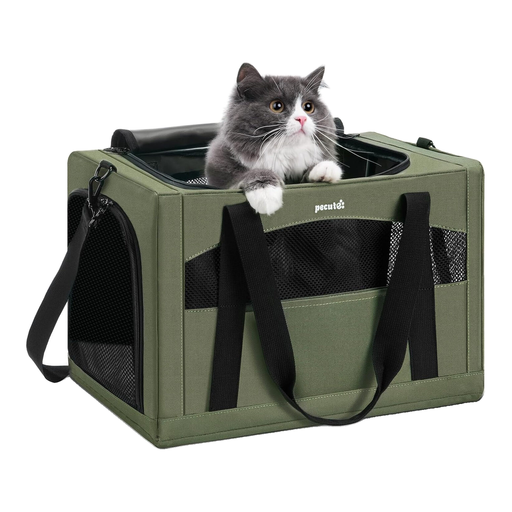
Why This Fits Their Persona: Ideal for owners of small pets (up to 5 kg) who need a reliable and secure bag for vet visits or short car rides. The lightweight design and carrying handles make it very convenient.
The integrated 5mm wireframe and honeycomb board reinforcement prevent the bag from collapsing. Locking zippers and an internal safety tether offer double protection against escapes.
Sturdy frame construction; dual escape-proof features; dedicated straps for car seat attachment.
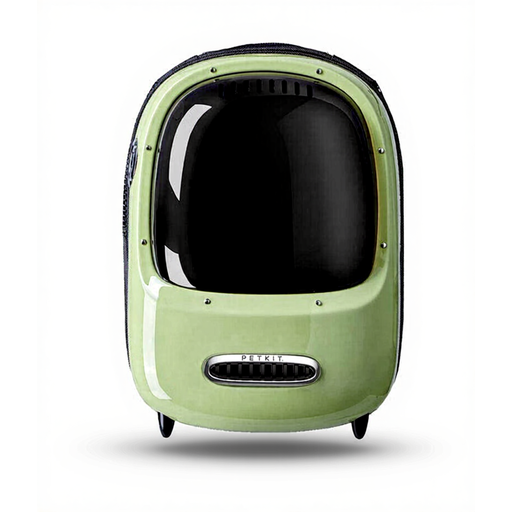
Why This Fits Their Persona: Perfect for pet owners who hike or travel with their cat or small dog (up to 8 kg) and value high comfort and technological support. The ergonomic design relieves back pressure.
The smart ventilation system with an integrated fan (external power source required) actively solves the problem of overheating. The tinted window reduces stress from external stimuli, while the night light provides safety in the dark.
Active air circulation system; integrated night light; ergonomic carrying system for pressure relief.
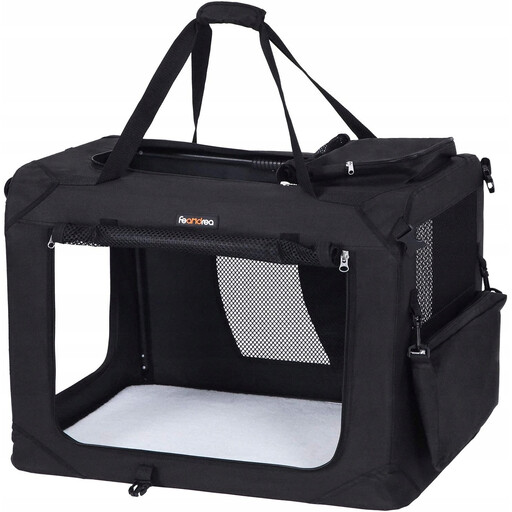
Why This Fits Their Persona: A solution for owners of large dogs (up to 32 kg) who need a spacious, yet portable and storable carrier for car travel, camping, or hotel stays.
The robust steel frame ensures high stability and prevents collapse. At the same time, the carrier folds flat, solving the bulky storage problem common with hard-shell carriers of this size.
Very spacious; folds down to a slim profile; robust steel frame with durable Oxford fabric.
We've compiled a complete, up-to-date list of products that fully meet these strict selection criteria and rigorous safety standards.
Start by placing the open carrier in your home and putting a familiar blanket or toy inside. Reward your pet with treats when it explores the carrier on its own. Begin with short periods with the door closed, gradually increasing the duration before you take your first trip.
The carrier should be large enough for your pet to stand up straight, turn around comfortably, and lie down in a natural position. Measure your pet while it's standing from the tip of its nose to the base of its tail (length) and from the floor to the highest point of its head or ears (height). Add about 4-6 inches (10-15 cm) to both measurements to get the ideal internal dimensions.
A soft-sided carrier is only safe if it has a stable, shape-retaining structure and can be securely fastened in the vehicle. Look for models with an integrated frame and special loops or straps that the car's seatbelt can be passed through. An unsecured, soft bag offers insufficient protection in an accident.