
Lieferung heute & morgen

Qualitätsgarantie

Willkommens-Angebote freischalten: KOSTENLOSE Lieferung | Bis zu 80 % RABATT | Kostenlose 30-Tage-JoyPlus-Testphase
App herunterladen
Whether for the annual vet visit, a long car journey, or a move to a new home – a suitable carrier for dogs and cats is essential. The market offers a vast array of options, from a simple dog tote to a multifunctional dog backpack. However, on closer inspection, many products exhibit flaws that can compromise not only your pet's comfort but also their safety. This guide will help you avoid common purchasing pitfalls and make an informed decision.
Many pet owners invest in a transport solution that proves to be impractical or unsafe after a short time. Look out for these three widespread weaknesses to avoid a bad purchase:
To make the right choice, you should focus on objective criteria rather than trusting marketing claims. The following three parameters are crucial for safety, comfort, and durability.
The foundation of any good transport solution is its structural integrity. A collapsible dog crate or a dog carrier bag should maintain its shape even when empty.
A secure and well-ventilated environment is critical for your pet's well-being, especially on longer journeys.
The carrier should be neither too small nor too large. Your pet must be able to stand up, turn around, and lie down comfortably.
Based on the criteria mentioned, we have selected a few products for different user profiles.
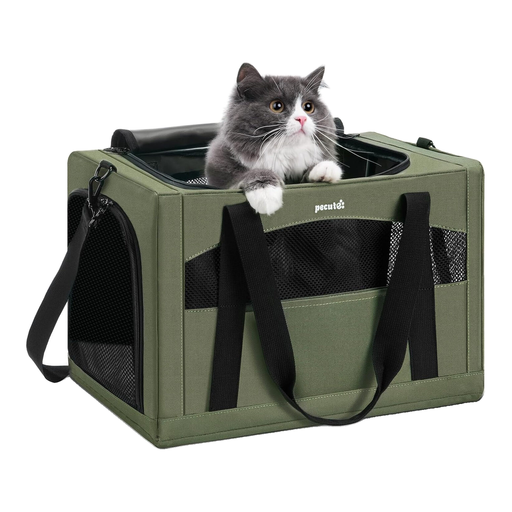
Why This Fits Their Persona: Ideal for owners of cats and small dogs (up to 5 kg) who need a stable and secure solution for everyday trips, such as vet visits or short car rides.
The integrated 5mm wire frame prevents the typical collapse of soft-sided carriers. Locking zippers and an internal safety tether counteract the risk of escape.
Stable frame construction for structural integrity; dual security in the car via seatbelt loop and strap attachments.
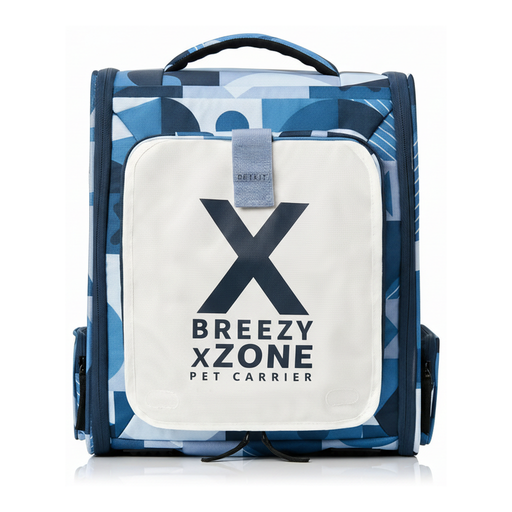
Why This Fits Their Persona: Perfect for pet owners who travel with their small dog or cat (up to 6 kg) and want a flexible solution that offers more space and tranquillity during waiting periods.
The expandable tent design counteracts the feeling of confinement that causes stress in animals. The blackout curtain creates a sheltered, low-stimulus environment.
2-in-1 function as a backpack and a temporary kennel; lightweight and collapsible for easy storage.
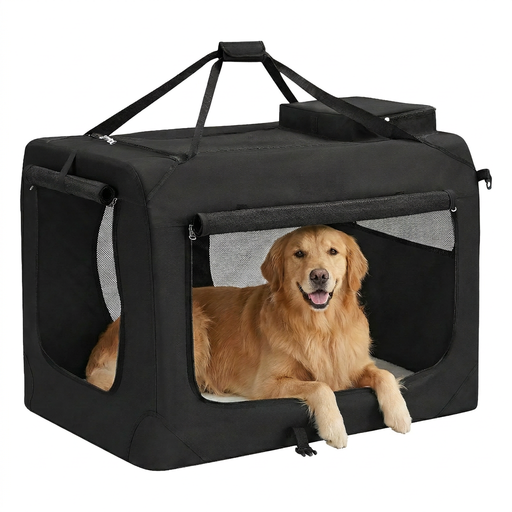
Why This Fits Their Persona: A practical solution for owners of large dog breeds who need a spacious, yet portable and easily storable crate for car journeys or travel.
This crate solves the problem of finding a secure car transport crate that isn't bulky. The steel frame ensures stability, while the collapsible design makes storage easy.
Very spacious for large dogs; collapsible design for compact storage; excellent ventilation through large mesh windows.
We have compiled a comprehensive, up-to-date list of products that meet these strict selection criteria and safety requirements.
Place the open carrier or crate in your home a few days before its first use. Put a familiar blanket, toy, or treats inside so your pet explores it voluntarily and with curiosity. Start with short periods with the carrier closed inside the house before embarking on your first trip.
The pet carrier should be sized so that your pet can stand up straight, lie down comfortably, and turn around. Measure your pet's back length and shoulder height, and add 10-15 cm to each to determine the minimum internal dimensions. A crate that is too large offers insufficient support during braking manoeuvres in the car.
Always use the designated attachment points. Many models have loops through which the car's seatbelt can be threaded. Ideally, position the carrier in the footwell behind the front seats or on the back seat and buckle it in securely. Never place the carrier unsecured on the passenger seat.