Pet photographers who focus on detail
If you want to fine-tune colours and markings in darker areas of your images, check how the printer, paper and settings work together. Canon Germany describes ICC profiles for matching printers and paper.


For occasional small pet prints, a photo printer that supports the size you need will do the job; for larger pictures to hang on the wall, you’ll need a model that explicitly supports A3+. If you print regularly, compare refillable ink tanks with cartridge printers using the same image size and print volume. For a coordinated display, the right paper, feed mechanism and colour workflow matter too.
If you want to fine-tune colours and markings in darker areas of your images, check how the printer, paper and settings work together. Canon Germany describes ICC profiles for matching printers and paper.
If you want to hang pet photos larger than A4, the print size and paper feed need to suit the paper you plan to use. Epson Germany lists A3+ support for the Expression Photo HD XP-15000 and EcoTank ET-8550.
If you regularly print photos or proofs, plan your consumables and print size together. Canon Germany and Epson Germany describe both refillable ink tanks and a range of photo print sizes.
First decide whether you want to print small photos, larger pictures for the wall or regular batches. This will determine the size, paper and consumables you need.
| What matters to you | What to check before buying | Who is this especially important for? |
|---|---|---|
| Colours, shadow detail and paper | Check which papers and feed options are approved, and whether colour profiles are available for the specific printer and paper combination. | If I want to fine-tune dark areas and colour transitions, the paper and settings need to suit my printer. Around 36% of consumers would make matching the image and paper their main buying consideration. |
| Finished image size | Decide on the final size and check that the model supports the paper size and feed method you need. | If I want to hang a pet picture larger than A4, I need a printer designed for that size rather than a compact photo printer. Around 29% of consumers would put image size first. |
| Consumables for photo series | Compare paper and ink for the same planned print volume and image size, and check what each stated yield is based on. | If I want to print several photos or proofs, I want to plan the size and consumables together. Around 21% of consumers would give the greatest weight to the cost and consumption involved in printing batches. |
| Space and mixed use | Check the photo print size, connections and space needed when the paper trays are open. | If I only print small photos occasionally in my hobby room and want to use the printer for other tasks too, its size and footprint matter. Around 14% of consumers would prioritise compact versatility above all else. |
Canon’s figures for the PIXMA G650 and Epson’s for the ET-8550 are based on specific print conditions and sizes. They do not demonstrate the same yield when printing larger pet pictures.
Compare consumables for your planned print volume and image size, rather than directly comparing yield figures based on different assumptions.
Allow for paper, ink and any proofs in the size you’ll actually be printing.
Paper thickness, feed mechanism and colour settings need to suit the specific printer and paper combination.
Check which media the model supports and which feed method it is designed for. Use a suitable colour profile if you want to fine-tune colour reproduction.
The Canon imagePROGRAF Pro-300’s second-place ranking in Testberichte.de’s A3 photo printer list applies to that exact model. Canon Germany now lists the PRO-300 as discontinued; the PRO-310 is a different model.
When referring to a ranking, keep the original model name and assess any other model against its own specifications.
HP notes that the Envy Photo 7230 uses dynamic security measures that may block cartridges with certain non-HP or modified electronic components.
Before buying, read the cartridge and firmware information for the exact model, then check which consumables suit your needs.
Canon’s photo printers range from compact models for small prints to A3+ printers.
Epson offers A3+ photo printing with both cartridge printers and refillable ink tanks.
The Envy Photo 7230 is an option for occasional photo printing alongside document printing, scanning and copying.
The portable printers listed here are designed for mobile photo printing. They are not necessarily a substitute for a printer for larger pet pictures, so check the print size and method for your specific needs.
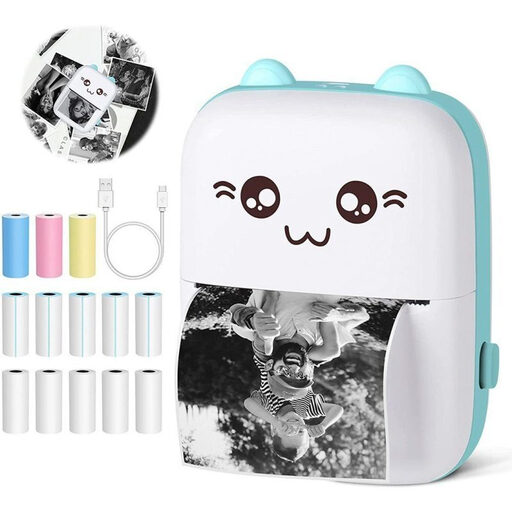 No image available
An option if you want to print photos and notes from your smartphone using a portable thermal printer.
 No image available
For small smartphone photos, provided the self-adhesive paper size suits your image.
The stated size of 50 × 76 mm is suitable for small prints, not larger pictures for the wall.
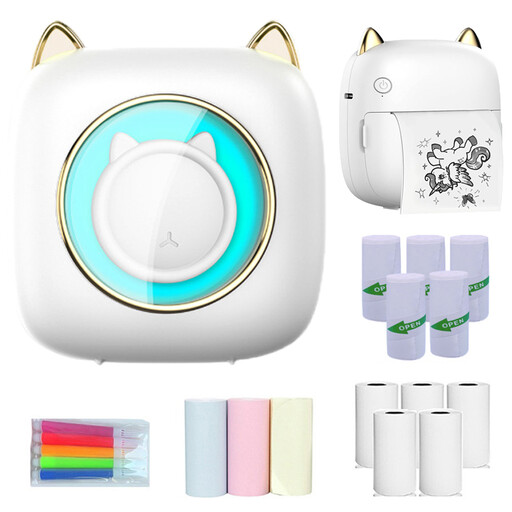 No image available
A good fit if you specifically want to print pet pictures in black and white rather than colour.
The product title specifies black-and-white thermal printing and a 1200 mAh battery.
Only if the small print size it supports is large enough for you. The Canon SELPHY CP1500, for example, supports 100 × 148 mm; for A3+, you’ll need a model that explicitly supports this size.
For the EcoTank and Expression printers covered by Epson’s support guide, first check the ink levels and run a nozzle check. If necessary, run the recommended print head cleaning cycle and follow the instructions for your specific model. Epson warns against cleaning cycles when ink levels are too low.
No. In Germany, your statutory rights if a product is faulty are separate from a guarantee; a guarantee is an additional voluntary service with its own terms and conditions. The Verbraucherzentrale explains the difference. Also check which ink and photo paper are suitable for your print size.
Electrical and electronic equipment sold in the EU must meet product safety rules. A CE mark alone is not an independent assessment of photo print quality; Your Europe explains the EU rules. According to the German Environment Agency, a printer that has reached the end of its life should be taken to a separate collection point for electrical and electronic waste, not put in your household rubbish.