
Lieferung heute & morgen

Qualitätsgarantie

Willkommens-Angebote freischalten: KOSTENLOSE Lieferung | Bis zu 80 % RABATT | Kostenlose 30-Tage-JoyPlus-Testphase
App herunterladen
A playpen is used to create a defined and secure area for pets. It allows for controlled exercise for puppies, rabbits, guinea pigs, and other small animals without the need for constant, direct supervision throughout your home or garden. Selecting the right model depends on the animal species, its size, the intended location (indoors or outdoors), and specific requirements for flexibility and security. This article analyses the technical parameters and material properties of various enclosure types to provide an informed basis for your decision.
The functional characteristics of a pet enclosure are primarily determined by its material, construction, and dimensions. An analysis of these criteria is crucial for selecting a suitable product.
The choice of material impacts the enclosure's stability, durability, and potential locations for use.
The following products represent a selection that covers different use cases in terms of material, modularity, and intended pet.
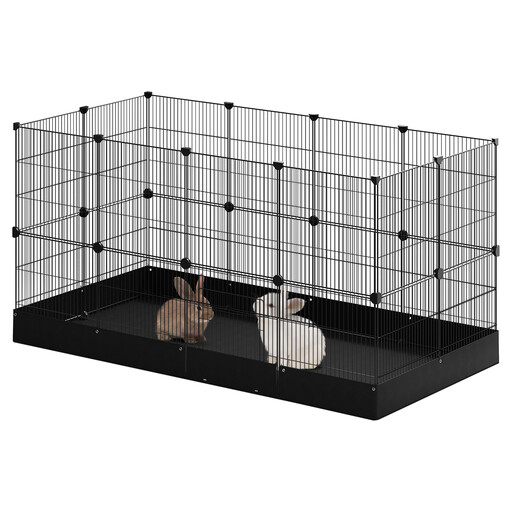
Why we recommend this product: This model combines the stability of metal grids with the practical benefit of an included Oxford fabric floor mat. The bar spacing of 1.5 cm is very narrow, making it suitable even for very small animals like hamsters or young guinea pigs. The modular design, with connectors and cable ties for added stability, allows for flexible shape configuration.
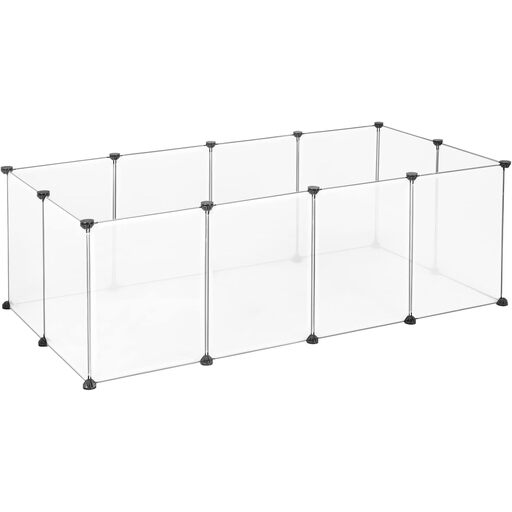
Why we recommend this product: This small animal enclosure uses transparent plastic panels that allow for an unobstructed view of your pet. The DIY interlocking system offers maximum flexibility in designing the run. With multiple sets, the enclosure can be expanded almost indefinitely in height and area. Non-slip stickers for the connectors increase stability on smooth floors.
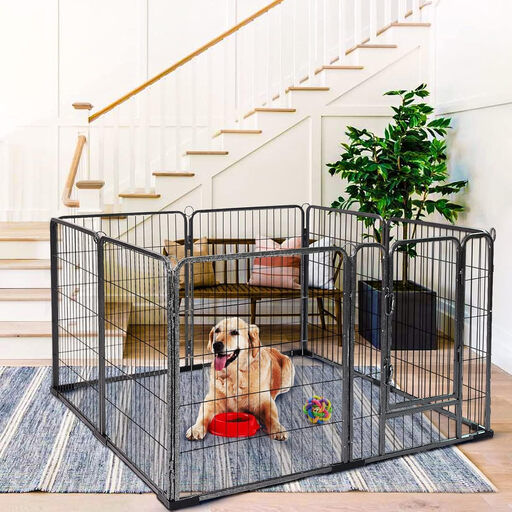
Why we recommend this product: This dog fence is designed for robustness and for use with small to medium-sized dogs. The rust-resistant metal construction and a height of nearly 80 cm make it a secure boundary. A special feature is the rounded metal stakes, which serve to anchor it in the ground, thus increasing its stability outdoors. The tool-free assembly and foldable design support portable use.
The models featured cover specific use cases. If you would like to explore a wider selection of configurations and sizes, especially for raising puppies, you can find more models in our Puppy Playpen category. There you will find a range of designs, from lightweight indoor solutions to heavy-duty outdoor enclosures.
1. How high should a playpen for rabbits be? The required height depends on the rabbit's breed and individual jumping ability. For dwarf rabbits, a height of 60-70 cm may be sufficient. For larger or more agile breeds, a height of at least 80-90 cm is recommended to prevent them from jumping over. An additional grid cover can be a sensible addition for particularly athletic jumpers.
2. Can a playpen also be used indoors? Yes, many models are explicitly designed as indoor playpens or are suitable for both environments. When used indoors, it is important to ensure floor protection. Models with an integrated floor tray, a separate liner, or non-slip rubber feet prevent scratches on hardwood or laminate flooring and simplify cleaning.
3. What is a good puppy playpen made of? For a puppy playpen, metal is often preferred. It is robust, withstands chewing during the teething phase, and offers high stability, even if the puppy jumps against the bars. Plastic interlocking systems can be a lightweight and flexible alternative for very young and small puppies, but they offer lower chew-resistance. The decision should be based on the puppy's size, breed, and temperament.