
Lieferung heute & morgen

Qualitätsgarantie

Willkommens-Angebote freischalten: KOSTENLOSE Lieferung | Bis zu 80 % RABATT | Kostenlose 30-Tage-JoyPlus-Testphase
App herunterladen
A pet playpen provides your pet with a safe, controlled space to play and explore, whether in the living room or the garden. But the market is vast, and not every model lives up to its promises. A bad purchase isn't just frustrating; it can also compromise your pet's safety. Many enclosures have design flaws that only become apparent with daily use. This guide will help you spot the typical pitfalls and make an informed decision.
When searching for a suitable enclosure, buyers repeatedly encounter the same problems. These three weak points often render a product unusable after a short time or pose a safety risk.
dog run for the garden that starts to rust after the first rain is a wasted investment. Equally unsuitable is a small animal enclosure made of plastic that can be effortlessly gnawed on by rabbits or guinea pigs. Durability and safety depend directly on the quality of the materials.foldable takes up valuable space when not in use and is impractical for travel or spontaneous use in the park.To avoid the problems mentioned above, you should check three core parameters. These define the quality, safety, and functionality of a pet playpen.
The material is the foundation for stability and longevity. The choice depends on the pet and the intended location.
puppy playpen or dog run. Look for a powder coating or galvanization, which protects the material from corrosion. Rounded edges and sturdy welds are important safety features to prevent injuries.indoor rabbit hutch or guinea pig enclosure. High-quality polypropylene panels are lightweight, easy to clean, and offer better protection from drafts compared to simple wire cages. A seamless connection between the elements is crucial here to give rodents no surface to grip and chew.A flexible system adapts to your needs, not the other way around.
foldable playpen offers a significant advantage for storage and transport. Such models can be collapsed in a few simple steps and stored compactly.Details make the difference between a safe retreat and a potential hazard.
small animal enclosure for hamsters or young guinea pigs, the spacing between the bars must be very narrow (often 1.5 cm or less) to prevent them from slipping through.Based on the criteria above, we have identified products that offer a well-designed solution for specific user profiles.
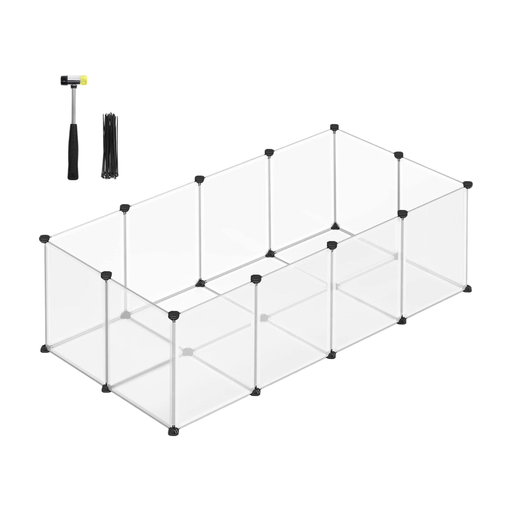
Why This Fits Their Persona: Ideal for guinea pigs, hamsters, or rabbits kept indoors. The integrated floor panels protect sensitive floors from scratches and dirt while making the enclosure more stable.
The seamlessly coated PP plastic panels leave no edges for rodents to grip, preventing them from chewing through—a common issue with low-quality plastic enclosures.
The integrated floor system prevents digging and protects the surface underneath. Its modular system is expandable to increase the height or floor area.
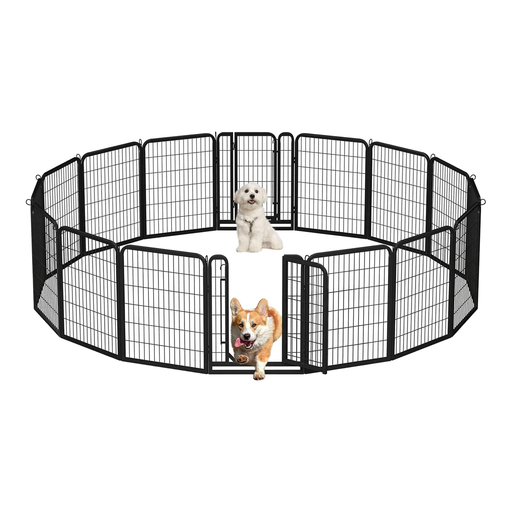
Why This Fits Their Persona: Anyone looking for a large, secure run for the garden or spacious indoor areas will find a suitable solution here. The 16 panels allow for a very large and flexible play area.
The robust metal construction with a water-resistant coating prevents rust. Included ground stakes ensure it can be firmly anchored in the ground, counteracting instability.
Large, customisable area with 16 panels. Foldable design for easy storage and transport. Two doors with safety latches for convenient access.
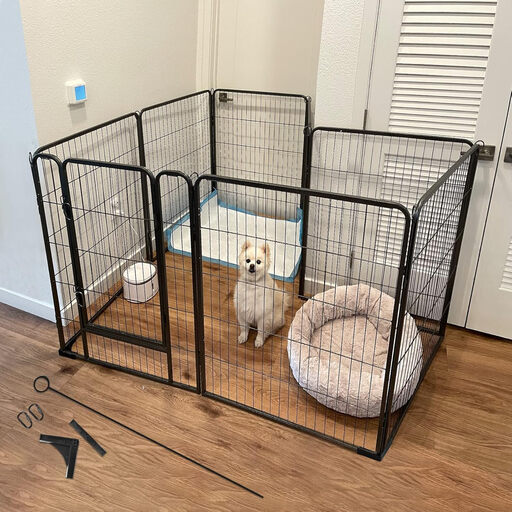
Why This Fits Their Persona: Perfect for owners of active puppies, medium-sized dogs, or rabbits that are prone to jumping. The 100 cm height provides a reliable barrier against escape attempts.
The solid metal construction and rounded metal stakes for stabilisation prevent it from tipping or shifting, which is a constant risk with lighter and lower enclosures.
Extra height of 100 cm for superior security. Rust-resistant metal for indoor and outdoor use. Non-slip protectors spare your floors and reduce noise.
We've compiled a complete, up-to-date list of products that fully meet these strict selection criteria and safety requirements.
The required height depends on the type of animal and its jumping ability. For calm small animals like guinea pigs or tortoises, heights of 40 to 50 cm are often sufficient. For rabbits, cats, or active puppies, heights of 80 cm to 100 cm are recommended to reliably prevent them from jumping over.
Yes, that's no problem at all. When choosing, look for models equipped with floor protectors or non-slip rubber feet. These prevent scratches on sensitive floors like parquet, laminate, or tile, while also providing a more stable base.
Metal grates can be easily wiped down with a damp cloth and, if necessary, a mild detergent. Plastic panels are also low-maintenance. Models with a removable floor tray or a wipeable floor liner are particularly practical, as this significantly simplifies cleaning the base. Always use only pet-safe cleaning agents.