
Lieferung heute & morgen

Qualitätsgarantie

Willkommens-Angebote freischalten: KOSTENLOSE Lieferung | Bis zu 80 % RABATT | Kostenlose 30-Tage-JoyPlus-Testphase
App herunterladen
As a Joybuy Product Recommendation Officer, I see countless well-intentioned purchasing decisions end in frustration every day. Especially with cookware like ceramic pans, the market is full of promises that quickly prove baseless in the home kitchen. A new purchase advertised as a healthy pan loses its non-stick properties after just a few weeks or warps on the stovetop.
This guide is designed to help you avoid the common pitfalls. We will focus on the objective features that define a durable and functional PFAS-free ceramic pan, ensuring your next purchase is a worthwhile addition to your kitchen.
Before we dive into the key features, let's highlight the three most common issues that lead to disappointment.
To avoid these traps, you should carefully examine three core areas before buying. These determine your pan's performance, durability, and safety.
A modern ceramic-coated pan often uses more than just a single layer of ceramic. Look for the following features:
A pan's performance depends heavily on its core material and base construction.
A good pan should do more than just fry.
Here are some models that represent a considered choice for different user profiles based on objective features.
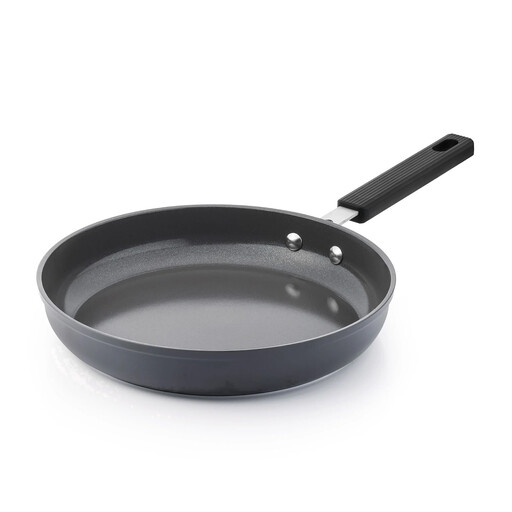
Why This Fits Their Persona: Ideal for daily tasks like making omelets or searing smaller portions. The 9.5-inch (24 cm) size is a practical standard for most households. The clear declaration of being toxin-free provides peace of mind for health-conscious users.
The pan is explicitly declared as PFAS-free, lead-free, and cadmium-free, thus avoiding the trap of misleading claims. The aluminum body ensures solid heat conduction in this price range.
Compatible with all stovetops, including induction. The heat-insulating handle offers extra safety when handling on the cooktop.
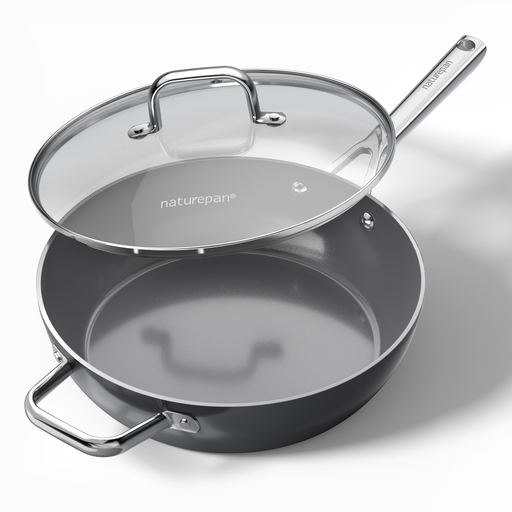
Why This Fits Their Persona: Perfect for families or anyone who enjoys cooking larger quantities. The high sides and included lid make this 28 cm pan a versatile tool for braises, sauces, and stews.
The titanium-ceramic coating, reinforced with diamond and titanium particles, directly addresses the trap of short-lived durability. The optimized base ensures even heat distribution and prevents hot spots.
Extremely versatile: Works on all stovetops and is an oven-safe pan up to 260°C (500°F). The stainless steel handle stays cool on the stovetop.
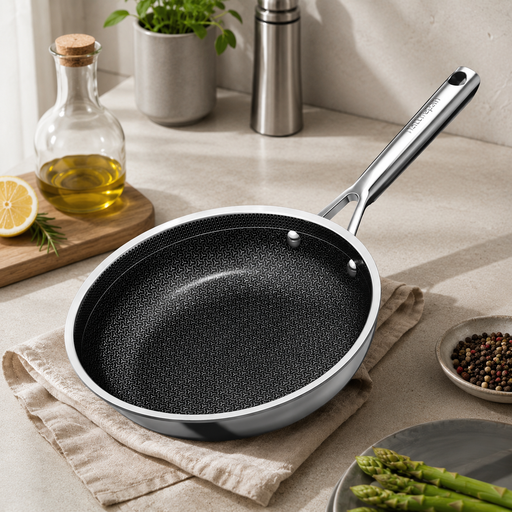
Why This Fits Their Persona: For users who appreciate the high-heat searing of stainless steel but don't want to give up the convenience of a non-stick surface. The hybrid technology is designed for steaks, fried potatoes, and other dishes that require high heat and excellent browning.
The 5-ply hybrid construction with a stainless steel core and laser-etched honeycomb pattern is designed for maximum durability and heat stability. This counteracts the pitfalls of short lifespan and uneven heat distribution.
Combines the searing properties of stainless steel with the non-stick performance of ceramic. According to the manufacturer, the surface is particularly robust and scratch-resistant. Oven-safe up to 260°C (500°F).
We have compiled a complete, up-to-date list of products that fully meet these strict selection criteria and safety standards.
To protect the non-stick coating, you should follow a few basic rules. Only use utensils made of wood, silicone, or plastic. Avoid heating the empty pan on the highest setting. Although many pans are declared dishwasher-safe, washing by hand with a soft sponge and mild dish soap is gentler and recommended to maximize its lifespan.
The primary health benefit of a ceramic pan is that, when manufactured correctly, it is PFAS-free. This means it does not release any of these potentially harmful chemicals into your food. It also allows for cooking with very little oil, which can contribute to lower-fat meal preparation.
No. A pan is only suitable for induction if its base is made of a magnetizable (ferromagnetic) material. A pure aluminum or copper pan will not work. When purchasing, look explicitly for the "induction-compatible" label or the spiral induction symbol on the packaging or the bottom of the pan.