
Lieferung heute & morgen

Qualitätsgarantie

Willkommens-Angebote freischalten: KOSTENLOSE Lieferung | Bis zu 80 % RABATT | Kostenlose 30-Tage-JoyPlus-Testphase
App herunterladen
An immersive viewing experience, where the colours from the screen's content are projected beyond the edge of the television and onto the wall, was long a feature of specific TV models. Today, retrofitting Ambilight is possible for almost any television and is more accessible than ever. However, the market is flooded with products that promise more than they deliver. Many users invest in a TV backlight only to be disappointed by inaccurate colours, flickering lights, or complicated technology.
As your Joybuy Product Recommendation Officer, I will help you recognise the typical marketing traps and make an informed decision. We will focus on the objective criteria that define a quality retrofitting solution.
Before you make a decision, you should be aware of the three most common issues that can lead to a poor purchase:
To avoid these pitfalls, you should focus on three core technical parameters. These significantly determine the quality and functionality of your setup.
The method used to capture colours from the screen is the most important factor.
For most users seeking a flexible and straightforward solution, a system with a high-quality camera is the more practical choice.
The type of LEDs used determines the quality of the colour transitions.
Pay attention to the details to ensure seamless integration:
Here are some recommendations tailored to different user profiles and their requirements.
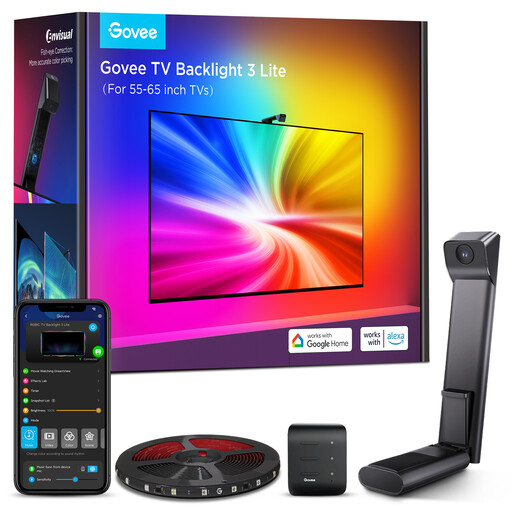
Why This Fits Their Persona: Ideal for users seeking a complete, screen-synchronised experience without needing a premium budget. This kit offers proven technology from a well-known manufacturer in this segment and is an excellent entry point into the world of immersive lighting.
This system uses a camera for colour detection, making it universally compatible with all content. Thanks to RGBICW technology, it also displays multiple colours simultaneously, avoiding the "block effect" of cheap RGB strips.
Complete package with a camera, RGBICW LEDs, and smart control via app and voice. The "W" in RGBICW stands for a dedicated white light, which provides more natural illumination.
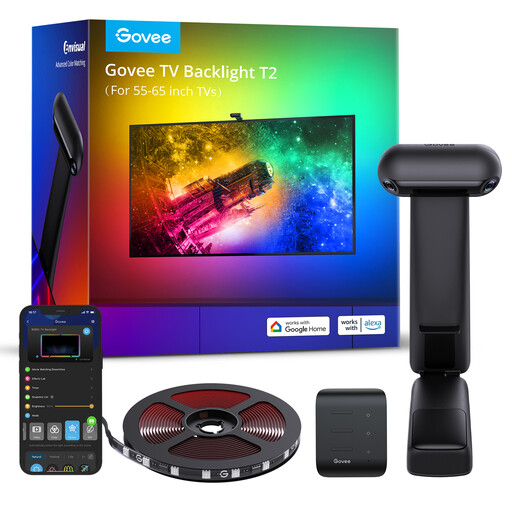
Why This Fits Their Persona: For users who demand maximum colour accuracy and the best possible immersion. This system is aimed at home cinema lovers looking for a high-performance Philips Ambilight alternative and are willing to invest for noticeably higher precision.
The dual-camera structure directly addresses the weakness of many single-camera systems: inaccurate detection at the screen edges. By splitting the image across two cameras, it achieves more precise and faster colour analysis over the entire screen area.
The dual-camera setup provides a visibly higher accuracy in colour reproduction. The high density of the RGBIC LEDs also allows for exceptionally smooth and detailed lighting effects.
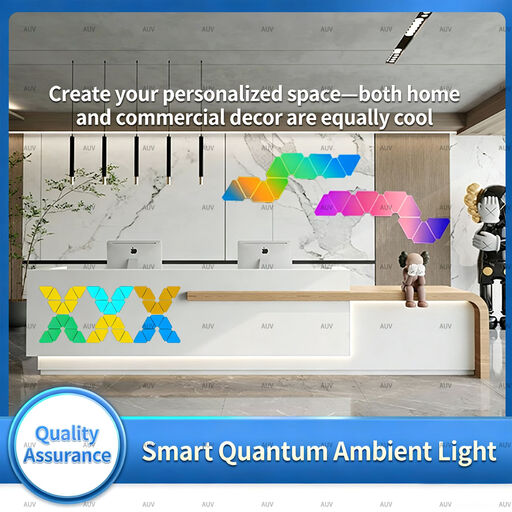
Why This Fits Their Persona: Perfect for gamers and creatives who want to incorporate not just the TV but the entire room into their lighting setup. The modular design allows for custom layouts, making the wall itself part of the gaming room lighting.
Instead of relying on potentially inaccurate screen synchronisation, this system focuses on precise music sync and customisable scenes. It bypasses the TV sync trap by offering a different kind of immersion for gaming and music.
Fully modular and creative setup (DIY splicing). The lights react in real-time to music and game soundtracks, creating a dynamic atmosphere that extends beyond the screen.
We have compiled a complete, up-to-date list of products that fully meet these strict selection criteria and all relevant safety standards.
Do camera-based TV backlights work with Netflix and other streaming apps? Yes, this is the key advantage of camera-based systems. Since the camera captures the image physically displayed on the screen, the lighting is compatible with all content, including your smart TV's internal apps, external streaming devices, and game consoles. Solutions with an HDMI sync box cannot do this.
How accurate is the colour detection on camera-based systems? The accuracy depends on the quality of the camera and the calibration software. Modern systems use specialised cameras, sometimes even with fisheye lenses or a dual-camera setup, to increase precision. For an optimal result, it is important to carefully perform the calibration via the companion app and to minimise direct light reflections on the screen.
Can an RGBIC LED strip affect my TV's lifespan? When installed correctly and using a quality product, there is no risk to your television. The LED strips are attached to the back of the TV's casing and generate only minimal heat, which is dissipated by normal air circulation. Power is supplied via an external adapter, so the TV's internal electronics are not burdened.