
Lieferung heute & morgen

Qualitätsgarantie

Willkommens-Angebote freischalten: KOSTENLOSE Lieferung | Bis zu 80 % RABATT | Kostenlose 30-Tage-JoyPlus-Testphase
App herunterladen
Philips Sonicare replacement brush heads are accessories that need to be replaced regularly when using an electric toothbrush. Even so, buying the wrong product can often lead to unnecessary costs: a seemingly affordable multipack may not fit your existing handle, the bristles may be too firm for sensitive teeth, or a whitening version may be mistaken for a general daily-cleaning brush head.
This buying guide explains what adults and families in Germany should look for when choosing Philips Sonicare brush heads. The focus is on compatibility, bristle firmness, replacement intervals and the intended use.
Not every Philips brush head automatically fits every handle. The key factor is the brush-head system. The models presented here mainly use the Philips Sonicare Click-on or Snap-on system. There may be restrictions with Philips One handles.
Before buying, you should therefore:
Philips Sonicare Optimal White and similar models are designed to remove certain surface stains. This is not the same as medical teeth whitening or changing the natural colour of your teeth. If you have sensitive teeth or existing problems, you should discuss your choice with your dental practice.
A pack containing six or eight brush heads may seem attractive at first glance. However, if you choose a version that is too firm or do not replace the brush heads regularly, there is no practical benefit. As a general guide: replace the brush head every 3 months, or sooner if the bristles become frayed or damaged.
Extra-soft or soft bristles may be suitable for sensitive teeth and sensitive gums. For example, Philips Sonicare Sensitive S2 brush heads are described as having more than 3,000 particularly soft bristles. Use only light pressure when brushing.
Models with medium bristles, such as ProResults or Optimal White, are aimed more at users looking for classic daily cleaning or the removal of surface stains. However, medium bristles are not automatically suitable for everyone.
Claims such as “up to 62,000 brush movements per minute” come from the respective product descriptions and refer to Sonicare technology. They are not a substitute for correct brushing technique.
For one person, a four-pack lasts approximately one year when the brush head is replaced every three months. A two-pack is suitable if you want to try a model first or do not want to stock up for the long term. For frequent users and families, six or eight brush heads can make reordering easier.
BrushSync-compatible handles can remind you when it is time to replace the brush head, where supported. On some models, the blue indicator bristles also become lighter over time. Nevertheless, the condition of the bristles and the instructions for use remain the deciding factors.
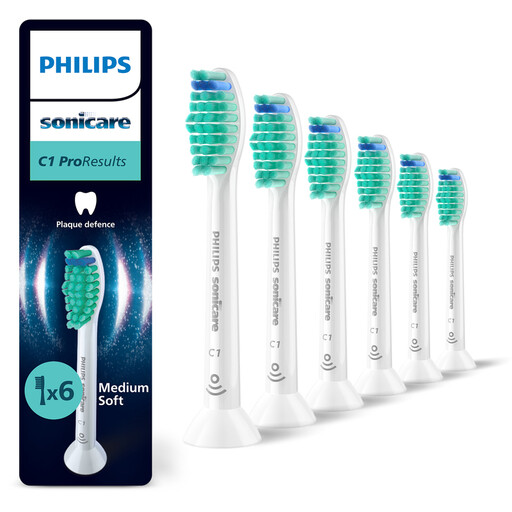
Why this product suits this profile: The six-pack provides a supply for regular replacements. Its contoured W-profile and medium bristle firmness are designed for classic daily cleaning.
The pack size reduces the need for frequent reordering without paying for a special feature that is not needed in everyday use.
Six brush heads, Click-on system and compatibility with Philips Sonicare Click-on handles according to the product information.
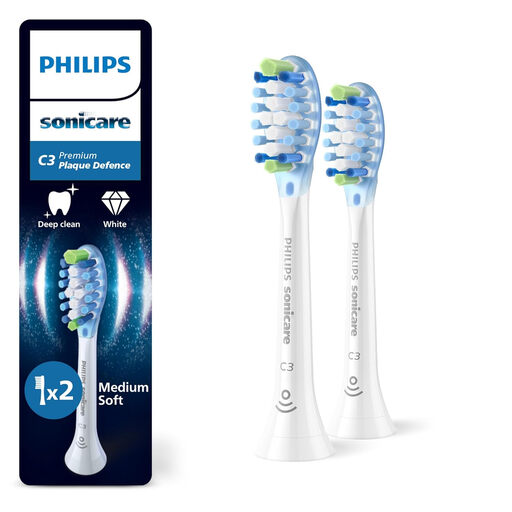
Why this product suits this profile: The dense bristle arrangement and flexible construction are designed to clean along the gumline and reach difficult-to-access areas.
The specific C3 version makes its intended use clear instead of simply promoting it with a general premium label.
Original Philips Sonicare brush heads in a two-pack; BrushSync support is specified for compatible handles.
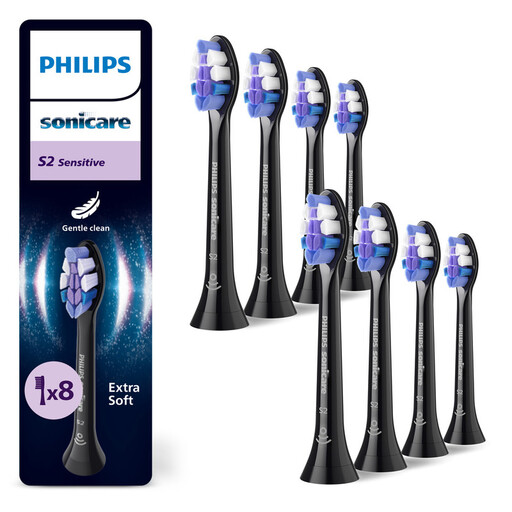
Why this product suits this profile: Extra-soft bristles and eight brush heads combine a gentler approach with a long-lasting supply for regular replacements.
The bristle firmness is clearly specified as extra soft. This helps you avoid accidentally choosing a medium-bristle model for sensitive areas.
Eight pieces per pack, Click-on attachment and BrushSync replacement reminder according to the product description.
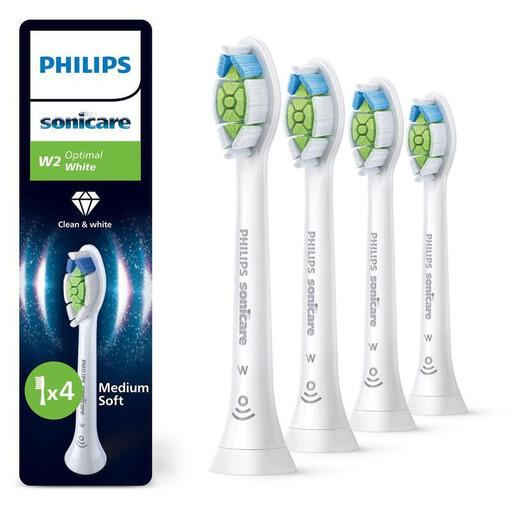
Why this product suits this profile: The diamond-shaped bristle area is designed to remove surface stains and complement your daily clean.
Its focus on surface stains is clearly distinguished from medical teeth whitening. This profile is not the right choice for sensitive areas.
Four brush heads, medium bristles and Click-on compatibility with Philips Sonicare handles according to the product information.
We have put together a complete, regularly updated list of products that fully meet these strict selection criteria and the safety regulations applicable in the EU.
With the handle switched off, place the brush head straight onto it until it clicks securely into place. Wet the bristles, apply toothpaste and let the handle do the work using light pressure. After each use, rinse the brush head thoroughly and allow it to air-dry.
Brush heads should not be shared. Loose or damaged bristles are a reason to replace the brush head immediately. Small parts may pose a choking hazard to children under three and should be kept out of their reach.
As a general guide, replace the brush head every three months. Replace it sooner if the bristles become frayed, bent or loose. On compatible models, BrushSync and indicator bristles can also remind you when it is time for a replacement.
Many Philips Sonicare brush heads fit Click-on or Snap-on handles from the same product family. However, this does not apply universally to every model. Check particularly whether your handle belongs to the Philips One range, as compatibility restrictions may apply.
Models with extra-soft or soft bristles, such as the S2 Sensitive, are available for this purpose. Use only light pressure. If you experience persistent gum bleeding, pain or discomfort, stop using the brush head and seek dental advice.