
Lieferung heute & morgen

Qualitätsgarantie

Willkommens-Angebote freischalten: KOSTENLOSE Lieferung | Bis zu 80 % RABATT | Kostenlose 30-Tage-JoyPlus-Testphase
App herunterladen
A Philips Sonicare electric toothbrush can vary significantly by model in terms of its pressure sensor, cleaning programmes, battery life and what’s included in the box. Many buyers, however, focus first on the number of brush movements or terms such as ‘Premium’. This can mean important everyday questions get overlooked: is a travel case included? Is there only one cleaning programme? Can you lower the intensity if you have sensitive gums?
This buying guide explains which features you can compare objectively and which Philips Sonicare toothbrush may suit different needs.
Models with up to 62,000 brush movements per minute may look powerful on paper. But pressure control, a timer and ease of use matter too. If you tend to brush too hard, a clear sensor is likely to be more useful than a higher technical specification.
An electric sonic toothbrush with five or more programmes gives you more choice. In everyday use, however, many people mainly use ‘Clean’ or ‘Sensitive’. So check whether you really need several modes, or whether a simpler model with one programme will do.
‘Up to 14’ or ‘up to 21 days’ refers to specific usage scenarios, often brushing twice a day. Actual battery life may vary if several people use the toothbrush or you brush for longer. For travel, it’s also worth checking whether a sonic toothbrush travel case or even a charging travel case is included.
A sonic toothbrush with a pressure sensor vibrates, lights up or gives another type of feedback when you press too hard. According to the product details, the Philips Sonicare 3100 HX4033/32 uses haptic feedback to warn you. Higher-spec models such as the DiamondClean range also use coloured signals.
The sensor doesn’t replace a careful brushing technique. It’s particularly useful if you tend to brush with a lot of pressure or prefer a low intensity setting.
An electric toothbrush with a timer should have at least a two-minute timer. The BrushPacer or QuadPacer also signals every 30 seconds to prompt you to move to the next area of your mouth. This helps you spread your brushing time more evenly.
Check whether the timer stops automatically or simply gives you a signal. The Philips Sonicare models in this selection use SmarTimer and BrushPacer, depending on the range.
Entry-level models often have a ‘Clean’ programme and two or three intensity settings. Higher-spec ranges offer programmes such as ‘Sensitive’, ‘White’, ‘Gum Health’ or ‘Deep Clean’. These names describe different modes of operation, but they are not medical claims.
A low intensity setting may be useful if you have sensitive teeth or gums. If you already have any concerns, discuss using the toothbrush with your dental practice.
An electric toothbrush with long battery life shouldn’t be judged on the number of days alone. Also check:
The product details for the models below state battery life of up to 14 or 21 days. Actual battery life depends on use and charge level.
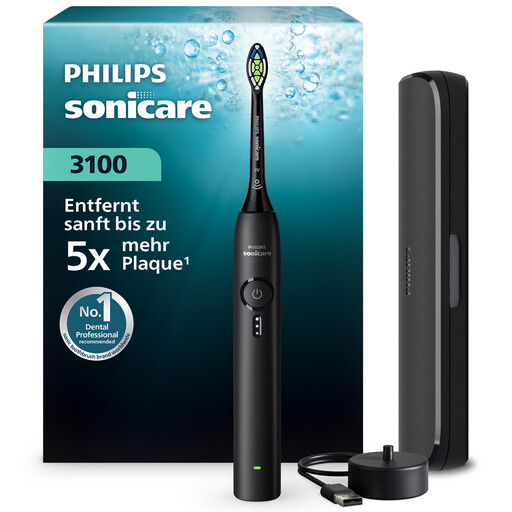
Why it suits these needs: This range is straightforward to use, with a Clean programme, three intensity settings and battery life of up to 14 days, according to the product details.
It has a pressure sensor, SmarTimer and BrushPacer, without adding multiple programmes that could make choosing a setting unnecessarily complicated.
Up to 31,000 brush movements per minute, a haptic pressure sensor and a travel case included.
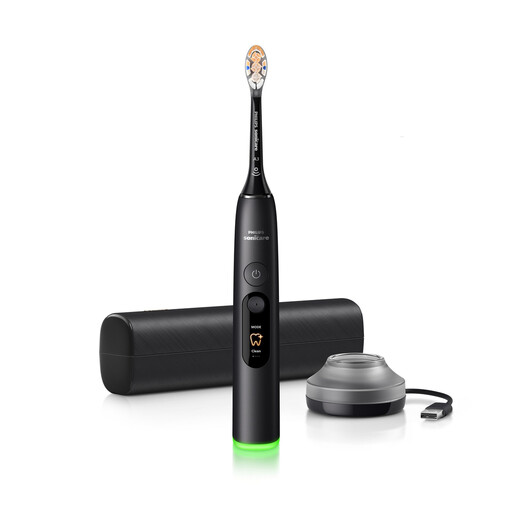
Why it suits these needs: Five programmes, three intensity settings, app connectivity and an interactive display are ideal for anyone who wants detailed control over their brushing routine.
The features are clearly set out: programmes, intensity settings, sensor feedback and what’s included can all be checked separately.
Five programmes, three intensity settings, a Bluetooth app, coloured pressure feedback and up to 14 days’ battery life, according to the product description.
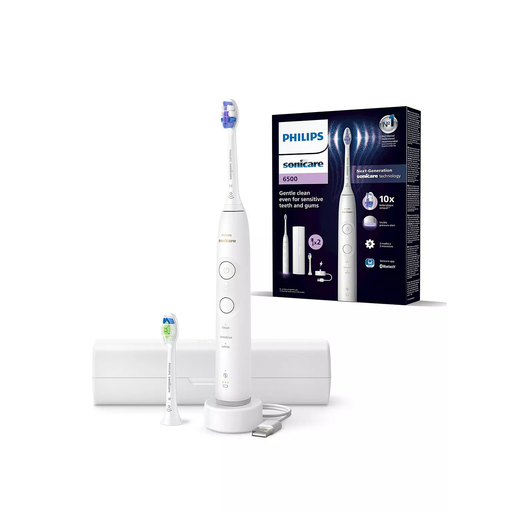
Why it suits these needs: Three programmes, nine programme and intensity combinations, app support and battery life of up to three weeks cater to a range of different uses.
The longer stated battery life means less frequent charging, while the pressure sensor remains available across the different intensity settings.
Bluetooth app, three cleaning programmes, three intensity settings, a timer and two different brush heads, according to the product details.
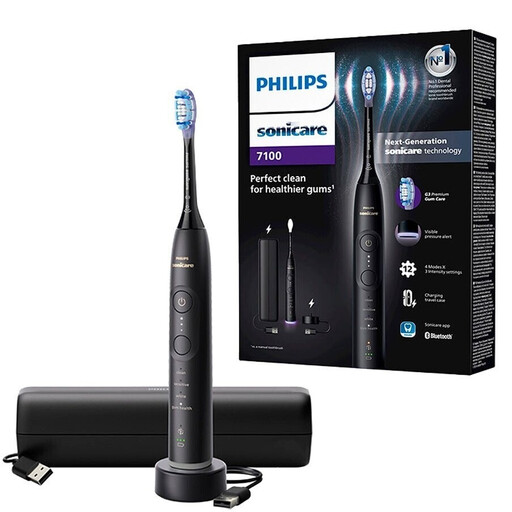
Why it suits these needs: Four modes, three intensity settings, Bluetooth connectivity and a USB travel case make this a good option if you want the same features when you’re away from home.
According to the product details, the travel case is more than just a storage case: it can also be used for USB charging.
Up to 21 days’ battery life, four programmes, a pressure sensor, app connectivity and a USB travel case, according to the product description.
We’ve put together a complete, regularly updated list of products that meet these strict selection criteria and fully comply with the safety regulations in force in the EU.
Depending on the range, the product details state battery life of up to 14 or 21 days with regular use. Actual battery life depends on intensity, brushing time and charge level. For longer trips, a model with a travel case or USB charging is a good choice.
Many Philips Sonicare handles use push-on brush heads. However, check the compatibility details for your chosen model before buying. Replace brush heads when they show visible signs of wear or as advised by the manufacturer, usually after about three months.
An app can make brushing times, reminders and certain types of feedback easier to follow. It’s particularly useful if you enjoy using technology and will check these features regularly. If you only need a timer and pressure sensor, a model without Bluetooth may be all you need.