
Lieferung heute & morgen

Qualitätsgarantie

Willkommens-Angebote freischalten: KOSTENLOSE Lieferung | Bis zu 80 % RABATT | Kostenlose 30-Tage-JoyPlus-Testphase
App herunterladen
A phone case should protect your smartphone in everyday use, while also feeling comfortable in your hand and not getting in the way of the camera, buttons or charging accessories. In practice, unsuitable purchases are often caused not by a lack of choice, but by inaccurate information and choosing a case that does not match the way you use your phone.
An iPhone case for the iPhone 16 will not automatically fit an iPhone 16 Plus or another model. Differences in the camera module, button positions, dimensions and cut-outs can already be decisive within the same model family. An iPhone 17 Pro case and an iPhone 17 Pro Max case are not interchangeable either.
The same applies to Samsung: a Samsung Galaxy case for the Galaxy S25 will not necessarily fit the Galaxy S25+ or the Samsung Galaxy S25 Ultra. Before buying, check the exact model name in your smartphone’s settings or on the original packaging.
An ultra-thin phone case with, for example, a material thickness of 0.6 mm can reduce scratches and everyday signs of use. However, by design, it offers less room for additional impact absorption than a multi-layer case with considerably more cushioning.
Claims such as ‘military-grade protection’ should only be assessed in relation to specific testing conditions. Key details include the drop height, which sides were tested and whether the smartphone itself or just the case was tested.
A MagSafe phone case or phone case with a magnetic ring can make it easier to use compatible mounts and chargers. However, the magnetic connection is not automatically equally strong with every accessory. Product information may also state that magnets can interact with medical devices. People with such devices should observe the safety distance specified by the manufacturer and, if in doubt, ask the device manufacturer or a doctor.
Look out for:
A raised edge around the camera and screen can provide additional clearance on flat surfaces. However, it is no substitute for careful handling and will not protect against every drop.
Polycarbonate (PC) is a rigid plastic, while thermoplastic polyurethane (TPU) is typically used for flexible frames and grip areas. Combining a PC back with a TPU frame can bring together different properties: shape retention on the back and more flexible fitting around the edges.
A transparent phone case keeps the device visible, but its appearance can deteriorate due to UV light, heat, skin oils and cleaning products. Anti-yellowing coatings are therefore a relevant product specification, but they do not guarantee permanently unchanged transparency.
For the office, home and everyday journeys, a slim case with raised edges is often sufficient. If you use your smartphone on building sites, while cycling or frequently outdoors, look for reinforced corners, a grippy surface and specific information about drop, water and dust protection.
A rugged smartphone or outdoor phone is an alternative if you want the protective construction to be built into the device itself. These models are generally larger and heavier than conventional smartphones. Depending on the model, they may offer features such as IP68, IP69K or MIL-STD-810H ratings. These standards should always be understood as technical specifications of the specific product, not as a general guarantee for every everyday situation.
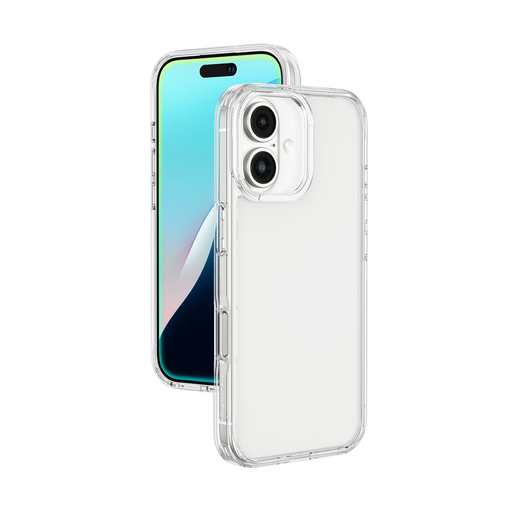
Why this product suits this profile: This transparent case is aimed at people who want to keep their iPhone 16 visible while looking for practical everyday protection.
The product information specifies compatibility with the iPhone 16, as well as raised edges around the camera and screen. The stated drop test of up to 2 m should be understood as a specific test result, not a general guarantee against damage.
Transparent PC back, TPU frame, EasyTouch buttons and DefendEdge edges according to the product description.
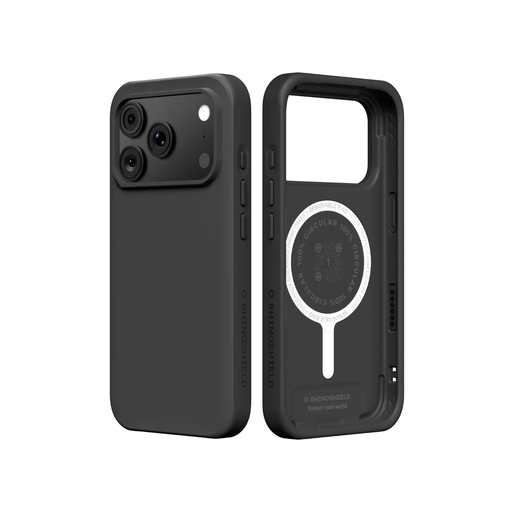
Why this product suits this profile: Suitable for people who use MagSafe accessories and want to combine reinforced corners with a minimalist design.
The description specifies compatibility with the MagSafe system, reinforced edges and internal corner grooves. According to the supplier, the claim of absorbing up to 71% of impact force has been validated under standard conditions.
Mono-material design, BPA-, BPS- and BPF-free construction according to the product information, plus support for camera controls.
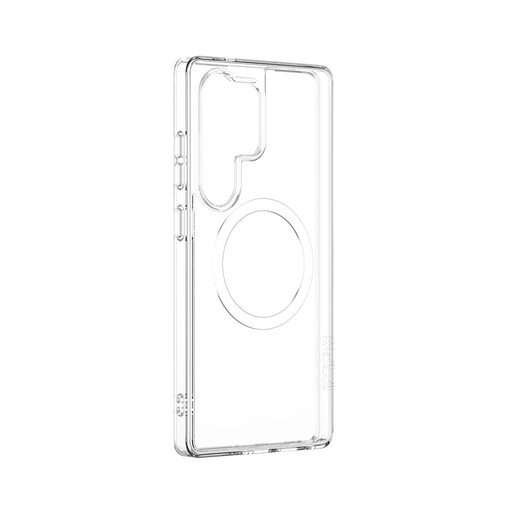
Why this product suits this profile: This case combines a visible smartphone back with a slim construction and an interface for compatible magnetic accessories.
Compatibility with the Galaxy S25 Ultra and the 0.6 mm material thickness are clearly stated. This makes it easier to check the fit than with general Galaxy compatibility claims.
0.6 mm design, PC/TPU construction, magnetic ring and anti-yellowing coating according to the supplier’s information.
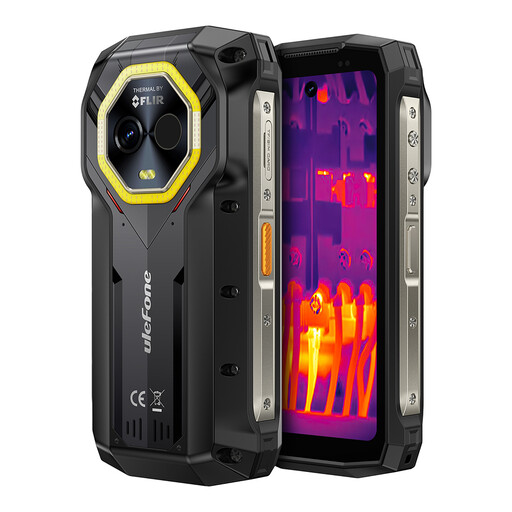
Why this product suits this profile: For outdoor, work and technical use, a robust smartphone can be more practical than adding a shockproof case to a standard device.
Rather than adding a case, the device itself is specified with IP68, IP69K and MIL-STD-810H ratings according to the product information. Suitability for a specific use still depends on the environment and how the device is handled.
5G, dual SIM, 6200 mAh battery, thermal imaging camera and 256 GB storage according to the product description.
We have put together a complete, regularly updated list of products that fully meet these strict selection criteria and the safety regulations applicable in the EU.
Look for reinforced corners, flexible frames, raised edges and clear information about drop testing. A shockproof case can reduce the risk of damage from everyday drops, but it cannot guarantee protection under every condition. For building sites or outdoor use, a rugged smartphone with stated protection standards may be more suitable.
Its lifespan depends on the material, UV exposure, heat, cleaning products and mechanical stress. An anti-yellowing coating can reduce visible changes. Replace the case if cracks, permanently loosened edges or damaged magnetic rings appear.
Not every case is suitable for wireless charging. Check whether the specific model explicitly supports wireless charging or MagSafe. With a case featuring a magnetic ring, the ring must be correctly aligned with the charging coil and the accessory being used. Remove a damaged case or magnetic ring and check the charging connection again.