
Lieferung heute & morgen

Qualitätsgarantie

Willkommens-Angebote freischalten: KOSTENLOSE Lieferung | Bis zu 80 % RABATT | Kostenlose 30-Tage-JoyPlus-Testphase
App herunterladen
A phone holder should position your smartphone securely without unnecessarily restricting access to controls, the camera or charging function. In practice, however, poor purchases are caused not only by a lack of compatibility, but also by exaggerated marketing claims. It is therefore worth taking a close look at the mounting method, dimensions and intended use before buying.
A magnetic phone holder does not automatically work with every smartphone. MagSafe is integrated into iPhones from the relevant model generation onwards; many Android devices, on the other hand, require a suitable metal ring or compatible case. Claims such as ‘strong magnet’ are therefore no substitute for checking compatibility specifically.
The charging function also deserves attention. A holder may remain attached to the smartphone, but it must be designed so that it does not interfere with the phone’s position on the charger. According to the product information, the Baseus MagPro II is intended for use with MagSafe chargers. Other models require a metal ring, which is not included.
A suction cup behaves differently on a smooth, dry, non-porous surface than on a textured dashboard. An air vent clip can save space, but it will not fit every ventilation grille. With a car phone holder, you should also check that your field of vision, controls and airbags remain unobstructed.
Outdoor surfaces come with additional limitations. According to the manufacturer’s specifications, the DJI Osmo Action Suction Cup Mount is intended only for smooth, flat, non-porous surfaces and activities without strong impacts. When used on vehicles, a level road and a speed below 80 km/h are specified.
360-degree rotation, folding arms or extendable poles are only useful if the joints hold their position under the weight of the smartphone. On cheaper models, a joint that moves too freely can cause the camera angle to drop. The locking mechanism, the holder’s own weight and the specified load limit are therefore crucial.
A holder for 4.7 to 7.0 inches covers many current smartphones. If your device has a thick case, however, the maximum clamp width must still be sufficient. The maximum load capacity is also relevant for a smartphone tripod. According to the product data, the Rollei Smartphone Traveler Tripod is designed to support up to 2 kg, while the safety instructions specify use with smartphones and require the leg locks to be fully tightened.
For video calls, a simple phone stand with an adjustable angle is often enough. If you film frequently, you may need portrait and landscape orientation, a remote control or a flexible design. A selfie stick with tripod combines a telescopic pole, stand function and remote shutter release. A smartphone gimbal, on the other hand, is aimed at users who need electronic stabilisation when recording moving footage. The right category therefore depends more on how you intend to use it than on individual marketing claims.
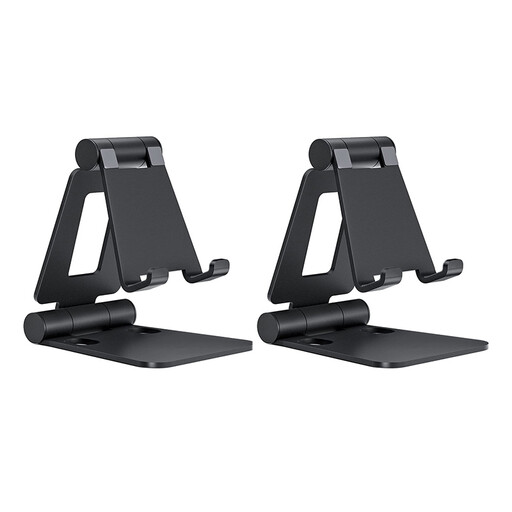
Why this product suits this profile: The two-piece set is suitable for a desk, kitchen or bedside table and requires no attachment to the smartphone.
The simple design reduces the number of moving parts and avoids compatibility issues associated with magnetic systems.
Aluminium construction, adjustable angle and two holders in the set.
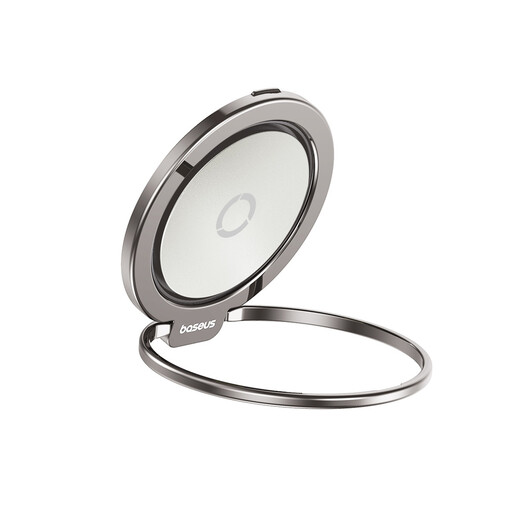
Why this product suits this profile: For MagSafe-compatible iPhones, this model combines a slim design with a ring grip and stand function.
Compatibility is stated clearly: iPhone 12 and newer with MagSafe; other devices require a metal ring.
360-degree rotation, 180-degree folding and use as a portrait or landscape stand.
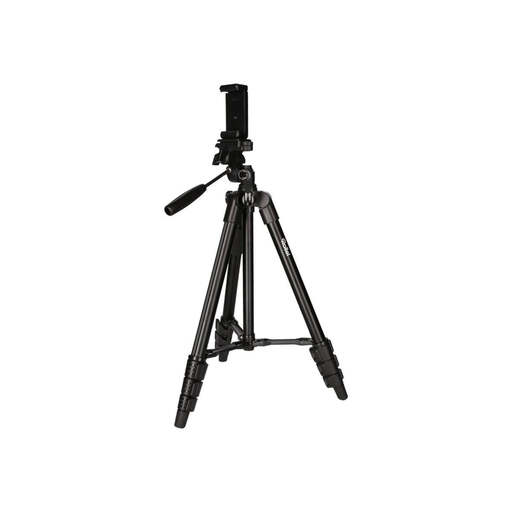
Why this product suits this profile: Travellers, vloggers and those making video calls get a height-adjustable smartphone tripod with a bag and Bluetooth remote shutter release.
The specifications state the packed size, weight, working height and maximum load capacity, making it easier to assess whether it suits your intended use.
39 cm packed size, 120 cm maximum height, 595 g weight and Bluetooth remote shutter release up to 10 m away.
We have put together a complete, regularly updated list of products that fully meet these strict selection criteria and the safety regulations applicable in the EU.
In the car, your smartphone holder must not obstruct your view of the road, airbags or controls. Navigation should only be set while the vehicle is safely parked. Before every journey, check that the clip, suction cup or magnetic base is securely attached.
With tripods, all leg locks should be fully closed. Lightweight models can topple in the wind. Small magnets, screws and button batteries should be kept out of children’s reach. To maximise the product’s lifespan, dry storage, regular visual checks and following the manufacturer’s instructions are more important than any single marketing claim.
It depends on the vehicle and the position you want. An air vent holder is compact, a suction cup is suitable for smooth surfaces, and a clamp holder can accommodate different smartphone sizes. The key requirement is always that your field of vision, airbags and controls remain unobstructed.
Not necessarily. The deciding factors are an integrated magnetic system, a compatible case or a suitable metal ring. Before buying, you should check the smartphone model, case and charging function together.
There is no universal answer. Its lifespan is affected by the materials, joints, clamping force, temperature, load and mounting surface. Regularly checking for cracks, loose screws and reduced adhesion can help you identify when it is time for a replacement.