
Lieferung heute & morgen

Qualitätsgarantie

Willkommens-Angebote freischalten: KOSTENLOSE Lieferung | Bis zu 80 % RABATT | Kostenlose 30-Tage-JoyPlus-Testphase
App herunterladen
A phone screen protector is designed to protect your screen from scratches, wear and dirt in everyday use. However, not every protective solution fits every smartphone or phone case. If you focus only on a high hardness rating or particularly sweeping marketing claims, you may end up buying a product that peels away, affects touch control or does not improve visibility in everyday use.
This buying guide explains which features matter before you buy and which solutions are suitable for commuters, heavy users and owners of Samsung Galaxy and iPhone models.
A 9H screen protector is often advertised as particularly durable. The rating generally describes the surface’s scratch resistance according to a specific testing scale, but it does not guarantee that the glass will remain undamaged after every drop. Even 9H glass can break under heavy pressure, bending or impact.
The combination of material, fit and proper use is therefore important. A damaged protector should be replaced for safety and functional reasons.
A full-cover screen protector often extends right to the edges of the screen. This can improve coverage, but with some phone cases it also increases the risk of the edges being lifted. A case-friendly screen protector usually leaves a small gap around the edge so that the case does not press against the glass.
You should therefore check the exact smartphone model before ordering. The Samsung Galaxy S25, S25+, S25 Ultra and S25 Edge have different dimensions and screen shapes.
A bubble-free installation does not depend solely on the screen protector. Dust, fingerprints and inaccurate alignment can cause air bubbles or an uneven fit, even when an installation aid is provided. A low-dust environment, thorough cleaning and a suitable alignment system are crucial.
Traditional tempered glass provides a firm surface and is often specified with 9H hardness. It is suitable for users who prefer a smooth, glass-like feel. However, rigid glass can be more difficult to apply on screens with heavily curved edges.
Hybrid glass screen protectors combine a glass or ceramic layer with a more flexible film layer. This allows the material to adapt more effectively to certain screen shapes. Flexible protective glass is not unbreakable: this material can also be damaged by excessive stress and should not be folded or bent sharply.
The available products list different specifications. For example, the 3MK FlexibleGlass for the Samsung Galaxy S25 is 0.3 mm thick and described as having a 7H ceramic layer. Other models, such as those from Spigen or 3MK for the Galaxy S25+, are specified with 9H hardness. These figures should be understood as product features, not as a complete guarantee against damage.
Look out for:
A protector for the Samsung Galaxy S25 Ultra is not automatically compatible with the Galaxy S25. With the ultrasonic fingerprint sensor, it may be useful to register your fingerprints again on the smartphone after installation if recognition is affected.
A glossy surface largely preserves the screen’s original image quality and feels similar to the original display. A matte surface can reduce reflections and visible fingerprints, but may slightly alter perceived brightness or colour saturation.
A privacy screen protector for the iPhone 17 Pro Max is an interesting option for commuters and office use. The VoxorAI protector is described as making the screen appear darker when viewed from the side. Actual visibility depends on the viewing angle, brightness and surroundings. Careful handling of your smartphone remains essential when viewing confidential content.
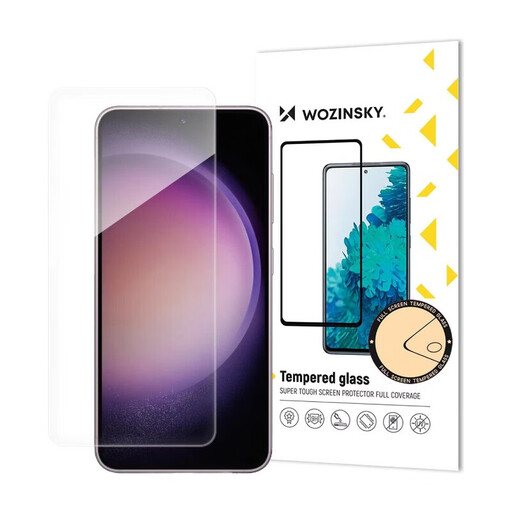
Why this product suits the profile: The flexible design covers the Galaxy S25 screen from edge to edge and is designed for straightforward installation.
The flexible full-cover design reduces the risk of rigid glass not sitting neatly along the edges. The product description states that it can be applied without adhesive and with minimal bubbling.
Edge-to-edge coverage, flexible construction and protection against scratches and dirt.
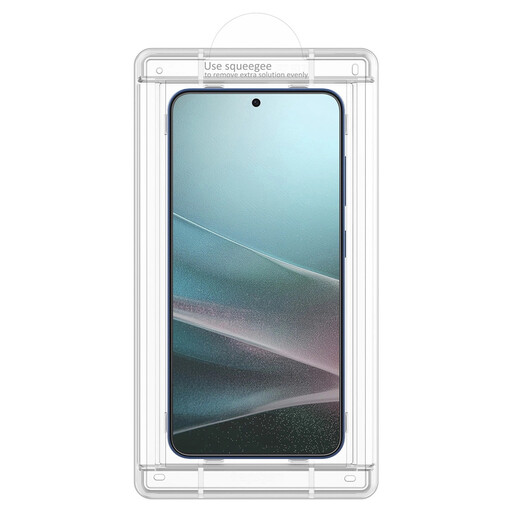
Why this product suits the profile: If you prefer precise alignment and a smooth, clear surface, this solution comes with an EZ-Fit installation frame.
The alignment frame addresses the common problem of a protector being applied at an angle. The stated 9H hardness is specified as a clear product feature.
EZ-Fit alignment, a transparent finish, 9H glass and, according to the product details, high touch sensitivity.
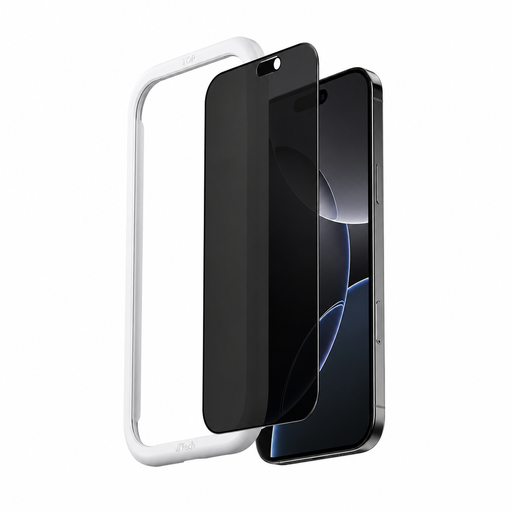
Why this product suits the profile: The integrated privacy function is designed for people who use their iPhone on trains, public transport or in the office.
The side-view privacy feature helps prevent prying eyes. The product details also mention automatic adhesion and a one-click installation aid.
9H glass, resistance to fingerprints and oil, plus the described privacy protection for the iPhone 17 Pro Max.
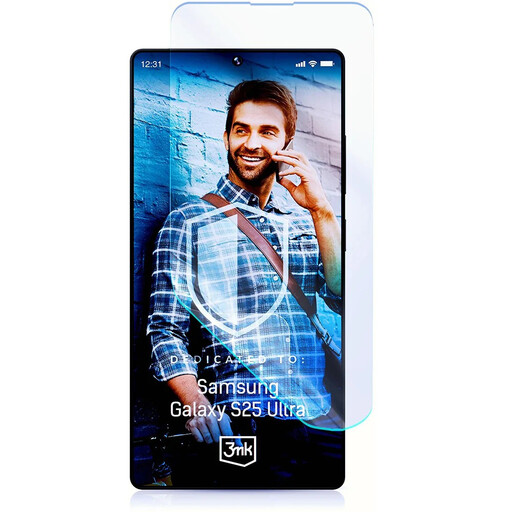
Why this product suits the profile: The combination of hybrid material, slim construction and installation aid is designed for heavy users who use their smartphones frequently.
The Fit-In positioning and the described cleaning process with Dust-Fix strips help prevent dust particles and misalignment during installation.
0.3 mm hybrid glass, support for the ultrasonic fingerprint sensor and, according to the product description, installation with minimal bubbling.
We have put together a complete, regularly updated list of products that fully meet these strict selection criteria and the safety regulations applicable in the EU.
A screen protector should not be reused once it has been removed. The adhesive layer and alignment may be affected as a result. If there are cracks, chips or lifting edges, replacement is advisable.
There is no fixed lifespan that applies in every case. Common factors include keys in the same pocket or bag, drops, friction and stress on the edge areas. Replace the protector as soon as you notice cracks, heavy scratches or lifted edges.
That depends on how you intend to use it. 9H glass offers a clearly stated surface hardness and a firm feel. Hybrid glass is more flexible and can offer advantages with certain screen shapes or a case-friendly design. The hardness rating alone does not determine overall suitability.
Installation is included with many products. Alignment trays, positioning strips or cleaning kits can make application easier, but they do not replace careful preparation. Additional costs usually only arise if you have the installation carried out by a repair or accessories service.