
Lieferung heute & morgen

Qualitätsgarantie

Willkommens-Angebote freischalten: KOSTENLOSE Lieferung | Bis zu 80 % RABATT | Kostenlose 30-Tage-JoyPlus-Testphase
App herunterladen
A good phone tripod not only stabilises your shots but also significantly expands your creative possibilities—from shake-free vlogs to perfectly lit group photos. However, the market is flooded with models whose advertised features often fail to deliver in practice. Before you make a decision, it's important to understand the most common pitfalls and know which technical features truly matter. This guide will help you make an informed choice.
Many products promise more than they can deliver. Pay close attention to these three weaknesses to avoid a bad investment:
To find the right model for your needs, you should carefully examine three technical aspects. These determine functionality, durability, and safety.
The material directly affects weight and stability.
Always pay attention to the maximum load capacity specified by the manufacturer. This should cover not only the weight of your smartphone but also any accessories like microphones or lights.
These two values define the tripod's primary use case.
The way the smartphone is attached is crucial for safety and convenience.
Based on the criteria above, we have identified a few models that are particularly well-suited for specific user groups.
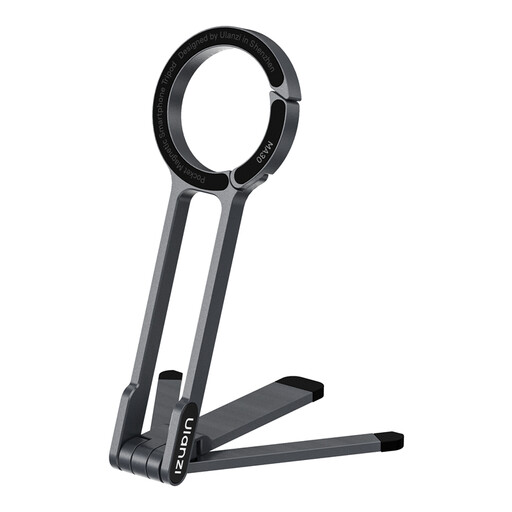
Why it's a good fit: Ideal for spontaneous shots on the go. The carabiner design allows it to be hooked onto a backpack or belt loop, while MagSafe compatibility enables setup in seconds without clamps. Perfect for vloggers and travellers who value minimal gear and maximum efficiency.
The Maglock system provides a strong magnetic hold, thus avoiding the pitfall of unreliable mounts. The 3-in-1 functionality (tripod, grip, selfie stick) is compact and thoughtfully implemented here.
Extremely portable design due to its carabiner shape and rapid deployment thanks to the magnetic mount.
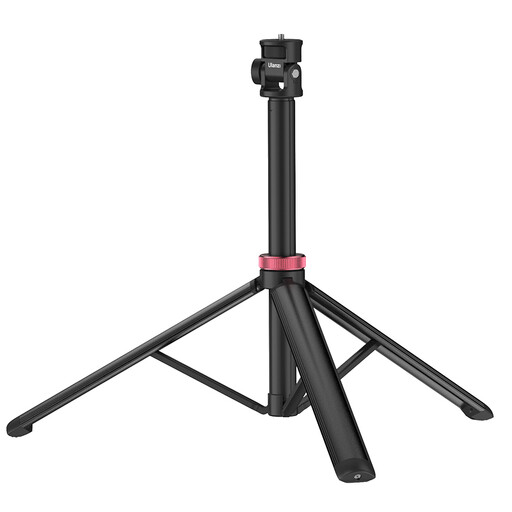
Why it's a good fit: Anyone needing maximum flexibility in recording height will find a solution here. With an extension height of over 2 metres, it's perfect for live streams while standing, shooting over crowds, or as a mount for a top-down setup. The aluminium construction provides the necessary stability.
This model avoids the pitfall of instability at full height through a solid aluminium construction and a wide base. It offers true versatility with its enormous height, rather than being just a compromise.
Outstanding maximum height of 204 cm and a 1/4" thread for mounting cameras or accessories.
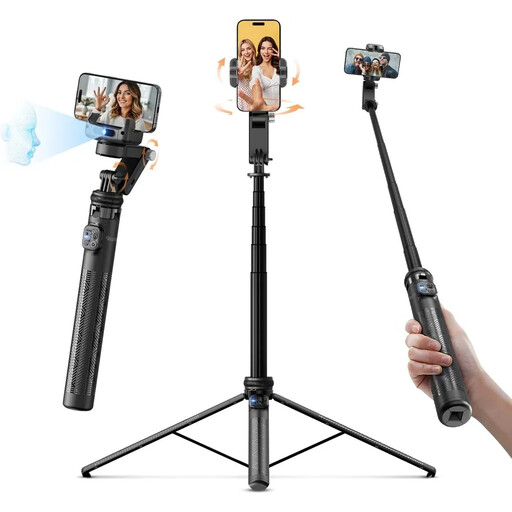
Why it's a good fit: This device combines a tripod with a motorised gimbal, AI face tracking, and gesture control. It is ideal for solo creators filming themselves or for families who want to capture dynamic yet stable videos. The gimbal function provides smooth motion shots that are impossible with a normal tripod.
It actively solves the instability problem with motorised stabilisation. Instead of being a compromise, this "all-in-one" device offers genuine technological value with AI tracking and a gimbal.
Integrated gimbal stabilisation and smart AI face tracking for professional-looking, hands-free shots.
We have compiled a full list of products that meet these selection criteria and are suitable for use in your region.
1. How stable is a phone tripod really, especially in wind? Stability primarily depends on the material (aluminium or carbon are more stable than plastic), the spread of the legs, and its own weight. In windy conditions, a tripod with a wide base and robust legs should be chosen. Some models offer a hook on the centre column where a weight (e.g., a backpack) can be attached for additional stabilisation.
2. Will any phone tripod fit my iPhone or Android device? Most tripods use an adjustable spring clamp. The crucial factor is the minimum and maximum clamp width specified in the product data. Measure the width of your smartphone (including its case) and compare it with these specifications. MagSafe tripods are specifically designed for newer iPhone models. For Android devices or older iPhones, a separate magnetic ring adapter can be attached to the phone case to establish compatibility.
3. What is the difference between a selfie stick with a tripod and a dedicated tripod? A selfie stick with a tripod is a hybrid designed for portability. The tripod legs are usually short and integrated into the handle, which limits stability and height. It is suitable for quick shots and use on flat surfaces. A dedicated travel tripod for phones or a vlogging tripod typically offers a much greater maximum height, a higher load capacity, and a more robust construction, but is less compact than a selfie stick. The choice depends on your primary use case.