
Lieferung heute & morgen

Qualitätsgarantie

Willkommens-Angebote freischalten: KOSTENLOSE Lieferung | Bis zu 80 % RABATT | Kostenlose 30-Tage-JoyPlus-Testphase
App herunterladen
As a Joybuy Product Recommendation Officer, I see users wading through countless product descriptions every day. The confusion is particularly high when searching for a phone tripod. The goal is clear: stable, professional-looking photos and videos with your smartphone. But the path to achieving this is often paved with bad purchases. Many products promise more than they can deliver, leading to frustration instead of great shots.
This guide is designed to help you recognise the common pitfalls and make an informed decision. We'll focus on the objective features that truly matter, leaving exaggerated marketing promises aside.
Before we turn to the solutions, we need to identify the problems. Many buyers regret their decision due to three recurring flaws:
To avoid these traps, you should focus on a few critical technical features. These determine whether a tripod is genuinely useful in everyday life.
The most important decision depends on your use case.
A tripod is only as good as its weakest link. Pay attention to the following points:
For travellers and mobile users, pack size and weight are crucial. A good travel tripod for a phone should be compact when folded and not weigh too much. An integrated phone mount with a remote control is standard today, but quality varies. Look for a rechargeable or easily replaceable battery and a stable Bluetooth connection.
Based on these objective criteria, we have identified a few models that offer a suitable solution for specific user groups.
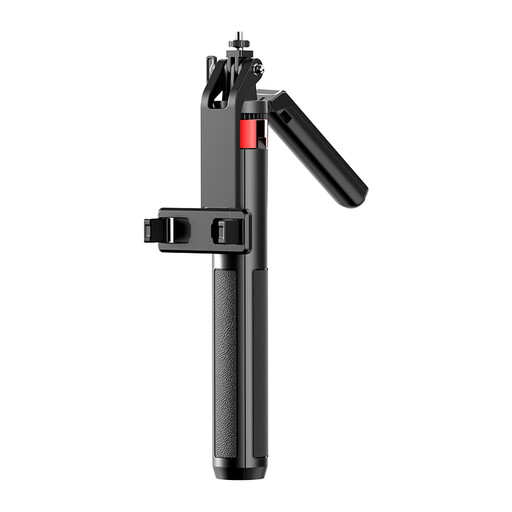
Why This Fits Their Persona: This model combines an impressive height of 180 cm with a stable quad-leg design. It's versatile enough for bird's-eye view shots while being stable enough for stationary vlogs on the go. The rechargeable remote is a practical detail for solo creators.
The four-leg construction directly addresses the "Wobble Trap," offering superior stability on uneven surfaces compared to conventional three-leg tripods.
Great maximum height (180 cm) and enhanced stability from four legs. Rechargeable remote control.
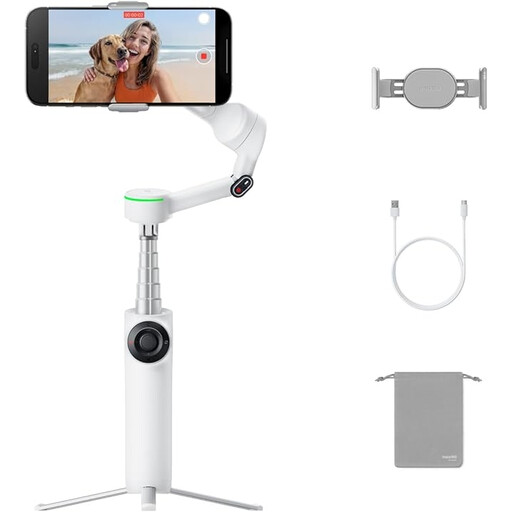
Why This Fits Their Persona: This is a fully-featured smartphone stabiliser for users who demand the highest video quality. The 3-axis gimbal ensures buttery-smooth footage, while AI-powered tracking features automate following subjects or people. It's a tool for those with creative and technical ambitions.
This device sidesteps the "Overkill Trap" by specifically targeting users who will actually need and use its advanced features. It delivers demonstrable performance that justifies its price.
Professional 3-axis stabilisation and AI-powered tracking for dynamic video shots. Integrated tripod and selfie stick.
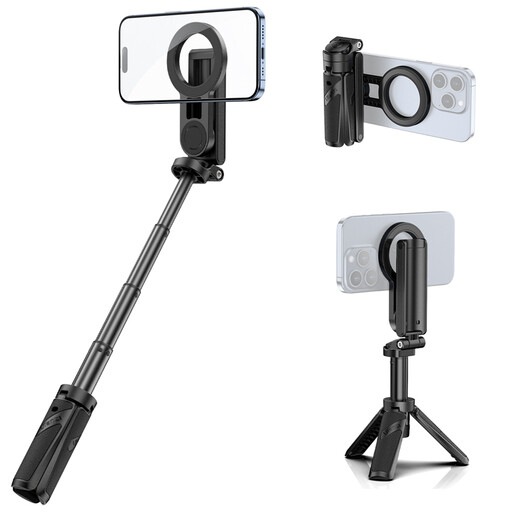
Why This Fits Their Persona: This 3-in-1 device is extremely compact and designed for rapid deployment. The magnetic mount is especially convenient for users of MagSafe-compatible iPhones (as a tripod for iPhone). It's the ideal companion for spontaneous selfies, group photos, and short video clips on the move.
It solves the "Compatibility Trap" with a fast and secure magnetic attachment, eliminating the need to fiddle with spring-loaded clamps. The Bluetooth remote is reliable and easy to pair.
Very compact and lightweight 3-in-1 design (grip, stick, tripod). Fast magnetic attachment for compatible smartphones.
We have compiled a complete, up-to-date list of products that fully meet these strict selection criteria and UK safety regulations.
What is the main difference between a phone tripod and a phone gimbal? A phone tripod is for stationary stabilisation. It fixes the smartphone in one place to prevent shake, making it ideal for static photos or videos. A phone gimbal, on the other hand, is an active system that uses motors to compensate for the user's movements (e.g., while walking) to create smooth, professional-looking video footage.
How do I ensure my smartphone will fit in the mount? Check the technical specifications of the phone mount. Manufacturers usually provide a minimum and maximum clamp width in millimetres. Measure the width of your smartphone, including any protective case you use, and compare it with the manufacturer's specifications. Also, pay attention to the maximum supported weight.
Does the Bluetooth remote work with any phone (e.g., iPhone, Android)? In most cases, the included Bluetooth remote shutters are compatible with both iOS and Android operating systems. The connection is typically established easily through the smartphone's Bluetooth settings. For some advanced features, you may need to install the manufacturer's proprietary app.