
Lieferung heute & morgen

Qualitätsgarantie

Willkommens-Angebote freischalten: KOSTENLOSE Lieferung | Bis zu 80 % RABATT | Kostenlose 30-Tage-JoyPlus-Testphase
App herunterladen
A phone tripod should hold your smartphone securely, give you the right angle and be easy to use day to day. In practice, however, some marketing claims can lead to the wrong choice. An especially compact model may not have a wide enough base, a stated range says nothing about stability, and a built-in Bluetooth shutter isn’t necessarily equally easy to pair with every smartphone.
This guide explains which features really matter when choosing a smartphone tripod. Our recommendations are for smartphone users, content creators, travellers, vloggers and anyone looking for a versatile mount for video calls, selfies or livestreams.
A mini phone tripod is easy to carry, but often has short legs and a small footprint. It’s suitable for a table or level surface, but not necessarily for uneven ground or windy outdoor conditions. Before buying, check the maximum load, the width of the base and the type of device the tripod is designed for.
A flexible tripod can be attached to railings, branches or poles. The key is whether the legs can grip the object firmly enough and whether the construction can support the combined weight of your smartphone, mount and accessories. Don’t exceed the maximum load. If the structure is moving or exposed to wind, don’t leave your smartphone attached unattended.
A phone tripod with a Bluetooth remote is useful for taking photos from a little further away, but it requires Bluetooth pairing and a suitable battery. A smartphone gimbal stabilises movement using motors, but it’s no substitute for a tripod on a firm surface. Gimbals need power, shouldn’t be used unless the smartphone is mounted correctly, and aren’t necessarily protected against moisture.
The smartphone mount should suit the width and weight of your device. With a MagSafe phone tripod, check that your smartphone or case is magnetically compatible. A magnetic connection doesn’t remove the need to check that your device is secure. Also follow the safety advice for magnetic models: keep magnets away from pacemakers, credit cards and magnetic storage media.
A 1/4-inch connection is a common mounting standard for cameras and action cameras. However, the tripod’s permitted load must still be suitable for the combined weight of the camera and accessories.
A foldable phone tripod for travel should combine a small packed size with a manageable weight. Models with a telescopic pole are handy for selfies and group photos, but can be more vulnerable to sideways forces when fully extended. A travel tripod for smartphones should therefore be used on firm ground, and you should check that all sections are locked in place before letting go.
A mini tripod is usually enough for tabletop shots. If you’re planning to film standing up or take full-length shots, you’ll need a greater working height. Details such as minimum height, maximum height and packed size are more useful than vague terms such as ‘professional’ or ‘extra stable’.
A selfie stick with tripod combines a handgrip, telescopic pole and stand. It saves you carrying extra accessories, but isn’t a substitute for a full-size camera support. A built-in cold shoe can hold a microphone or LED light, provided the total weight remains within the manufacturer’s stated limit. A gimbal may be more suitable for video with lots of movement; for static shots, a classic tripod is usually enough.
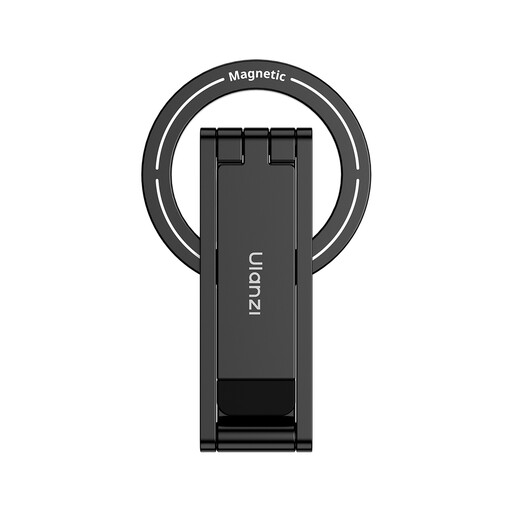
Why it suits this user: This 3-in-1 model combines a magnetic smartphone mount, mini tripod and selfie stick in a compact design. It’s a good choice if you want to carry as little kit as possible.
Its compact design is clearly positioned as a mini solution, not a replacement for a full-size camera tripod. Check the magnetic connection before letting go.
Foldable design, 14N dual-magnet system according to the product information, and use as either a tripod or selfie stick.
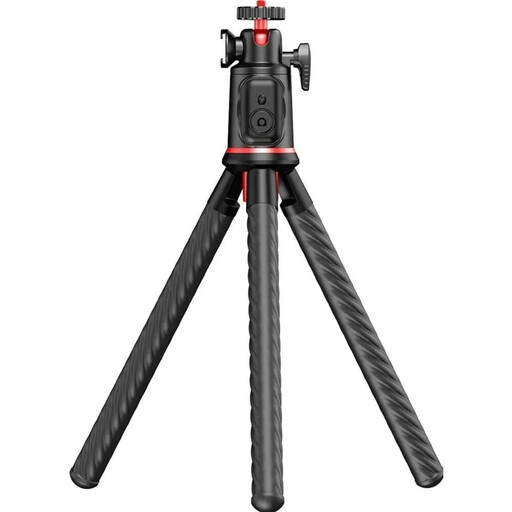
Why it suits this user: Vloggers and travellers get flexible legs, a telescopic pole and a 360-degree ball head for a range of shooting angles.
The product information specifies a maximum load of 2 kg and gives clear guidance on wrapping the legs around an object. This makes it easier to assess suitability before setting it up.
Bluetooth 5.4 remote with a range of up to 10 m according to the product information, cold shoe, 1/4-inch thread and 360-degree ball head.
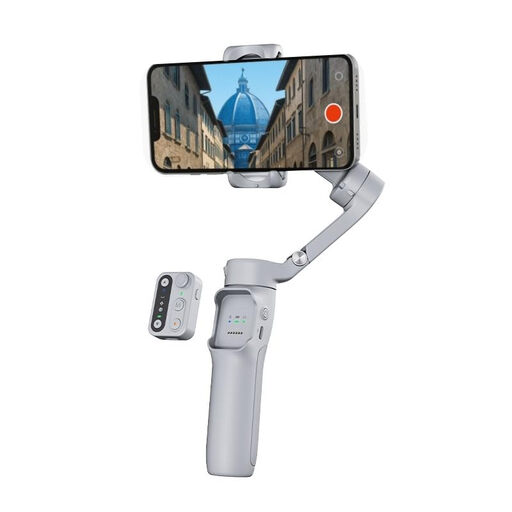
Why it suits this user: For walking shots, livestreams and dynamic vlogs, a motorised 3-axis gimbal is a good alternative to a smartphone tripod on a firm surface.
You’ll need to mount your smartphone correctly and make sure the battery is sufficiently charged. This makes the distinction clear between stabilisation while moving and a passive mount.
3-axis stabilisation according to the product information, foldable design, detachable remote and stated battery life of up to 11 hours.
We’ve put together a complete, regularly updated list of products that meet these strict selection criteria and the safety regulations in force in the EU.
The tripod should stand on a firm, level surface. Make sure all leg sections and locks are fully in place. Then check that the phone mount is secure and that the centre of gravity isn’t significantly outside the footprint of the base. With flexible legs, check they’re securely attached to the structure before letting go.
Its lifespan depends on the materials, joints, locks and how it’s used. Aluminium constructions can last a long time when treated properly. Remove dirt with a soft, slightly damp cloth. Regularly check tripod joints, screw threads and clamp mounts for looseness or visible wear.
A basic phone tripod doesn’t normally have any ongoing costs. Depending on the model, Bluetooth remotes need a button cell battery. A smartphone gimbal needs to be charged regularly. Magnetic mounts may also involve extra costs if you need a compatible case or a suitable magnetic ring.