
Lieferung heute & morgen

Qualitätsgarantie

Willkommens-Angebote freischalten: KOSTENLOSE Lieferung | Bis zu 80 % RABATT | Kostenlose 30-Tage-JoyPlus-Testphase
App herunterladen
A high-quality phone tripod is essential for creating sharp photos and shake-free videos. Yet, the market is flooded with products whose marketing promises often suggest more than the technology can deliver. Many users invest in accessories that prove to be impractical or unstable after a short time. This guide will help you identify the crucial features and make an informed decision based on your actual needs.
Before we dive into the technical details, it's important to understand the most common issues that can lead to a poor purchase.
To avoid these traps, you should focus on three objective criteria that determine the quality and longevity of a phone tripod.
A tripod's stability is directly linked to its material. Models made of aluminium generally offer greater strength and durability than all-plastic versions. Pay attention to the specified maximum payload (in kg or g). This should safely exceed the weight of your smartphone, including its case and any potential accessories (e.g., an external microphone). For a travel tripod, the packed size and its own weight are also important factors for portability.
The tripod head determines your flexibility in framing your shot. A ball head allows for quick and smooth adjustment to almost any angle. There are two common systems for the phone mount:
A universal 1/4-inch thread on the tripod or mount is the standard for photographic accessories and ensures you can also mount other devices like compact cameras or LED lights.
The most important decision depends on your use case:
Based on these objective criteria, we have identified several models that are well-suited for specific user groups.
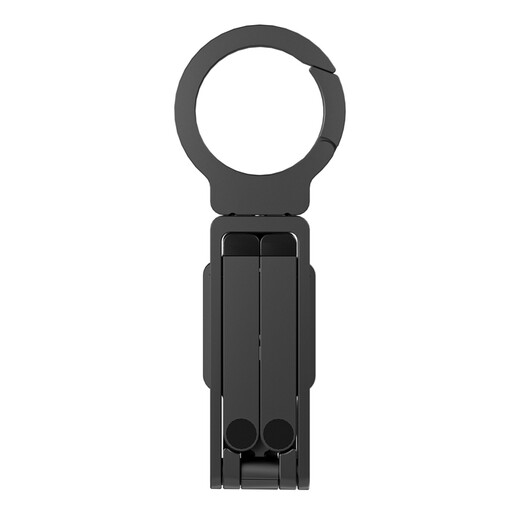
Why This Fits Their Persona: Ideal for travellers who value minimal luggage and maximum efficiency. The carabiner-style design easily clips onto a backpack, while the magnetic mount allows for setup in seconds for spontaneous shots.
The aluminium construction prevents the problem of unstable plastic parts. The magnetic mount is a modern solution to the compatibility issue, especially for users of an iPhone tripod with MagSafe.
Extremely portable and quick to deploy; robust aluminium construction; versatile use as a mini-tripod, grip, and stand.
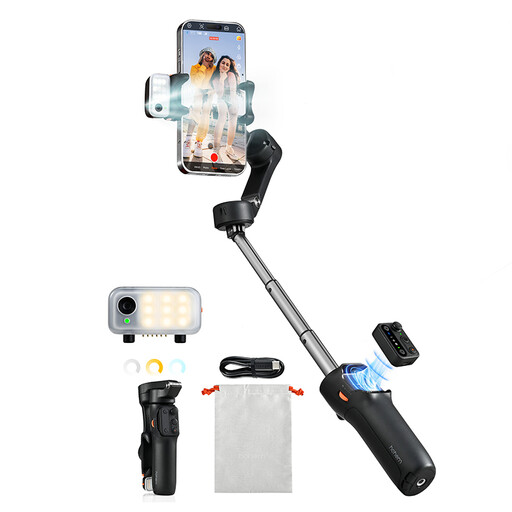
Why This Fits Their Persona: Designed for content creators who want to shoot smooth, professional videos on the move. The combination of 3-axis stabilisation, an integrated tripod, a fill light, and AI tracking offers a complete production tool in one device.
This model bypasses the software dependency trap, as its magnetic AI tracking works without an app or Bluetooth, according to the manufacturer. The 3-axis stabilisation is a mechanical solution, not just a software feature.
True 3-axis stabilisation for cinematic shots; integrated fill light and AI tracking; foldable design with a detachable remote control.
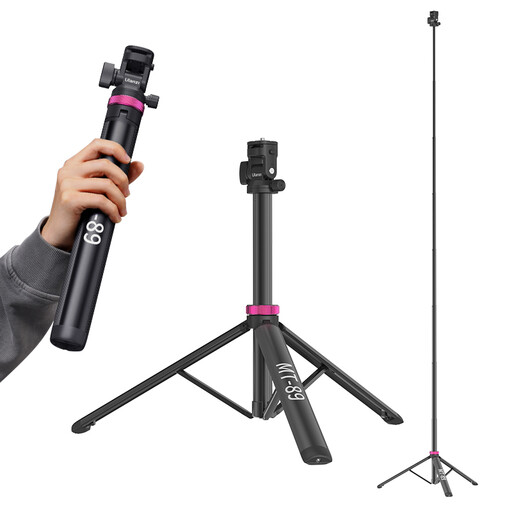
Why This Fits Their Persona: Perfect for users who need significant height and maximum stability for stationary shots, such as for tutorials, livestreams, or as a mount for lighting. The enormous extension height of over 2 metres offers great flexibility in camera perspective.
The robust aluminium construction and the specified maximum payload of 2 kg directly address the problem of instability. The standard 1/4-inch thread on the ball head ensures broad compatibility with phone mounts and cameras.
Very tall maximum height (208 cm); stable aluminium legs with quick-release locks; flexible 360° ball head for versatile positioning.
We have compiled a complete, up-to-date list of products that fully meet these strict selection criteria and rigorous safety standards.
1. What should I look for regarding the compatibility of a phone tripod with my iPhone or Android device? Pay attention to the clamp's jaw width, which is specified in millimetres. Measure the width of your smartphone, including its case, to ensure it fits. Also, check the tripod's maximum payload. For newer iPhones, a magnetic phone mount with MagSafe compatibility is a very convenient option.
2. How important is a remote control for a phone tripod? A tripod with a remote control (usually via Bluetooth) is extremely practical. It allows you to start and stop photos or videos from a distance without touching the smartphone, which prevents camera shake. This is especially useful for group photos, self-portraits, and vlogs where you aren't standing directly behind the camera.
3. Do I need a gimbal, or is a regular tripod enough for my videos? That depends on the type of videos you create. For static shots where the camera stays in one place (e.g., interviews, tutorials, time-lapses), a regular phone tripod is sufficient and more budget-friendly. However, if you're recording video while moving (e.g., walking, travelling, sports), a phone stabiliser or gimbal is essential to achieve smooth, professional-looking footage.