Which option is right for you?

For creatives working by a bright window

If the daylight changes and you have limited scope to reposition your screen, a matte display and flexible positioning are important features to look for. Lenovo specifies a matte display for configuration F0JDCTO1WWDE1. However, how well it works by your own window will depend on where you place it and how the light falls.

For serious photo editors

If you want to assess colours and tonal values carefully before printing a photo book, consider the display, ambient light and, where appropriate, calibration together. EIZO points out that calibration can’t compensate for a colour gamut that’s too small or an uneven panel.

For occasional photo book makers

For occasional projects, key considerations include compatibility with your chosen design software, enough storage and a complete, practical workspace. CEWE states that its Fotowelt ordering software is available for Windows, macOS and Linux.

What should you look for when buying?

First, check how easily you can position the screen by the window and whether the specific display version suits the way you work with photos and page layouts. Then check the software, storage and everything else you’ll need for your workspace.

What matters What to look for Who is it important to?
Screen visibility by a window Check the display finish, adjustment options and the distance or angle you can achieve in relation to the window. A stated typical brightness doesn’t guarantee that reflections won’t be an issue. If I want to see photos and page layouts clearly in changing daylight, I pay particular attention to the screen finish and position. For around 36% of consumers, screen visibility by a window is the top priority.
Assessing colour and detail Compare the display specifications for the exact version. If colour accuracy matters, consider the monitor, calibration options and room lighting together. If I want to assess colours and tonal values carefully before printing, pixel count alone isn’t enough to help me choose. Around 29% of consumers prioritise colour assessment.
Software and image files Check the software requirements for your chosen photo book service. Allow for enough storage and a separate backup of your projects. If I want to use the photo book software I’m familiar with and keep my image files organised, I first check compatibility and how much storage I need. For around 21% of consumers, software and files are the main concern.
Complete workspace Compare the space you’ll need and check which screen and input devices are required for each setup. If I want to create a straightforward, space-saving workspace, what matters most is how the computer and screen work together. Around 14% of consumers prioritise a compact, all-in-one setup.

Avoid common buying mistakes

  • Matte or bright doesn’t automatically mean reflection-free

    How easy a display is to read by a window also depends on the light and the screen’s position. Manufacturer specifications can’t replace checking it in the place where you’ll use it.

    Check the exact display version and plan a position that minimises distracting reflections as much as possible.

  • Don’t compare a mini PC and an all-in-one as computers alone

    A mini PC such as the Mac mini M6 doesn’t have a built-in display; the all-in-one configurations reviewed combine the computer and screen.

    Compare the complete setup, including the screen, input devices and connections you’ll need.

  • High resolution doesn’t guarantee accurate colour previews

    Pixel count doesn’t tell you everything about colour reproduction. According to EIZO, calibration can’t fix the limitations of a panel.

    Think about how accurately you need to judge colours, and consider the display, calibration options and room lighting together.

    If colour accuracy is important, you may also need a suitable monitor and calibration solution.

  • Don’t store photos and projects only on your new computer

    If a drive or device fails, up-to-date backups can help you restore your photos and photo book projects.

    Plan to keep separate backups of your photo archive and project files.

    You may need an additional backup drive for this.

Key brands at a glance

Lenovo

A good option if you’re looking for an all-in-one with a display explicitly specified as matte. The specifications below apply to the specific F0JDCTO1WWDE1 configuration.

  • For this configuration, Lenovo specifies a 27-inch matte IPS display, 99% sRGB, 300 cd/m² and 1920 × 1080 pixels.
  • These manufacturer specifications are not a test for reflections by a window, nor do they apply to every IdeaCentre model.

Apple

The Mac mini M6 lets you choose your monitor separately, while the iMac M6 combines the computer and display. These designs suit different space and screen requirements.

  • Apple specifies a resolution of 4480 × 2520 pixels for the iMac M6. Nanotexture glass is listed as an option for the 12-core model.
  • You’ll need to factor in a separate screen for the Mac mini M6. Nanotexture glass isn’t listed for every iMac version, and the specifications don’t confirm that the display is reflection-free.

HP

The OmniStudio X 27-cx0770ng is an integrated option if you’re looking for a QHD all-in-one.

  • For this version, HP specifies 2560 × 1440 pixels, 16 GB RAM and a 512-GB SSD.
  • The manufacturer’s specifications don’t tell you how much the display reflects light by a bright window.

Dell

The Dell 27 All-in-One EC27260 shows why it’s important to check the exact display and storage configuration within a model range.

  • Dell specifies 16 GB RAM and a 512-GB SSD for one FHD configuration; a QHD configuration is listed with 32 GB RAM and a 1-TB SSD.
  • Don’t mix up the display and storage specifications for different versions.

EIZO

The separately available ColorEdge monitor range is worth considering if you want to choose a screen and colour workflow for a desktop without a built-in display.

  • EIZO says ColorEdge monitors offer features including factory and hardware calibration.
  • According to EIZO, calibration can’t compensate for a colour gamut that’s too small or an uneven panel. This is manufacturer information, not an independent assessment of a complete PC.

Joybuy product selection

Joybuy product selection: a mini PC as the basis for a photo book design setup, with the screen and other workspace requirements to be checked separately.
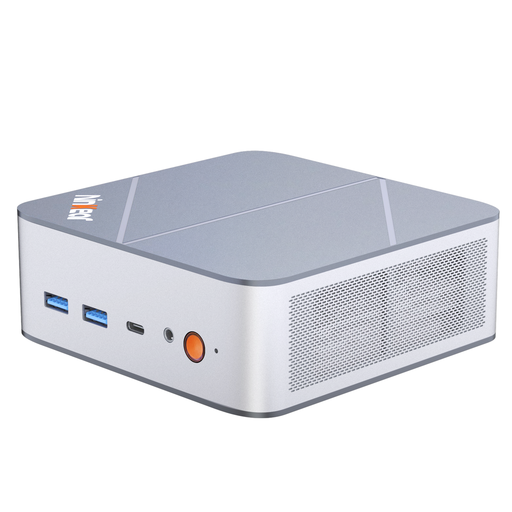
Ninkear M8 mini PC

Ninkear M8 mini PC

A good fit for photo book projects if you’re looking for a mini PC with Windows software and a 1-TB SSD. Before buying, check which screen and input devices are included.

16 GB DDR5 RAM and a 1-TB SSD.

Windows 10/11; AMD Ryzen™ 7 8745HS processor.

Dimensions: 130 × 127.5 × 52 mm.

View at Joybuy

Frequently asked questions

Do I have to use Windows to make a photo book?

No, not for CEWE Fotowelt ordering software: CEWE offers it for Windows, macOS and Linux. If you want to use another photo book service, check its software requirements separately.

How should I position my screen by a window?

Position the screen to minimise direct glare or visible reflections that could get in the way when you’re assessing your photos. Check how it looks at the times of day when you usually work. German workplace regulations set requirements for screens used at work, but they don’t apply across the board to private photo book design.

Will a calibrated monitor make my photo book look exactly the same?

No. Calibration can help with the display, but according to EIZO, it can’t correct an unsuitable colour gamut or panel unevenness. Also follow your photo book service’s image resolution warnings and design guidance.

What do I need for a complete workspace?

It depends on the design: you’ll need to allow for a separate monitor with the Mac mini M6, while the all-in-one configurations reviewed have a built-in display. Also check which input devices and connections you’ll need for your setup.

Do I have to use a particular monitor for making photo books at home?

German workplace regulations don’t establish a general requirement to use a particular monitor for making photo books at home. They exclude screen use in private settings outside teleworking from their scope.