Start by deciding on the largest print size you need and the paper you plan to use. For A3+ fine art prints, options include pigment printers such as the Canon imagePROGRAF PRO-310 or Epson SureColor SC-P700; dye printers are another option for photos up to A3+. For regular prints in smaller sizes, dye-sublimation could be a good fit. Before choosing, also check the paper feed, ICC profile, and the cost of ink and paper.
Who would benefit from their own photo printer?
Fine art exhibitors
If you want to choose the paper and output for your exhibition prints yourself, the ink system, media feed and a suitable ICC profile all matter. Canon Germany and Epson Germany describe different features for their individual models.
Photographers printing large formats
The largest print you plan to make determines which class of printer you need: A3+ printers and systems for smaller sizes such as A4 or 20 × 30 cm are designed for different uses. The formats listed are based on information from Canon Germany, Epson Germany and DNP Photo Imaging Europe.
Home office users with limited space
If you want to print exhibition photos at home, you’ll need to weigh up the space required and paper handling against the ongoing cost of ink, paper and test prints. Epson Germany describes the XP-15000 as compact, but remember to check how much room it needs, including for the paper feed.
What should you look for when buying?
First, compare the print size you need with the paper surface you plan to use. You can then work out which ink system, media feed and colour workflow will suit your home office.
| What matters to you |
What to look for when buying |
Who is this important to? |
| Paper and print durability |
Check that the intended paper feed supports your exhibition paper and that an ICC profile is available for the specific printer and paper combination. Read the conditions attached to any durability claims carefully. |
If you want to choose your own fine art paper and match your prints to the exhibition medium, paper compatibility is essential. This is a priority for around 36% of consumers. |
| Print size |
Decide on the largest sheet size you need and compare it with the media sizes specified by the manufacturer. Also consider whether you want margins or a mount. |
If your planned display calls for larger images, a smaller print size won’t do the job. Print size is the main priority for around 29% of consumers. |
| Colour matching |
Look for an ICC profile for the printer and paper, along with the corresponding paper setting. As Canon Germany explains, a reflective print and an illuminated screen may not look identical. |
If you want to match colours to specific exhibition papers, a suitable workflow matters more than a general promise about how images will look. This is a priority for around 21% of consumers. |
| Space and ongoing costs |
Check the space required, including the paper path, and factor ink, paper and test prints into your budget. F.A.Z. Kaufkompass also points to purchase and printing costs as factors to consider. |
If your home office is short on space or you want to keep regular material costs down, weigh up printing at home against using an external print service. This is a priority for around 14% of consumers. |
Common buying mistakes
-
Assuming smaller photo sizes are the same as A3+ exhibition prints
A system for A4 or 20 × 30 cm won’t necessarily meet your needs for larger exhibition prints.
Decide on the largest size you need before choosing a printer, then compare it with the media sizes specified by the manufacturer.
Larger images may also require a different printing method or an external print service.
-
Choosing a printer without considering the paper you plan to use
The paper feed and ICC profile need to suit the specific combination of printer and medium. Epson Germany lists a fine art paper feed for the SC-P700; this does not apply to other models.
Check the feed and profile for your exhibition paper before deciding on a model.
Unsuitable paper settings or repeated test prints can use up extra supplies.
-
Comparing only the printer price with a print lab’s quote
When printing at home, remember to include ink, photo paper and test prints in your costs, as well as the printer itself.
Compare the expected costs for your print sizes and quantities rather than focusing only on the initial price.
Key brands at a glance
Canon
The PRO-310 and PIXMA PRO-200S are worth considering when comparing A3+ pigment and A3+ dye printing.
- According to Canon Germany, the PRO-310 has ten separate inks, including a Chroma Optimizer; the PIXMA PRO-200S uses eight dye inks.
- These details apply to the individual models and do not demonstrate a general advantage in quality or durability.
Epson
The SC-P700 and Expression Photo HD XP-15000 are designed for different A3+ uses.
- Epson Germany lists a fine art paper feed and an integrated roll paper unit for the SC-P700. The manufacturer describes the XP-15000 as a compact A3+ photo printer with a six-colour ink set.
- These features don’t remove the need to check the specific paper path or compare ongoing material costs.
DNP
The DP-DS820 is a dye-sublimation option for regular prints in smaller sizes.
- DNP Photo Imaging Europe lists media for this model in sizes including A4 and 20 × 30 cm.
- This is a different choice of size and consumables from printing on A3+ fine art sheets of your choice. The manufacturer’s statements about image quality are manufacturer claims.
Photo printers at Joybuy
The products below are mainly for mobile photo printing in smaller sizes. They are not intended as alternatives to an A3+ or fine art printer for exhibition prints.
 No image available
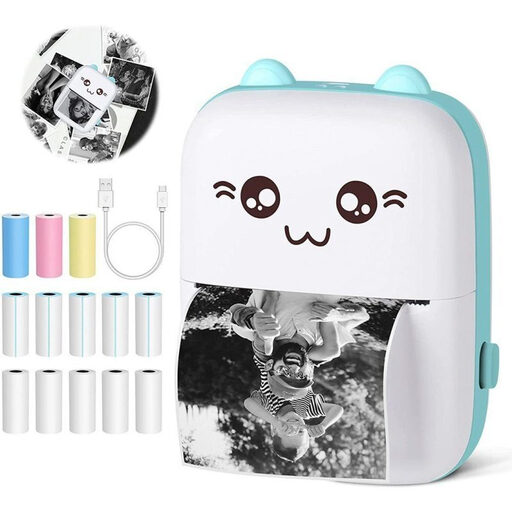
Portable mini thermal printer for smartphone photos
For printing photos from your smartphone on the go; the mini format is not the same as an A3+ exhibition printer.
Thermal printing for photos and notes.
View at Joybuy
 No image available
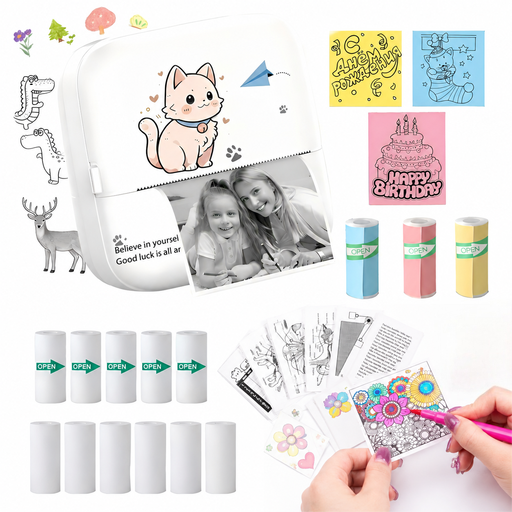
Portable Bluetooth mini thermal printer
For printing photos and notes on the go; this use does not make it an A3+ solution for exhibition prints.
Bluetooth and thermal printing; the product name also lists stickers and labels as suitable uses.
View at Joybuy
 No image available
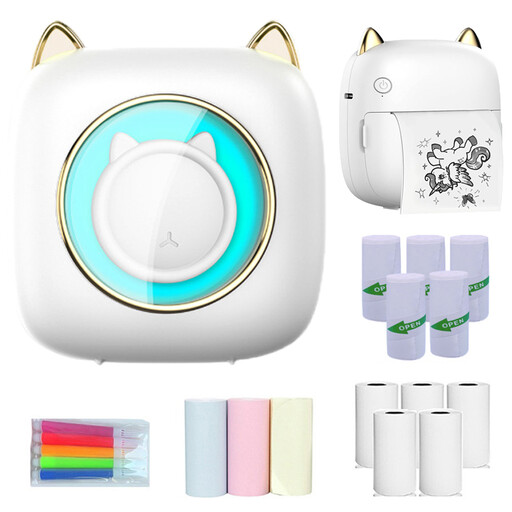
Portable Bluetooth thermal printer, black and white
This is only a suitable choice if black-and-white output meets your mobile printing needs; the stated output is not suitable for colour exhibition photos.
Thermal printing; the product name lists a 1200 mAh battery.
View at Joybuy
 No image available
Portable Bluetooth mini thermal printer with 10 rolls
For black-and-white prints on the go; not designed for colour exhibition photos.
Thermal printer; the product name lists 10 rolls of thermal paper.
View at Joybuy
 No image available
Xiaomi Portable Photo Printer 1S
For small sticky-backed smartphone photos; the stated format is not a substitute for large exhibition prints.
Zink printing on sticky-backed photo paper in 2 × 3-inch format.
View at Joybuy
Frequently asked questions
How can I avoid colour differences between my screen and exhibition print?
Check for an ICC profile for the specific printer and paper combination, and use the corresponding paper setting. A print reflects light, whereas a screen emits light, so you shouldn’t expect them to look exactly the same.
What should I bear in mind when using fine art paper?
Check that the paper feed and paper setting are suitable for your specific model and medium. Epson Germany lists a fine art paper feed and an integrated roll paper unit for the SC-P700; these features don’t automatically apply to other printers.
What extra costs should I expect on top of the printer price?
Remember to budget for ink, your chosen photo paper and test prints. Costs will depend on factors including print size, medium and actual usage. Compare these for the quantities you plan to print.
Who should I contact if my printer is faulty?
Your statutory consumer rights apply to the seller and are separate from any voluntary manufacturer’s warranty. Verbraucherzentrale.de recommends taking the specific terms of your contract into account; whether you bought the printer for personal or business use may also be relevant.
Can I put an old printer in my household rubbish?
No. The German Environment Agency recommends disposing of electrical equipment separately, for example at a recycling centre or an appropriate take-back point.


