What should you look for when choosing?
Start by deciding on the finished print size, then consider the number of prints and the media you’ll use. This will help you narrow down the right type of printer for your shared studio setup.
| Consideration |
What to check before buying |
Who is this important to? |
| Portrait size and paper |
Check the finished print size, supported paper type and paper feed for the specific model. |
If I’m choosing between a small print to take away and an A4 or A3+ portrait, the finished size needs to suit both the printer and the paper. Around 36% of consumers make this their priority. |
| Lots of prints per session |
Decide on the number and sizes of prints you expect, then run through the whole process as a trial. |
If several guests are taking prints away one after another, the selection process, set-up and handover matter to me too. Around 29% of consumers put batch printing capacity first. |
| Supplies for repeat printing |
Find out which media are compatible, and work out how much paper, ribbon or ink you’ll need, including for test prints, based on the number of prints you plan to make. |
If I regularly print portraits and test prints, I want to keep track of how much paper and printing material I’m using. Around 21% of consumers prioritise ongoing supply costs. |
| Space and operation |
Check the space required and how you’ll send images to the specific model, for example via a smartphone, computer or memory card. |
If several people use the printer, I need to know where it will go and how the image file will be sent to it. Around 14% of consumers look first at the space required and how the printer is operated. |
Which manufacturers are worth considering?
The manufacturers listed offer different print sizes and media options; the details below relate to the specific product ranges described.
Canon
For this type of setup, Canon offers compact printing with a paper and ribbon set, refillable A4 photo printing and A3+ photo printing.
- The SELPHY CP1500 is designed for small prints; Canon specifies postcard size, 100 × 148 mm. The PIXMA G650 supports borderless photo printing up to A4, while the imagePROGRAF PRO-310 prints up to A3+.
- The SELPHY CP1500 isn’t an A4 printer. These devices and their media systems shouldn’t be treated as a single, unified printing solution.
Epson
Epson offers the refillable A4 EcoTank ET-8500 photo printer with scanning and copying, as well as the cartridge-based Expression Photo HD XP-15000 as an A3+ alternative.
- The models listed cover different sizes and functions, including A4 photo printing and A3+ printing.
- The devices use different ink systems. Work out your material requirements based on the prints you plan to make, rather than assuming one system is generally cheaper without comparing them.
DNP
DNP describes the DP-DS620 as a dye-sublimation printer for producing large numbers of small prints using compatible roll media.
- DNP quotes up to 400 prints per hour for the DP-DS620, with print sizes up to 15 × 23 cm.
- The print-speed figure is a manufacturer’s estimate, not a measurement of the complete studio process. The listed range of print sizes doesn’t include A4.
Fujifilm
Fujifilm describes the instax mini Link 3 as a smartphone printer for small instant photos.
- It’s designed for printing small keepsake photos from a smartphone.
- You’ll need an app to use it. Check that its operating system compatibility and small print size suit your workflow before you buy.
Joybuy products for mobile photo printing
The devices below are intended for mobile photo printing from a smartphone. Before using one for festive portraits, check the specific print size and colour output. A4 or A3+ portraits require a printing workflow designed for those sizes.
 No image available
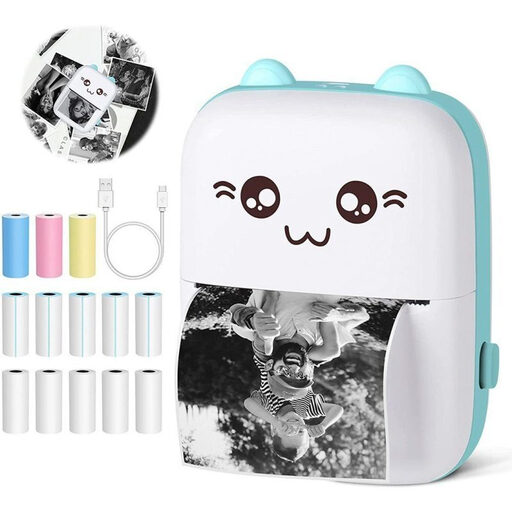
Portable mini thermal printer for smartphones
For printing photos on the go, if a portable thermal printer suits the print size you need.
View at Joybuy
 No image available
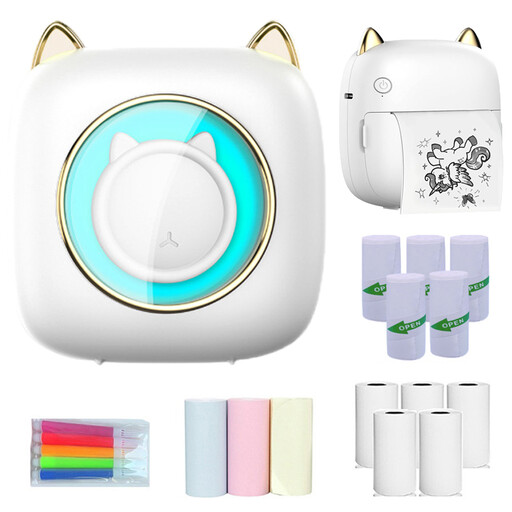
Mini thermal printer for smartphone photos, black and white
Black-and-white thermal printing is an option if you don’t need colour photos.
The product title mentions Bluetooth and a 1200 mAh battery.
View at Joybuy
 No image available
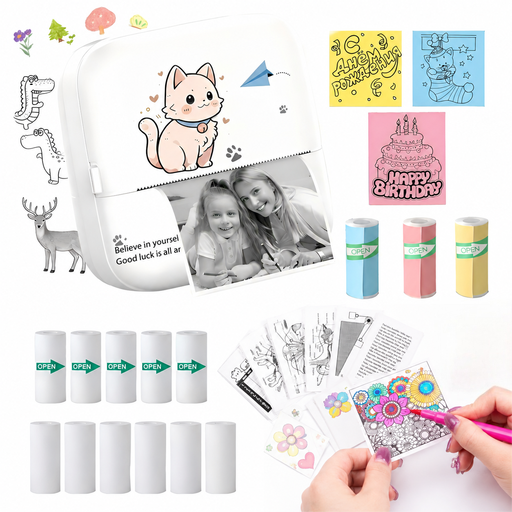
Portable Bluetooth thermal printer for photos and labels
For printing from iOS or Android devices on the go, if thermal printing suits the photo size you need.
Check whether compatible thermal paper is suitable for the range of prints you plan to make.
View at Joybuy
 No image available
Xiaomi Portable Photo Printer 1S
For small smartphone photos, if ZINK printing fits your studio workflow.
Check whether the specified 50 × 76 mm print size, self-adhesive paper and Xiaomi Home app are suitable for the prints you want to make.
View at Joybuy
Frequently asked questions
Can I print an A4 festive portrait with a compact SELPHY?
Not with the Canon SELPHY CP1500: Canon specifies postcard size, 100 × 148 mm, among its supported formats. For A4 photo printing, Canon’s PIXMA G650 and Epson’s EcoTank ET-8500 are examples to consider.
What should I set up before the first session, and what should I check if inkjet prints are faulty?
Test how you’ll send images to the specific model and check that you’re using the right paper by making a test print. If colours are missing, Epson recommends a nozzle check and, if necessary, a printhead cleaning for affected EcoTank or Expression devices. The instructions warn against running cleaning cycles when ink levels are low.
What costs and rights should I consider after buying the printer?
Factor in compatible paper and ribbon or ink, as well as any test prints. Manufacturer estimates of print capacity alone aren’t enough to work out the cost of a specific portrait. The Verbraucherzentrale distinguishes between the statutory consumer rights you have against the seller and a voluntary guarantee when buying consumer goods. Whether this consumer guidance applies to a purchase for your studio also depends on whether it buys as a business or as a private individual.
Can identifiable portraits of guests be stored or published in a shared studio without further permission?
Using a printer doesn’t, by itself, grant permission to process or publish images. According to the Federal Commissioner for Data Protection and Freedom of Information, processing personal data requires a lawful basis under Article 6 of the GDPR; consent is one possible basis, but not the only one. Section 22 of the KunstUrhG concerns consent to the distribution or public display of portraits. So consider access rights, storage and any potential publication separately, in relation to the purpose and the specific studio workflow.


