Fine art printers
You want to print large forest scenes on carefully chosen paper, with tonal range, paper handling and colour management taking priority over print volume.


For large, dark forest scenes printed on matte fine art paper, a pigment-based A3+ photo printer is a natural starting point. The paper must be approved for use with the specific printer, and the colour management settings need to match. If you mainly print glossy colour photos, a dye-based A3+ printer could be a good fit. For frequent, high-volume printing, consider a refillable model – taking print size, consumables and maintenance into account in each case. The features mentioned are based on the manufacturers’ specifications and are not the result of a direct test using your photos.
You want to print large forest scenes on carefully chosen paper, with tonal range, paper handling and colour management taking priority over print volume.
You want to print your own landscape photos in larger formats and choose between photo paper and fine art paper.
You regularly print several photos, so you compare refillable ink, paper use and maintenance requirements rather than looking at the printer price alone.
A good fit if: You want to print large forest photos on matte or other suitable fine art paper. The Canon imagePROGRAF PRO-310 and Epson SureColor SC-P700 are models in this category.
Things to consider: The approved paper, feed method and colour profile need to suit the specific printer and paper combination. Epson specifically promotes the SC-P700’s ability to reproduce detail in dark areas; this is a manufacturer’s claim.
A good fit if: You mainly want to print colour photos on suitable photo paper and make use of A3+. The Canon PIXMA PRO-200S and Epson Expression Photo HD XP-15000 use different dye-based ink systems for this purpose.
Things to consider: Check the approved papers and consumables for the volume you actually expect to print. Claims about colour reproduction or durability do not automatically apply to every type of paper or storage condition.
A good fit if: You regularly print lots of photos. Compare A3+ models such as the Epson EcoTank ET-8550 and ET-18100. If A4 is large enough and scanning matters, the Canon PIXMA G650 is another option.
Things to consider: Factor in paper, refill ink and, where applicable, a maintenance box. Manufacturers’ quoted yields do not tell you how many of your own forest photos you can print.
A good fit if: You want small prints straight from your smartphone and don’t plan to create larger framed forest scenes. The Canon SELPHY CP1500 and Kodak Dock Plus are dye-sublimation printers designed for this type of print.
Things to consider: A small print size is no substitute for a printer that can handle larger images. Before buying, check which paper and ribbon set you need and whether it is compatible with the printer.
When printing forest photos at home, your choice mainly depends on whether you prioritise detail in dark areas and the look of the paper, a larger format, regular print volumes, your workspace or small prints straight from your phone.
| What to consider | What to look for | Who it matters most to |
|---|---|---|
| Dark areas and colours | Check the ink type, a suitable paper profile and whether you can make a test print. More inks alone are no guarantee of a better result. | If natural-looking shadows and balanced colours matter more to me than high print volumes, image quality comes first. Around 28% of consumers put this at the top of their list. |
| Format and paper | Check the largest format you need, as well as borderless printing, supported media and paper feed options for the specific model. | If I want to frame a forest photo, I decide on the finished size and paper surface first. Around 22% of consumers prioritise this choice of format and paper. |
| Ongoing printing costs | Compare ink, paper and potential maintenance costs for the same planned print volume and photo size. | If I regularly print several images, I want to assess consumables and maintenance based on my own print volume. Ongoing costs are the top priority for around 22% of consumers. |
| Space and workflow | Check the space required, including room for paper to feed through, as well as the connections, drivers and extra features you want on the specific model. | My home office printer needs to fit in the space I have and work with my routine. I only need scanning or copying features if I’ll use them. Workspace and features are a priority for around 17% of consumers. |
| Small prints straight from your phone | Check the print size, supported connection and the right paper and ribbon set before deciding against a larger format. | If small prints straight from my smartphone are enough, ease of use matters more than a large format. Around 11% of consumers put small direct prints at the top of their list. |
The format, paper feed and colour profile each answer a different question. Unsuitable media or settings can waste paper and ink.
Check the approved media, feed method and ICC profile for the exact printer and paper combination you want to use.
Manufacturers quote yields based on their own specifications; these don’t account for the subject, print size or paper you use for your own photos.
Compare consumables for the same planned photo size and work out your likely print volume, rather than assuming a quoted bottle yield will apply to you.
The Canon SELPHY CP1500 and Kodak Dock Plus are designed for small prints, while A3+ printers meet different size requirements. For large, framed forest scenes, you may need an additional larger printer or to order prints elsewhere.
Before choosing a printer, decide whether small prints will be enough or whether you want to print larger forest scenes.
The Canon models listed cover pigment-based and dye-based A3+ photo printing, refillable A4 photo printing and small dye-sublimation prints.
The Epson models mentioned include pigment-based photo printers, cartridge models and refillable A3+ photo printers.
The Dock Plus is an option for small prints from your smartphone, not for large forest scenes.
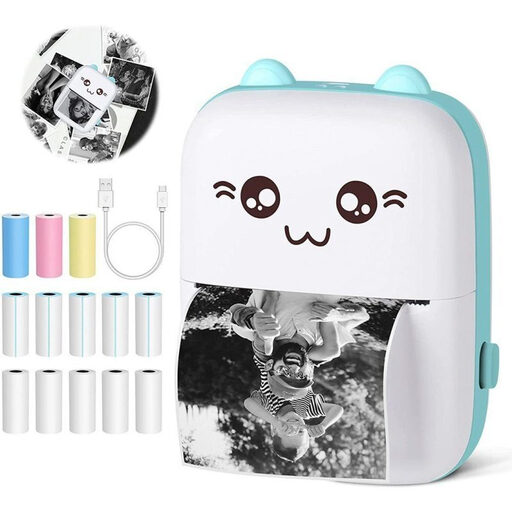
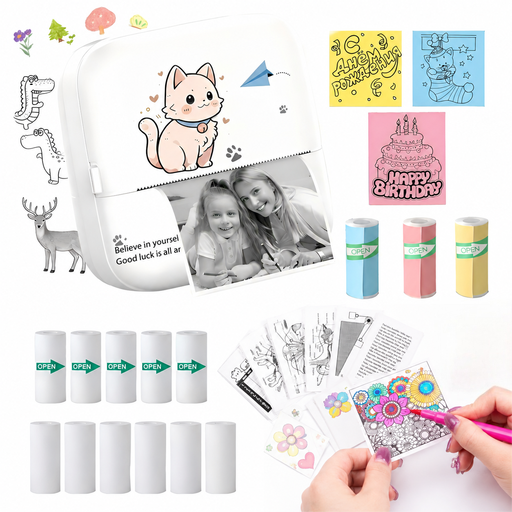
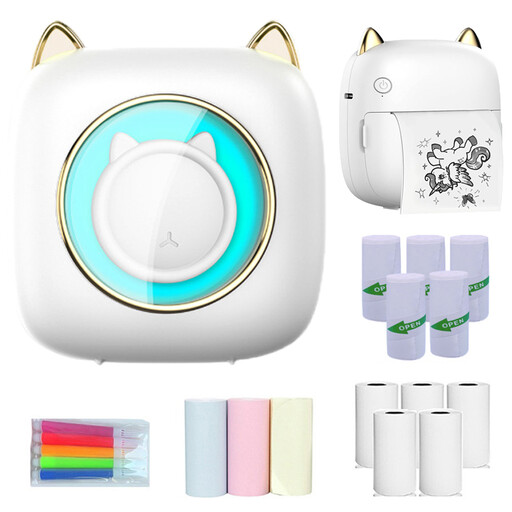
The products below are portable mini thermal printers for smartphone photos and notes. Before buying, check that the print size and colour reproduction suit your forest photos.
 No image available
For photos and notes from your smartphone; this product is described as a portable mini thermal printer. Check that the print size and colour reproduction suit your images.
 No image available
For photos printed directly from an iOS or Android smartphone; the product specifications mention Bluetooth and a dedicated app. Use compatible thermal paper and keep the printer dry and away from high temperatures.
 No image available
Only suitable if black-and-white prints are enough for your images; the product description says that ten rolls of thermal paper are included. It also warns that prints may turn black if rubbed.
 No image available
For printing from your smartphone on the go, if black and white is enough; the product title lists Bluetooth and a 1200 mAh battery. The photo printing is explicitly described as black and white.
First, check the size and paper surface you want, then find a suitable ICC profile for the printer and paper. Canon Germany points out that what you see on a screen and a print on reflective paper won’t look exactly the same, even with colour management. A test print of your own file will help you assess the results in practice.
For affected EcoTank or Expression printers, Epson recommends running a nozzle check first, followed by a printhead clean from the driver if necessary. Follow the instructions for your specific model rather than carrying out a more intensive clean without good reason.
Compare compatible ink and paper. Epson also lists a compatible maintenance box for the ET-8550 and ET-18100. On 28 September 2026, the Verbraucherzentrale explained that a manufacturer’s voluntary warranty is not the same as your statutory rights against the seller.
No. The German Environment Agency (Umweltbundesamt) states that old electrical appliances must not be put in household rubbish; recycling centres accept them free of charge.