
Lieferung heute & morgen

Qualitätsgarantie

Willkommens-Angebote freischalten: KOSTENLOSE Lieferung | Bis zu 80 % RABATT | Kostenlose 30-Tage-JoyPlus-Testphase
App herunterladen
As a Joybuy Product Recommendation Officer, my mission is to provide you with clear, objective information to help you make informed purchasing decisions. This guide focuses on the features and benefits of photochromic cycling glasses.
Anyone who regularly rides a road or mountain bike knows the problem: your route takes you from a shaded forest trail directly into dazzling sunlight. Or, the cloud cover suddenly breaks on a long tour. In moments like these, glasses that don't adapt to the light are either too dark or too bright. Photochromic cycling glasses, also known as photochromic sports sunglasses, offer a practical solution. Their lenses automatically adjust their tint based on UV light intensity, eliminating the need to manually swap lenses.
This article explains the key criteria to consider when choosing a pair and introduces a few compelling models.
Choosing the right pair of glasses depends on several technical factors. Here are three key aspects that should guide your decision.
Photochromic lenses are classified into protection classes (categories) that describe the degree of light transmission. For cycling, glasses designed for changing light conditions are ideal, covering a wide range, typically from Category 0 (nearly clear) to Category 3 (darkly tinted).
Also, pay attention to the transition speed. The lenses should adapt quickly when moving from dark to light to avoid impairing your vision. Lightening up generally takes a bit longer than darkening.
Safety and durability are crucial in cycling. Modern sports glasses combine advanced materials to deliver both.
Glasses that slip or pinch are a distraction and ruin the enjoyment of a ride. A good fit is therefore crucial. Adjustable nose pads made of soft silicone allow for a custom fit on different nose shapes. Rubberised temple tips ensure a secure grip, even during sweaty climbs or on bumpy descents. The overall weight of the glasses should be as low as possible to prevent pressure points.
Here, we present a model that uses photochromic technology, along with two specialised alternatives optimised for other use cases.
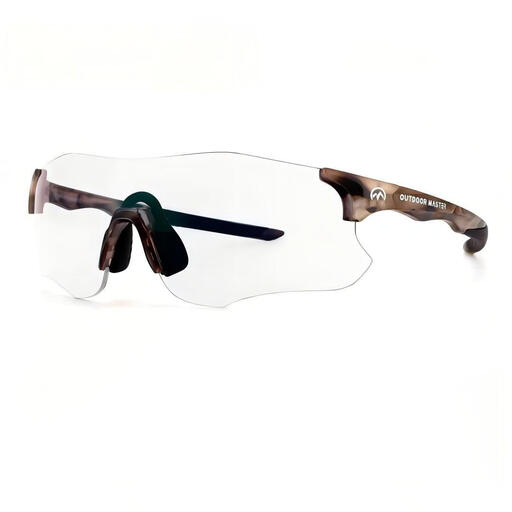
Why It Stands Out This model is a classic example of photochromic cycling glasses. The lenses automatically adjust their tint to the UV light intensity, covering the range from Category 0 to Category 3. This provides consistently clear vision without the need for manual lens changes.
Pros
Who It's For For cyclists (road, MTB), runners, and hikers who want a single pair of glasses for all light conditions and value automatic functionality and safety.
Not every athlete needs photochromic lenses. Sometimes, other features like maximum glare reduction or extreme portability are more important.
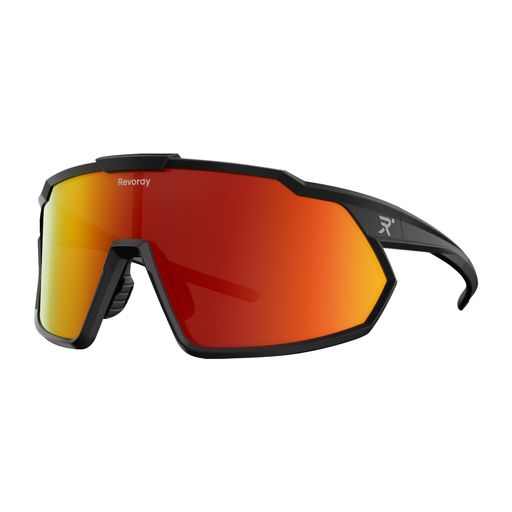
Why It Stands Out The focus of these glasses is on reducing glare with polarised lenses. They are tested for impact resistance according to the ANSI Z87.1 standard, which certifies a high level of structural safety for athletic use.
Note: This model is not photochromic but polarised. It maintains a constant tint.
Pros
Who It's For For cyclists who primarily ride in bright, sunny conditions and need maximum protection from glare, such as on wet roads or near water.

Why It Stands Out The standout feature of this model is its patented, tri-fold design. When folded, the glasses are only 35 mm thick and extremely light at 26g, making them exceptionally portable.
Note: This model is not photochromic and is designed for general outdoor and travel use.
Pros
Who It's For For athletes and travellers looking for stylish, extremely lightweight, and compact sunglasses to carry in a jersey pocket or luggage.
Haven't found the perfect model for your specific needs yet? There is a wide variety of other designs and technologies to discover, tailored to different activities and preferences.
Browse our full selection of outdoor sunglasses to find the perfect pair for your activities.
The speed of the tint adjustment depends on the specific model, temperature, and UV radiation intensity. Darkening is usually quite fast, often within 30 to 60 seconds. Lightening, for example when entering a tunnel or a dense forest, typically takes longer, often several minutes.
In most cases, they do not, or only to a very limited extent. The photochromic reaction is triggered by UV radiation. However, modern car windscreens are equipped with a UV filter that blocks most of this radiation. Therefore, the lenses do not receive the necessary stimulus inside the vehicle to darken significantly.
UV400 protection means that the sunglass lenses filter light rays up to a wavelength of 400 nanometres. This range includes all harmful UVA and UVB rays. Glasses with this label therefore offer the highest available standard of protection for the eyes against ultraviolet radiation.