
Lieferung heute & morgen

Qualitätsgarantie

Willkommens-Angebote freischalten: KOSTENLOSE Lieferung | Bis zu 80 % RABATT | Kostenlose 30-Tage-JoyPlus-Testphase
App herunterladen
By the Joybuy Product Recommendation Officer
Photochromic cycling glasses with UV400 should perform reliably in changing light conditions: in the shade in the morning, on open country roads and during short stretches in direct sunlight. For cyclists, mountain bikers, road cyclists, commuters and other outdoor sports enthusiasts, it is not just the tint that matters. The fit, ventilation, weight and actual features determine whether the glasses remain practical for everyday use.
Photochromic lenses react to UV radiation. The tint may therefore be less pronounced inside a vehicle, as windscreens partially block UV radiation. If you regularly want to use your cycling glasses in a car or behind heavily UV-filtering windows, you should bear this limitation in mind.
The term “photochromic” alone also says nothing about the tint range. A model covering Cat. 0 to Cat. 3 covers a wider range than glasses with no specific adjustment range stated.
UV400 protection describes protection from ultraviolet rays up to a wavelength of 400 nanometres. This marking does not mean complete glare protection. Against reflections from wet roads, water or bright rocks, polarised cycling glasses may offer additional benefits.
If you often ride on tarmac, you should therefore check whether the lenses are only photochromic or polarised as well. The two technologies serve different purposes.
Lightweight cycling glasses weighing 25 to 30 grams can feel comfortable to wear. However, what matters is whether the nose bridge and temples provide sufficient grip. Rigid contact points can cause pressure on longer rides, while overly smooth temples may slip when you sweat.
Adjustable nose pads, non-slip elements and a well-fitting frame are therefore more important than simply choosing the lowest possible weight.
Look for a clear reference to UV400 and check whether the manufacturer states the tint range. With photochromic models, the Cat. 0 to Cat. 3 specification is particularly useful because it describes the intended light-transmission range. The way the tint is perceived can vary depending on UV intensity, temperature and surroundings.
The lens colour is also relevant for cycling sunglasses intended for bright sunlight. Amber or high-contrast tints can alter the visual effect, but they do not replace an individual assessment of the viewing conditions.
Polycarbonate is commonly used in sports glasses and is described as impact-resistant in the models listed here. This does not mean that the lenses are unbreakable or suitable as safety glasses for work involving a high risk of impact. Damaged or heavily scratched lenses should be replaced.
When choosing UV400 protective glasses, you should also pay attention to the warnings for the specific product. Cycling glasses are intended for road use and leisure sports, not for grinding, machinery work or similar activities.
In practice, anti-fog cycling glasses will not automatically remain fog-free in every weather condition. Ventilated lenses can improve airflow and reduce fogging. Particularly on slow climbs, in cold air or in high humidity, proper care and a good fit remain important.
A lens that sits too close to the face can restrict air circulation. You should therefore check whether ventilation openings are present and whether the glasses remain comfortable when worn with a helmet and cap.
If you need vision correction, look for cycling glasses with a prescription inner clip. The clip must be compatible and should not restrict your field of vision uncomfortably. The models below list a Prescription Inner Frame as included. The actual prescription lenses for the clip are not automatically included.
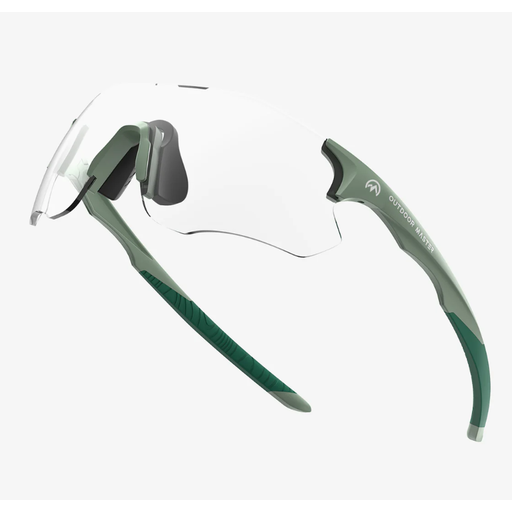
Why this product suits this profile: These glasses combine a lightweight TR90 frame with photochromic HD lenses and are designed for changing light conditions when cycling and during other outdoor activities.
The tint range is clearly stated as Cat. 0 to Cat. 3. UV400 protection and an anti-slip gel element on the frame are also specified.
TR90 memory frame, impact-resistant HD lenses, UV400 specification and replaceable nose pad.
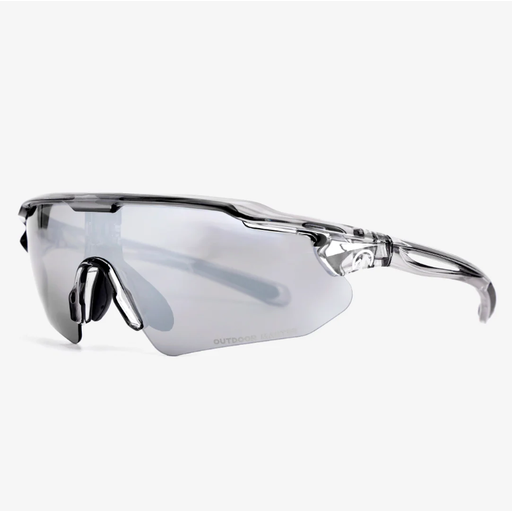
Why this product suits this profile: For regular rides, this model offers both photochromic and polarised properties in cycling glasses with adjustable nose pads.
The product description explicitly mentions both lens technologies. This makes it easier to distinguish the model from options with tinted lenses only.
Polycarbonate lenses, TR90 frame, UV400 specification and a weight of around 26 to 29 grams according to the product data.
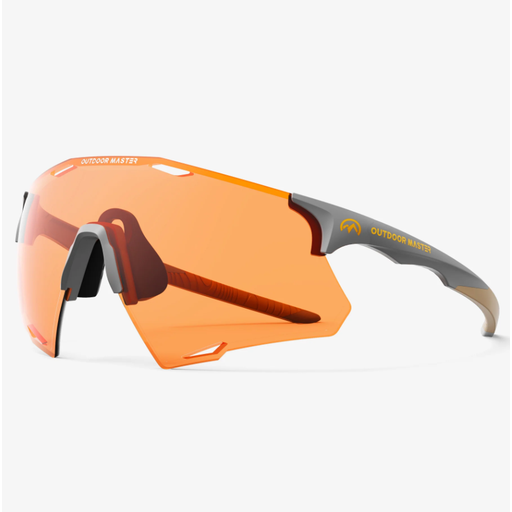
Why this product suits this profile: This model is aimed at users looking for polarised sports glasses for cycling, with an inner clip for a possible prescription solution and a ventilated lens design.
The ventilation helps address the risk of fogging. Adjustable nose pads and silicone elements support a customisable fit.
According to the product data: 25.5-gram weight, polarised polycarbonate lenses, UV400 specification and included prescription inner clip.
We have put together a complete, regularly updated list of products that fully meet these strict selection criteria and the safety regulations applicable in the EU.
To help cycling sunglasses retain their properties for as long as possible, you should follow a few guidelines:
Cycling glasses with interchangeable lenses may be appealing to users who need different tints. With photochromic models, there is no need to change the lenses manually in everyday use. However, their response still depends on the light and surrounding conditions.
That depends on the specific tint range and the level of UV radiation. According to the product specifications, a model covering Cat. 0 to Cat. 3 is designed for changing light intensities. Even so, check whether the base tint remains light enough for your route in diffuse light.
There is no single standard lifespan. Frequent cleaning with unsuitable products, scratches, heat and improper storage can affect their usability. A case, microfibre cloth and gentle cleaning help protect the lenses and frame.
For changing brightness, photochromic cycling glasses are particularly useful. Polarised lenses, on the other hand, are designed to reduce certain reflections. If you regularly ride in changing weather and on reflective roads, you may wish to consider a model combining photochromic and polarised features.