
Lieferung heute & morgen

Qualitätsgarantie

Willkommens-Angebote freischalten: KOSTENLOSE Lieferung | Bis zu 80 % RABATT | Kostenlose 30-Tage-JoyPlus-Testphase
App herunterladen
As a cyclist, you know the challenge: a ride that starts in a shaded forest, crosses sun-drenched fields, and ends at dusk. Constantly changing light conditions can not only impair your vision but also cause eye fatigue. Photochromic cycling sunglasses, also known as self-tinting glasses, automatically adjust their tint to the level of UV radiation, ensuring consistently clear vision.
This article serves as your guide. It explains the underlying technology, highlights the key criteria for making a selection, and presents a curated list of models with different specialisations.
The right pair of sunglasses depends on your individual needs and primary use cases. Three technical features are particularly important.
The terms are often used interchangeably, but they describe different functions.
During intense sports activities, whether on a road bike or a mountain bike, a secure and comfortable fit is crucial.
High-quality sports sunglasses are more than just sun protection.
Based on the criteria mentioned, we have compiled a selection of models that focus on different technological strengths.

Why it stands out: This model combines photochromic and polarized properties in a single lens. It not only adapts to brightness but also simultaneously filters out distracting glare.
Advantages:
Who it's for: Cyclists looking for an all-in-one solution who frequently ride in changing light conditions and on glaring surfaces (wet roads, lakesides).

Why it stands out: The focus of this model is on consistent glare reduction and an extremely lightweight design. At just 25.5 grams and with a ventilated lens design, it's built for performance in bright conditions.
Advantages:
Who it's for: Athletes who primarily train in sunny weather and require maximum protection from glare with minimal weight.
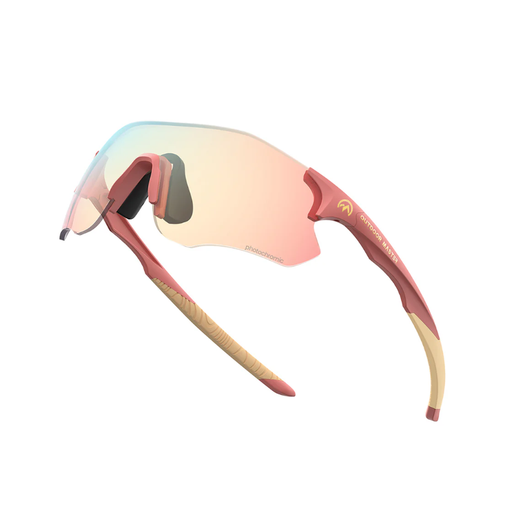
Why it stands out: These sunglasses specialise in maximum adaptability to light conditions. The photochromic HD lenses cover a wide tint range from Category 0 (almost clear) to Category 3 (dark).
Advantages:
Who it's for: Multi-sport athletes, as well as road and mountain bikers, who need one pair of glasses for a wide range of conditions—from rides at dusk to tours in the bright midday sun.
If these recommendations don't include the perfect model for your specific needs, you can find more options in our broader selection.
Discover more sports sunglasses and accessories in our Bikes & Cycling category.
1. How quickly do photochromic cycling sunglasses react? The reaction speed depends on the intensity of UV radiation and the ambient temperature. As a rule, darkening in direct sunlight takes about 20 to 30 seconds. Lightening in the shade or indoors can take a bit longer, as the chemical reaction proceeds more slowly without UV exposure.
2. Do photochromic glasses work inside a car? No, in most cases, they do not. Modern car windscreens block most of the UV radiation required to activate the photochromic lenses. Therefore, the lenses will remain light or only tint minimally inside a car.
3. Can I wear photochromic cycling sunglasses at night? Yes. In their lightened state (usually Category 0 or 1), the lenses are nearly clear. They continue to offer protection from wind, dust, and insects without significantly impairing your vision in the dark. This makes them a practical 24-hour solution.