
Lieferung heute & morgen

Qualitätsgarantie

Willkommens-Angebote freischalten: KOSTENLOSE Lieferung | Bis zu 80 % RABATT | Kostenlose 30-Tage-JoyPlus-Testphase
App herunterladen
As a cyclist, you know the challenge: light conditions change constantly on a long ride. One moment you're in blinding sunshine on an open road, the next you're passing through a shady forest. Add to that the glare from wet roads or a low-lying sun. The wrong pair of glasses can not only hinder your performance but also pose a safety risk.
This article serves as your guide. It explains the core technologies behind photochromic polarized cycling sunglasses and presents a selection of models with different specialisations to help you make an informed decision.
The selection of sports glasses is vast. Three technical features are particularly crucial for high-performance road cycling glasses or MTB glasses.
The combination of these two features offers superior adaptability.
Glasses that slip at high speeds or on uneven terrain are useless.
Good sports sunglasses are more than just glare protection.
Based on the criteria above, we've curated a selection of glasses that meet the diverse needs of cyclists and outdoor athletes.

Why It Stands Out: This model combines the two core technologies—photochromic adaptation and polarization. It's designed for cyclists seeking an all-in-one solution for variable conditions.
Pros:
Who It's For: Ambitious cyclists (road and MTB) who need a single, highly functional pair of glasses for training and competition in a wide range of light conditions.
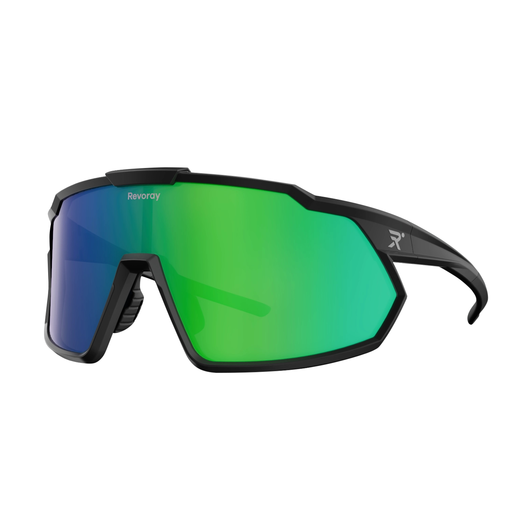
Why It Stands Out: The focus of these glasses is on maximum glare reduction and mechanical durability. The HD TAC polarized lenses are engineered to deliver visual clarity in bright conditions.
Pros:
Who It's For: Cyclists and outdoor athletes who primarily operate in bright, sunny conditions and value highly effective glare reduction and durability. This model is not photochromic.

Why It Stands Out: The standout feature of these glasses is their patented folding design. They can be folded down to a thickness of 35 mm and are extremely light at 26 g, making them highly portable.
Pros:
Who It's For: Users looking for an extremely lightweight and portable pair of sports sunglasses for men and women for daily use, travel, or moderate sports activities. They are a stylish option but feature neither polarized nor photochromic lenses.
The models presented cover specific use cases. If you're looking for prescription glasses, different designs, or other specialized features, you might find the right model in our broader selection.
? Discover more prescription sunglasses here
1. What is the difference between photochromic and polarized lenses? Photochromic (self-tinting) lenses react to UV light and adjust their tint to the brightness. Polarized lenses have a fixed filter that reduces glare from reflective surfaces like wet asphalt. Some glasses, like the OutdoorMaster model, combine both technologies.
2. Do photochromic cycling glasses work inside a car? Generally, no, or only to a very limited extent. Most car windshields already block the majority of UV radiation that photochromic lenses need to darken. For use in a car, glasses with a fixed tint or polarized models are often a better choice.
3. How can I identify high-quality sports glasses? Look for objective features like the frame material (TR90 is a good indicator), the weight, the UV400 protection rating, and any certifications (e.g., for impact resistance). The quality of the coatings (anti-reflective, water-repellent) and adjustable elements like nose pads also contribute to the overall performance.