Who might find an LED panel useful?

Photographers dealing with reflective frame glass

If the picture mainly shows the window, a light or the camera, start by adjusting the positions of the light, frame and camera. The Smithsonian Institution Archives explains how reflected light can create bright, blown-out areas on shiny surfaces.

Photographers shooting larger framed prints

With a large image, you need even lighting right into the corners, as well as enough room to position one or two lights outside the areas where they would cause distracting reflections.

Photographers who want consistent colours

If you want to reproduce print colours as consistently as possible, consider the light’s colour temperature and colour-rendering specifications alongside the white balance. Canon Europe points out that you may need to adjust the white balance in challenging lighting conditions.

What should you look for?

Make the most of window light first

Best if: The print is already evenly lit and the main issue is a reflection.

Consider: You won’t need to set up an extra light, but changing daylight is harder to control precisely. A polarising filter can reduce certain reflections, but it won’t necessarily eliminate them.

Add a bi-colour panel

Best if: One side of the framed print is too dark and you can position the panel outside the area reflected in the glass.

Consider: You can adjust the brightness and colour temperature. However, when combining window and LED light, you still need to set the white balance to suit the shot.

Use two panels or a larger lighting setup

Best if: A single light leaves a larger print visibly unevenly lit and there’s enough room to position several lights.

Consider: More equipment and light sources can create new reflections. You’ll only know whether the light is distributed effectively after taking a test shot of the framed print.

Priority What to check before buying Who is this especially important to?
Reflections in the frame glass How easily the panel and stand can be tilted and repositioned; check reflections in a test shot using your planned window and camera angles. If the window is the main thing reflected in the glass, I’d rather change the positions first than simply add more light; around 33% of consumers put reflections first.
Even lighting Panel size and positioning options; check the corners of the image in a test shot when photographing large prints. With a larger print, I want to assess the brightness across the whole surface; around 25% of consumers prioritise even lighting.
Consistent print colours The colour temperature range and CRI rating of the specific model; check the white balance in a test shot when using mixed lighting. If consistent print colours matter to me, I don’t want to assume the light’s specifications guarantee the result on the subject; around 25% of consumers prioritise colour reproduction.
Space, power and accessories Room to set up the light beside the window, as well as the contents of the box and the power supply required for the specific version. If there’s little room beside the window, I want to know in advance what will fit and what I can connect; around 17% of consumers prioritise a practical setup.

Avoid common buying mistakes

  • Assuming more brightness means fewer reflections

    The panel itself can show up as a bright shape in the glass. The Smithsonian Institution Archives describes distracting reflections on shiny surfaces, so more light won’t automatically solve the problem.

    First, try changing the positions of the light, camera and frame. Only add a panel if your shot actually shows an uneven-lighting problem.

  • Assuming CRI and Kelvin ratings guarantee accurate print colours

    A light’s specifications alone don’t tell you what the result will be when you combine window and panel light. Canon Europe recommends adjusting the white balance to suit challenging lighting conditions.

    Compare the specifications for the exact model and check the white balance in the conditions you’ll actually be shooting in.

  • Buying two panels without checking the space needed and what’s included

    Two light positions need more room and can create extra reflections. Accessories and power supplies vary between kits and product versions.

    Plan your setup beside the window and check before buying whether stands, diffusers and the required power supply are included.

Brands to consider

Godox

The P260C Pro is a bi-colour panel for flexible, adjustable fill light.

  • Godox says the model has a diffuser, a colour temperature range of 2800–6500 K and an average CRI of at least 98.
  • These are the manufacturer’s specifications, not an independent measurement taken with a framed print. Position the panel so it isn’t reflected in the glass.

Rollei

The LUMIS LED Panel Bi-Color offers a larger light surface for a fixed setup.

  • Rollei lists the model as measuring 35 × 24 cm, with a colour temperature range of 3200–5600 K and a CRI above 96. The manufacturer says it can be powered from the mains.
  • According to Rollei, the optional batteries aren’t included. A CRI rating is no substitute for setting the white balance for your specific shot.

NEEWER

The NL480 twin-light kit is designed for setups with two separately positioned bi-colour panels.

  • NEEWER lists two lights, diffusers and stands in the kit, along with a colour temperature range of 3200–5600 K and CRI 96+.
  • These specifications come from the manufacturer. Two lights need more space and can create extra reflections in the glass.

amaran

The P60x is a bi-colour panel for setups where you can carefully choose the distance and direction of the light.

  • The manufacturer’s manual lists a colour temperature range of 3200–6500 K and a maximum of 5070 lx at 1 m and 5600 K.
  • This figure applies to the stated test conditions and, on its own, says nothing about even lighting or reflections in the glass.

walimex pro

The LED Sirius 160 Bi Color is another panel light to consider for a setup with a stand and adjustable colour temperature.

  • As a dimmable panel light for photography and video, it may be suitable for this type of setup.
  • Its position in a product list doesn’t mean it has been tested with framed prints. Check the lighting and reflections with your own subject.

Joybuy products

The products below are supplementary lights for photography, rather than conventional LED panels. They’re only worth considering if their design suits the size of your subject and your setup. If you’re photographing glass-fronted frames, you’ll still need to check for reflections in a test shot.
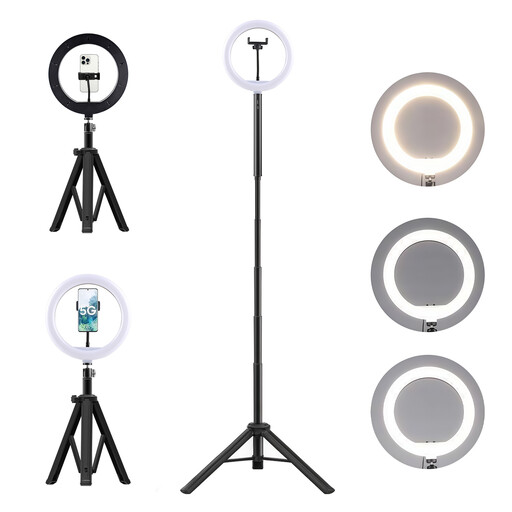
LED ring light kit with power bank and stand

LED ring light kit with 10,000 mAh power bank and stand

The product description lists photography as a use, but the ring light design differs from a panel. Check that it’s suitable for the size of your framed print.

Includes a 10,000 mAh power bank and floor stand.

View at Joybuy
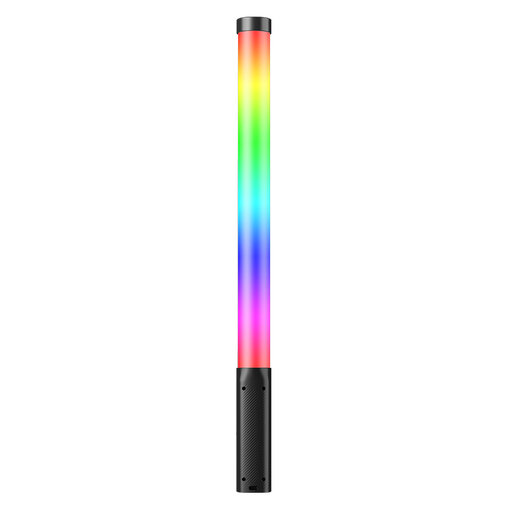
Ulanzi VL119 Handheld Video Light 10W

Ulanzi VL119 Handheld Video Light 10W

This handheld light stick isn’t an LED panel. Check whether its design provides enough coverage for your framed print and whether you can position it without causing distracting reflections.

The product name lists 10 W, 360° Full Color RGB, 360 Lux at 0.5 m, a 3300 mAh battery and 2500–9000 K.

View at Joybuy

Frequently asked questions

Will a brighter LED panel get rid of the window reflection in the frame glass?

No, you shouldn’t count on it. First, change the positions of the frame, camera and light; a polarising filter can reduce certain reflections in glass. Check the result in a test shot. The Smithsonian Institution Archives describes reflections on shiny surfaces, while Nikon explains that a polarising filter can reduce reflections from glass.

How should I position the light and adjust the white balance?

Position the panel so its reflection doesn’t appear in the glass, then check the brightness and reflections right into the corners of the image. When combining window and panel light, set the white balance to suit the actual shooting conditions; adjusting the light’s Kelvin setting won’t do this on its own. Canon Europe explains how to adjust the white balance in challenging lighting conditions.

Is one panel enough for a larger framed print?

It depends on whether it lights the whole surface evenly and can be positioned to avoid distracting reflections. Check the corners of the image in a test shot. If a single light leaves visibly uneven lighting, two light positions could be an option, provided you have enough room.

Do I need to buy batteries, stands or diffusers separately?

It depends on the specific version. Rollei says batteries for the LUMIS LED Panel Bi-Color are optional and aren’t included; the product description for the NEEWER NL480 twin-light kit lists stands and diffusers. Check what’s included with the specific offer before buying.

How can I tell which labelling requirements apply to a light?

Check the information for the specific product and the requirements that apply to it. According to the European Union, CE marking is only required for products covered by harmonised EU rules that require it. Germany’s Federal Network Agency says that market surveillance can include checking product labelling and identification; this doesn’t establish that any individual offer complies.