Invitation designers who focus on detail
If lettering, paper texture or embossing is the main subject, check the close-up capabilities of the specific lens. Fujifilm and Sony specify a 1:1 reproduction ratio for certain macro lenses.


A suitable standard zoom lens is often enough to photograph an entire invitation, as long as it offers the framing you want and can focus close enough. If you want to capture embossed details or fine print at a larger scale, consider a compatible macro lens. When photographing a series of cards, controlled lighting, consistent framing and a reliable white balance are key. If your existing lens already captures the whole card well, it may be worth starting with a more consistent shooting setup.
If lettering, paper texture or embossing is the main subject, check the close-up capabilities of the specific lens. Fujifilm and Sony specify a 1:1 reproduction ratio for certain macro lenses.
A repeatable setup is useful when photographing several variations. Adobe notes that colour temperature can change under different lighting, while Canon recommends using a tripod for consistent product framing.
If you’re starting by photographing complete invitations or arrangements, check which lens and accessories are actually included with the kit before you buy.
Best if: you mainly photograph whole invitations and arranged scenes. Check the focal length range, close-focusing capability and what’s included with the specific kit.
Bear in mind: A standard zoom lens isn’t automatically a 1:1 macro lens.
Best if: you want small lettering, paper texture or embossing to appear large in the frame. Check the mount, reproduction ratio and distance from the subject.
Bear in mind: A camera body-only offer won’t automatically include a macro lens, and a short shooting distance can make it harder to light the subject.
Best if: your lens already captures whole cards well, and the main issues are lighting, shadows or inconsistent framing.
Bear in mind: A more stable setup won’t solve genuinely inadequate close-up performance from your existing lens.
| Buying consideration | What to check before buying | Who it matters most to |
|---|---|---|
| Fine print details | Check the mount, maximum reproduction ratio and focusing distance of the specific lens. | If I want to show embossing or small lettering at a larger scale, the lens I use needs to focus close enough. This applies to around 36% of customers whose main priority is print detail. |
| Paper and print colours | Check the white balance and file format you want on the specific model; assess colours under comparable lighting wherever possible. | If consistent colour reproduction across different shots matters to me, I pay attention to the lighting and white balance. This applies to around 29% of customers whose main priority is colour accuracy. |
| Consistent framing | Check whether you can position the camera securely in your planned setup and repeat the same framing. | If I want to compare several card variations, I need consistent framing. This applies to around 21% of customers whose main priority is consistency across a series. |
| The right kit | Check the exact camera body and lens version, mount, battery, charger and any other accessories you need. | If I want to get started with the right kit, I want to know in advance which components are included. This applies to around 14% of customers whose main priority is what’s included in the kit. |
A 1:1 reproduction ratio is a specification for a particular macro lens, not automatically for a camera body or kit zoom lens.
First decide whether whole cards or small print details are your main subject. Then compare the lens mount and reproduction ratio of the lens actually included in the offer.
Changes in daylight can alter the colour of the light during a series of card shots, affecting how colours appear.
Keep your setup and framing as consistent as possible, and check the lighting and white balance between shots.
What’s included can vary between specific kit versions. For the Z50II kit with 16–50 mm VR lens, Nikon explicitly states that a charger isn’t included.
Check the exact kit name and the accessories listed with the offer, rather than relying on the camera body name alone.
If you need a charger to use the camera, you may need to buy one separately for the Nikon kit mentioned above.
The EOS R50 is an APS-C camera body with an RF mount and support for RF and RF-S lenses. The RF-S 18–45 mm is a standard zoom lens for photographing whole scenes.
The Z50II kit with 16–50 mm VR pairs the camera body with a standard zoom lens. The Z MC 50 mm f/2.8 is a separate macro option with a Z mount.
The X-S20 uses the X mount and supports RAW shooting. The XF30mmF2.8 is a separately available X-mount macro lens.
The α6700 is an APS-C camera body with an E mount; the SEL30M35 is a separately available APS-C macro lens.
Joybuy products selected for this topic.
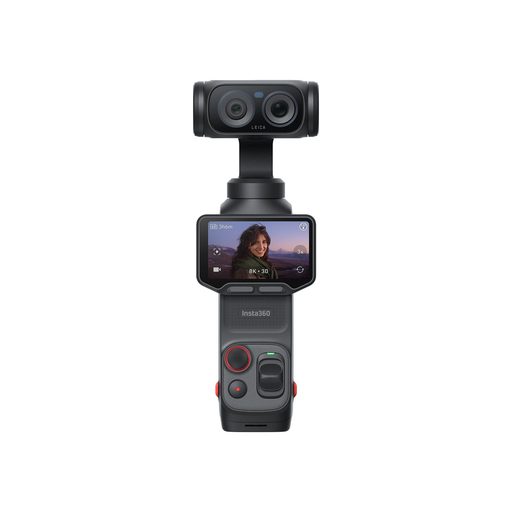 No image available
The listed close-up and telephoto zoom options may be useful for tight framing. Before choosing, check whether this specific type of camera meets your needs for a mirrorless camera.
The product description lists a dual-lens system, telephoto zoom and colour profiles.
No. 1:1 is mainly relevant when you want to show small details at a larger scale. For a whole card, first check the framing and close-focusing capability of the standard zoom lens you’ll actually be using.
Use a tripod to keep the framing as consistent as possible, and watch for changes in daylight. Check the white balance if the paper and print colours look different between shots. A tripod won’t replace checking for shadows or changes in the colour of the light.
Check the lens and accessories included with the specific offer. Nikon explicitly states that the Z50II kit with 16–50 mm doesn’t include a charger; for macro photography, you’ll also need to check that the lens is compatible.
According to information from the European Union, when you buy goods at a distance, you generally have a 14-day right to cancel from the date of delivery, subject to exceptions and separate rules on return costs. Separately, under EU rules, faulty goods are covered by a legal guarantee of at least two years from the seller. This information applies to the consumer purchase described and does not apply generally to private sales.