For changing daylight and narrow arcade entrances, a mirrorless system camera with a suitable wide-angle lens is a flexible choice if you want to vary your framing. In scenes with strong differences in brightness, RAW and, for static architecture, possibly exposure bracketing can be useful, as Nikon Germany explains. A compact camera with a fixed focal length may suit spontaneous walks, provided its field of view works for your locations. Stabilisation helps counter camera shake, but not moving passers-by; check the rules on indoor photography and tripods at each location.
Who are the different cameras suited to?
Photographers shooting into the light
If you want to retain detail in both the bright street and the darker entrance, RAW files or exposure bracketing can give you more flexibility when editing. Nikon Germany explains how exposure bracketing works for scenes with bright and dark areas.
Architecture photographers
If you want to photograph entrances, patterns and building lines from limited vantage points, consider the field of view of the specific lens and how you position the camera. Leipzig Travel describes the distinctive architecture of Leipzig city centre.
Spontaneous city explorers
If you mostly shoot handheld, stabilisation, portability and lens flexibility all matter. The right combination depends on whether a compact kit or flexible framing is more important to you.
What should you consider when choosing?
When shooting in changing light and from tight spaces, decide which priority matters most to you when choosing a camera.
| Purchase priority |
What to check before buying |
Who it matters most to |
| Brightness contrast |
RAW, exposure control and, for planned HDR shots, an exposure bracketing function; multiple exposures work best with relatively static scenes. |
If I want to capture the bright street and dark entrance in one image, I look for flexibility when editing later. Around 29% of consumers would make handling backlighting their top priority for this subject. |
| Field of view and lines |
A compatible wide-angle lens, its field of view with the sensor size, and options for positioning the camera. |
In a tight space, I want to capture the whole entrance and carefully align the building lines. Around 24% of consumers would prioritise field of view and composition. |
| Handheld photography |
Stabilisation in the specific camera body and lens; for moving passers-by, also consider the appropriate shutter speed. |
If I’m photographing in an arcade without a tripod, stabilisation and shutter speed matter to me. Around 18% of consumers would prioritise sharpness when shooting handheld. |
| Portability |
The weight of the kit you’ll actually carry, handling, and whether a fixed focal length suits your locations. |
On a longer walk, I want to bring my camera without being tied to a fixed field of view that doesn’t suit the entrances. Around 17% of consumers would make portability their top priority. |
| What’s included in the kit |
What’s in the box, lens compatibility and any accessories needed for your planned shots. |
If I want a camera that’s ready to use, I need to know whether it comes with the right lens and any essential accessories. Around 12% of consumers would prioritise the contents of the complete kit. |
Which common misconceptions should you avoid?
-
Comparing only the highest ISO setting as a solution to backlighting
A high maximum ISO figure doesn’t tell you how well a camera can handle bright and dark areas in the same image.
Check RAW and exposure control. Only plan to use exposure bracketing if the subject will remain still enough while you take the shots; Nikon Germany describes the technique for areas with different brightness levels.
-
Assuming the camera body alone determines your framing
At a narrow entrance, the lens you already have or the one included in the kit may limit the field of view more than the camera body.
Check the specific lens and its field of view with the relevant sensor size. If you’re using a compact camera with a fixed focal length, make sure its field of view suits your locations.
-
Assuming stabilisation prevents all motion blur
Stabilisation helps counter camera movement during exposure, not the movement of passers-by.
Distinguish between static architecture and moving people, and consider shutter speed when people are in the frame too, as Canon explains in its guidance on image stabilisation.
-
Assuming the camera body alone is fully equipped for your planned use
A camera body listing doesn’t automatically mean that it includes the wide-angle lens you need for tight spaces.
Check what’s included and whether the lens is compatible. Also make sure you have everything else you need for your shots.
-
Assuming freedom of panorama means you can photograph in any arcade
Section 59 of the German Copyright Act (UrhG) refers to the exterior view of buildings and applies only under the conditions set out there. It doesn’t grant general permission for indoor photography or tripod use.
Check the rules on indoor photography and tripods at each location. The Federal Ministry of Justice and Consumer Protection and the Federal Office of Justice also list the relevant legislation on buildings and images.
Which brands are worth considering?
Nikon
Nikon Germany lists a 24.5-MP full-frame sensor and in-body stabilisation for the Z5II. Check the wide-angle lens and what’s included in the specific kit separately.
- The interchangeable lens options may be useful when you need different fields of view at different entrances.
- Manufacturer stabilisation figures are nominal values; the lens and shooting conditions affect how well stabilisation works in practice.
Fujifilm
According to Fujifilm, the X-S20 is an APS-C system camera with 26.1 MP, RAW and in-body stabilisation.
- Fujifilm lists a weight of 491 g and stabilisation of up to seven stops.
- The stabilisation figure is based on a specific test-lens configuration; the wide-angle lens you need will add to the kit you carry.
Sony
Sony Germany lists a 33-MP full-frame sensor for the α7 IV.
- Resolution can be a consideration when choosing a suitable system for flexible framing.
- 33 MP doesn’t prove that you’ll see a noticeable benefit with every output format.
Canon
Canon lists a 24.2-MP full-frame sensor and HDR features for the EOS R8.
- The documented HDR options and RAW features may be useful when planning shots with strong differences in brightness.
- Canon lists the body-only weight as 414 g, or 461 g with battery and memory card, in accordance with CIPA guidelines. For handheld photography, check the stabilisation of your chosen lens separately.
Ricoh
Ricoh Imaging Europe describes the GR IV as a compact APS-C camera with a fixed focal length.
- Its fixed 18.3 mm focal length is equivalent to approximately 28 mm in 35 mm format; Ricoh also lists 25.74 effective MP and five-axis stabilisation.
- You can’t change the field of view with a different lens to suit particularly tight spaces.
Joybuy products on this topic
This selection ranges from a mirrorless APS-C system camera with a zoom lens to compact digital cameras. For each model, check whether the lens, field of view and shooting features suit tight spaces and changing light.
 No image available
Sony Alpha 6100 APS-C with 16–50 mm power zoom lens
The zoom lens is useful for changing your framing at different entrances.
Features listed include APS-C, a 16–50 mm power zoom lens, RAW and optical stabilisation.
View at Joybuy
 No image available
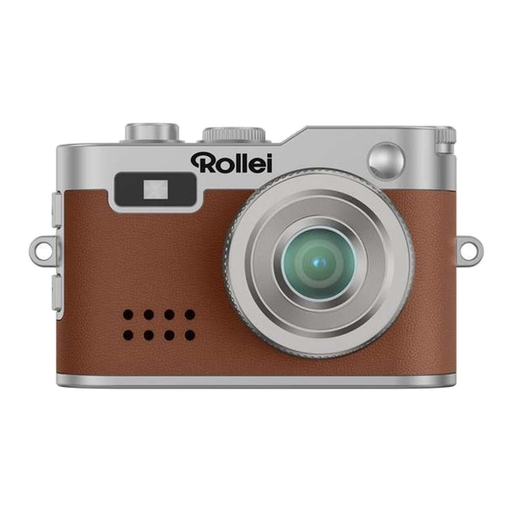
Rollei Mini digital camera, brown
The mini size may come in handy for spontaneous stops on a city walk; check that the resolution suits your intended output format.
Product details list a weight of 18 g and a photo resolution of 1920 × 1080 pixels.
View at Joybuy
 No image available
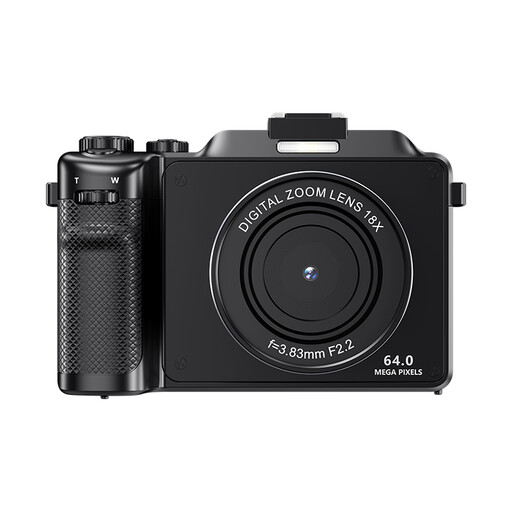
KOMERY X9 digital camera, 64 MP, 18x zoom, 4K video
The title lists 18x zoom for changing your framing; check which type of zoom is meant before buying.
Other listed features include 64 MP, autofocus, flash and 4K video.
View at Joybuy
 No image available
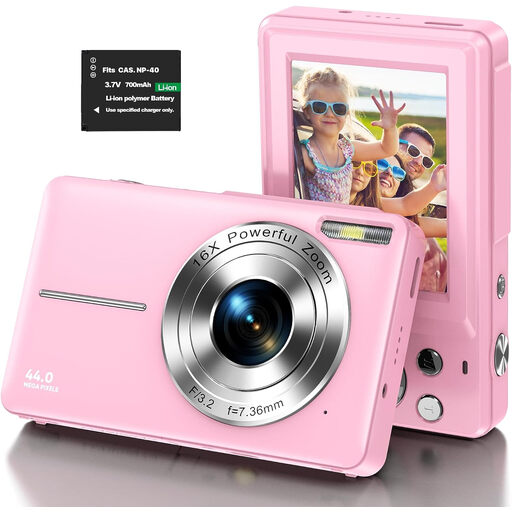
Songdian pocket camera, pink, 64 MP, 16x digital zoom
This compact model is described as a pocket camera, making it an option for taking out and about; check whether the digital zoom suits the framing you want.
Listed features include 64 MP, autofocus, Full HD video and 16x digital zoom.
View at Joybuy
Frequently asked questions about photographing arcades
How can I capture a bright street and a dark entrance in the same shot?
Choose your framing and check both the bright and dark areas. RAW can give you more flexibility when editing later. If the architecture is mostly static, you can combine shots taken at different exposures to create an HDR image, as Nikon Germany explains. Moving passers-by make multiple exposures more difficult.
Do I definitely need a tripod to take photos in an arcade?
No, not necessarily: a stabilised camera body or lens can help reduce camera shake when shooting handheld. A tripod can be useful for planned longer exposures, but check whether you’re allowed to use one in the specific arcade.
What should I check is included before buying?
Check whether the lens you need is included and compatible with the camera body. If you’re planning to shoot in tight spaces, make sure the field of view of that specific lens suits your subjects too.
What rules apply if I publish photos of arcade entrances or people?
Subject to certain conditions, Section 59 of the German Copyright Act (UrhG) applies to works in public thoroughfares, streets or squares; for buildings, it explicitly refers only to the exterior view. When publishing identifiable people, you must observe Section 22 of the German Act on the Protection of Copyright in Works of Art and Photography (KunstUrhG); Section 23 sets out exceptions that apply only when their specific conditions are met. This does not grant blanket permission for indoor photography or tripod use. The Federal Ministry of Justice and Consumer Protection and the Federal Office of Justice list the relevant provisions.


