Artists who need accurate colour
If you want to assess or document an oil painting, you’ll need to account for reflections and changing light. Nikon Germany advises adjusting the white balance when lighting conditions change.


For detailed photos, start with a suitable lens that minimises distortion, and keep the camera stable and parallel to the painting. For video, you’ll also need the right recording formats and a white balance that can be adjusted as the window light changes. The Museums Association of Brandenburg recommends a low-distortion lens for reproductions, while Nikon Germany advises adjusting the white balance when the light changes. A more expensive camera body alone won’t solve problems with reflections or the lens; nor do the model features listed here demonstrate comparative colour accuracy when photographing oil paintings.
If you want to assess or document an oil painting, you’ll need to account for reflections and changing light. Nikon Germany advises adjusting the white balance when lighting conditions change.
To capture visible brushstrokes, the lens, shooting distance and camera position all need to suit the detail you want to photograph. The Museums Association of Brandenburg recommends using a lens with as little distortion as possible for reproductions.
If you want to show a detail of a painting in motion, consider the recording format and changing window light as well as the lens. Video format specifications vary between camera models.
The Museums Association of Brandenburg recommends using a lens with as little distortion as possible for reproductions, and positioning the camera parallel to the painting’s surface. Nikon Germany notes that you should adjust the white balance when the light changes.
| What matters | What to look for when buying | Who is it important to? |
|---|---|---|
| Colour accuracy and reflections | Check whether you can adjust the white balance, and whether you can position the camera, painting and light source to minimise reflections. | If I’m concerned about colour differences and glare, I check the lighting and white balance first. Around 33% of consumers are likely to consider colour accuracy and reflections their most important buying priorities. |
| Brushstrokes and close-up framing | Consider the minimum focusing distance and distortion of the specific lens, as well as keeping the camera stable and parallel to the painting. | If you want to capture fine brushstrokes for an archive or print, you need a suitable close-up composition rather than simply enlarging the image digitally. Around 27% of consumers are likely to put clearly visible fine details first. |
| Video and post-production | Check the resolution, frame rate and colour formats you need for the exact model; if a crop is specified, take the angle of view in the relevant mode into account. | If I want to pan across colours or brushstrokes, I compare the video formats I actually need. Around 27% of consumers are likely to prioritise moving images and editable video files. |
| Cost of a camera and lens | Check whether your existing equipment will do the job, and if buying new, compare what’s included with the suitability of the supplied lens. | If you want to start by documenting your work with the equipment you already have, you can use it to try out the framing and lighting position. Around 13% of consumers are likely to consider keeping additional costs to a minimum their main priority. |
How much detail you capture also depends on whether the lens can focus closely enough and how much distortion it introduces. A high-resolution camera body alone won’t guarantee a suitable composition.
First, check that the framing and shooting distance work for your painting with the specific lens you plan to use.
Depending on the mount, you may also need a suitable lens.
Glare can obscure painted details, and changing lighting conditions may mean you need to adjust the white balance.
Check your chosen composition for reflections and take another colour reference if the light changes.
Recording formats and image crops vary by model. For example, Nikon specifies a crop for the Z50II at 4K/60p.
Check the specifications for the exact model and the video mode you actually plan to use.
The EOS R50 is designed for photos and video, while Canon says the EOS R50 V is more video-focused.
The ZV-E10 II is a video-focused APS-C interchangeable-lens camera with an E-mount.
The Z50II combines DX photo and video features for buyers who need both.
The X-S20 offers photo and video options, while the high-resolution sensor in the GFX100 II is designed for suitably equipped workflows.
The Lumix GH7 is more video-focused, while the Lumix S1R II is a high-resolution full-frame hybrid camera.
This selection includes DJI Osmo Pocket models for moving images and a Sony APS-C interchangeable-lens camera. For details of oil paintings, also check the framing, reflections and that the camera is positioned parallel to the painting.
 No image available
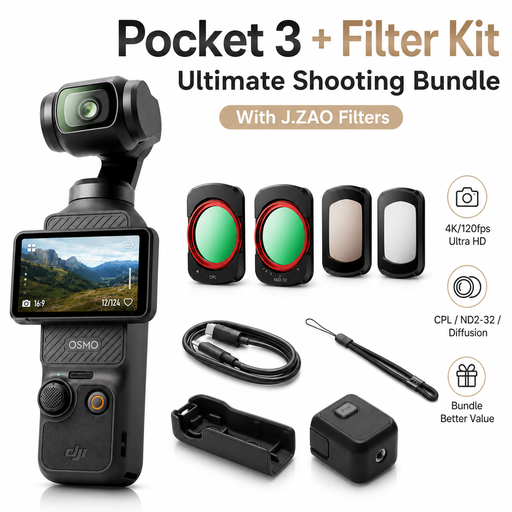
For moving close-ups, if a handheld gimbal camera suits the way you shoot.
Named in the product title: 1-inch CMOS sensor, 3-axis gimbal, 4K/120fps video and rotating 2-inch touchscreen.
According to the product listing, the set includes a filter kit with a CPL filter.
 No image available
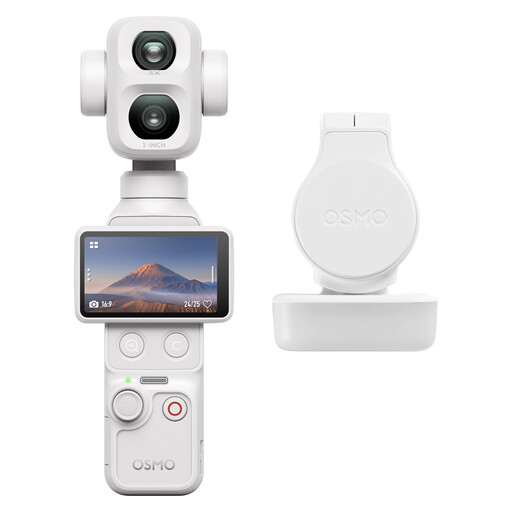
When photographing a detail of a painting, make sure the specific recording modes and framing suit your photo or video needs.
 No image available
For still photos with adjustable framing, provided the supplied zoom lens covers the angle of view and shooting distance you need.
The product specifications list 24.2 MP, RAW, 4K recording and a tilting display.
Included in the set: 16–50 mm power zoom lens.
 No image available
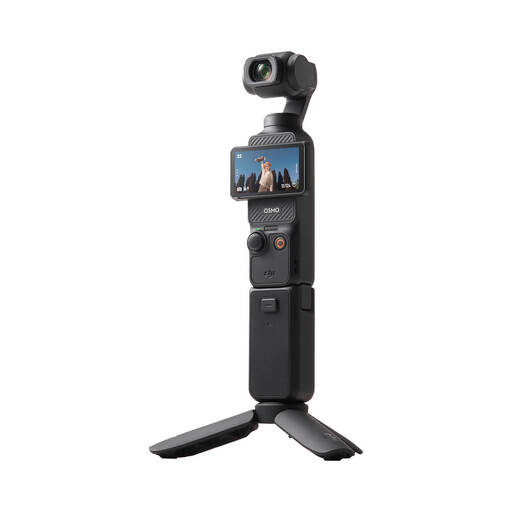
For moving close-ups, if a compact gimbal camera suits the video you’re planning to make.
The product specifications list 4K/120fps, a 1-inch sensor, 3-axis stabilisation and 10-bit D-Log M.
The Creator Kit described includes a mini tripod and battery handle.
 No image available
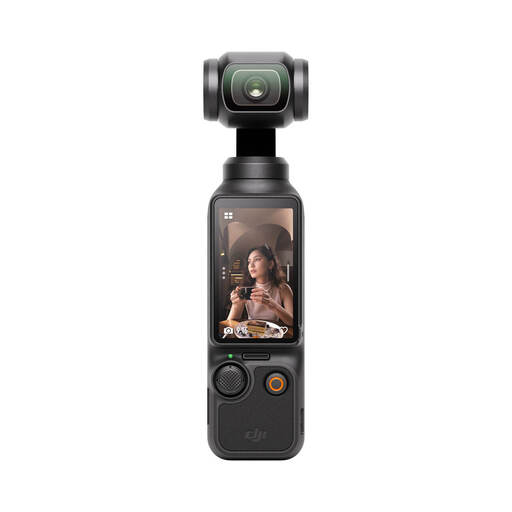
For moving images, if you’re looking for a gimbal camera for your video workflow.
The product specifications list a 1-inch CMOS sensor, 4K/120fps video, 3-axis stabilisation and a rotating 2-inch touchscreen.
10-bit D-Log M is listed for video post-production.
Check your chosen composition for reflections and, for an even reproduction, position the camera as parallel as possible to the painting. Nikon Germany advises adjusting the white balance when the light changes; avoid mixing light sources if you can. A two-lamp setup described in a museum guide isn’t essential when shooting in window light.
Not necessarily. First check whether your existing lens can focus from the required distance and capture the composition without distracting distortion. For basic documentation, the guidance from the Federal Association of Artists’ Estates and BBK Munich and Upper Bavaria also mentions high-performance smartphones; for demanding print and archival work, it distinguishes higher-quality reproductions.
Check whether the offer includes a lens that suits the composition you want. Camera body and kit specifications aren’t interchangeable; depending on the mount, you may need an additional lens. If a product is faulty, you have statutory consumer rights against the seller; these are separate from any voluntary guarantee. The consumer advice centre states that new goods are generally covered for two years from delivery or receipt.
This depends, among other things, on who owns the work and what usage rights apply. Works of visual art may be protected by copyright; Section 16 of the Copyright Act covers the right of reproduction, while Section 19a covers the right of making a work available to the public. If the work isn’t yours, check who holds the rights, what usage rights apply and whether any exceptions are relevant to your specific case before publishing. Without these details, it isn’t possible to give a general answer on whether a particular photograph may be published.