Piano listeners with a regular listening spot
If you mainly listen to recordings and can fit two compact speakers in your small living room, separate stereo speakers are an important option to consider.


If you mainly listen to piano recordings and have room for two speakers, a compact pair of active stereo speakers is an obvious choice. A single wireless speaker takes up less space and is a better fit if streaming is your priority. If you have a digital piano, first check that its audio output matches a suitable speaker input, then test for any delay while playing. The inputs listed by Yamaha for the HS3/HS4 and the input delay setting documented by Sonos do not, by themselves, confirm compatibility with a particular instrument.
If you mainly listen to recordings and can fit two compact speakers in your small living room, separate stereo speakers are an important option to consider.
If you want to hear your digital piano through external speakers, check the instrument’s audio output and make sure the chosen connection feels right when you play.
If you mainly play piano music from a mobile device or streaming service and only have room for one device, setup and any adapters you may need are important considerations.
First decide whether you want to stream recordings or connect a digital piano to play yourself. Then consider the space available, compatible inputs and how much setup is involved.
| What you need | What to check before buying | Who is it important to? |
|---|---|---|
| Room-filling sound | Check whether two speakers will fit around your listening spot and whether the listing includes a pair. | If I want to listen to piano recordings through two separate speakers, I need room for both. Around 25% of consumers prioritise room-filling sound above all else. |
| Connecting a digital piano | Match the instrument’s audio output to the speaker input, and check for any delay while playing. | If I play myself, my digital piano needs to connect through a compatible input. Around 25% of consumers primarily want to connect a digital piano. |
| Space and positioning | Measure the space needed, including room for cables, and check whether there are room-adjustment controls if you’ll be placing the speakers close to a wall. | If my living room has little spare space, I need to be able to position the speakers to suit my listening spot. Around 25% of consumers prioritise a small footprint. |
| Easy playback | Check which connection your music source actually supports and whether you’ll need accessories for setup or input. | If I want to stream piano recordings easily, the connection and setup should suit my source. Around 25% of consumers prioritise hassle-free streaming above all else. |
Sonos says the Era 100 must first be set up on Wi-Fi before you can use Bluetooth for the first time.
If you mainly plan to use the speaker over Bluetooth, check the setup process before buying.
Allow time to set it up over Wi-Fi and in the app.
Documented inputs vary by model. You can connect a digital piano only if its output, the speaker input and the signal path are compatible.
Check the exact name of your instrument’s output against the speaker’s documented input.
Depending on the connection, you may need compatible cables or an additional input adapter.
Genelec lists one 8010A monitor per pack, while Yamaha lists the HS3 as a pair.
Check the number of speakers and what’s included before comparing listings.
For stereo, you may need a second monitor and suitable connecting cables.
Genelec notes that placing its monitors close to walls or other boundaries can increase bass output.
Check their position from your listening spot, and only use any room-adjustment controls as instructed for the specific model.
The HS3/HS4 are compact pairs of active studio monitors with several wired inputs.
The M60 is a compact desktop stereo system for music sources connected over Bluetooth, USB-C or AUX.
The LSX II LT is a compact pair of active speakers with streaming features.
The Era 100 is a single speaker for streaming when space is limited.
The 8010A is a very compact, active single monitor for a wired listening setup.
These product options cover compact speakers and systems for playing piano recordings in a small living room. Make sure the connection suits your music source.
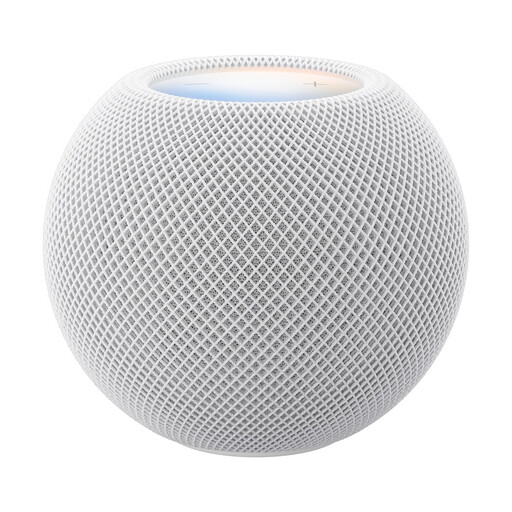 No image available
This single smart speaker may suit you for playing piano recordings, as long as it can connect to your chosen source.
According to the product information, setup requires a compatible iPhone or iPad, Wi-Fi and an Apple Account.
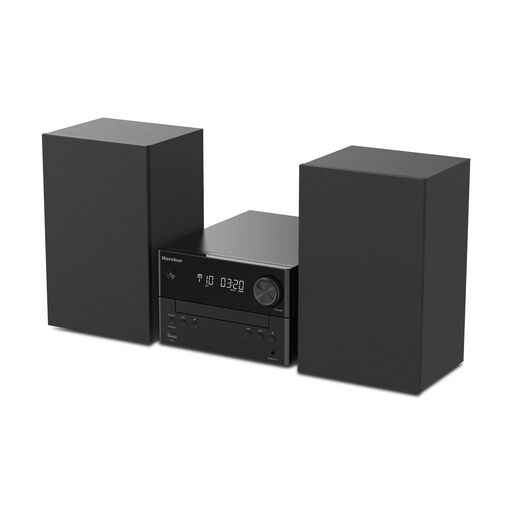 No image available
This compact system may suit you for playing piano recordings from a compatible source; check that it can connect to your music source.
The product name lists a CD player, DAB+, Bluetooth, USB, FM radio, MP3 playback, AUX and 20 W.
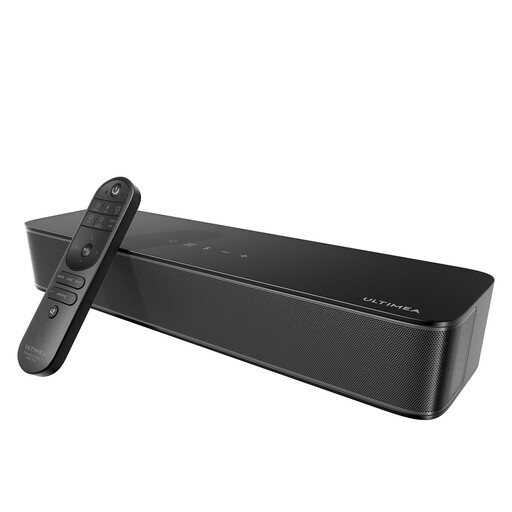 No image available
This soundbar may suit you for playing piano recordings, provided it can connect to your chosen music source.
The product name lists 120 W, a 2.1-channel system and a built-in subwoofer.
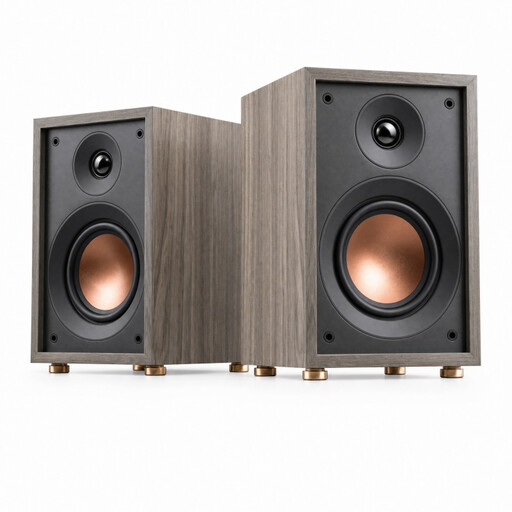 No image available
This model may suit you for music in a limited space if you already have a suitable amplifier.
Specifications listed include a 4-inch woofer, a 20-mm dome tweeter, 60 Hz–20 kHz, 4 Ω and 10–50 W. As a passive speaker, it needs a suitable amplifier.
 No image available
This passive model may suit you for music in a limited space if you have a suitable amplifier.
The product name lists a 6.5-inch driver, a 28-mm dome tweeter, 8 Ω and 10–120 W. A suitable amplifier is required to use it.
Start by checking your listening spot and the space available for the speakers. Genelec says bass can increase when monitors are close to walls. Check the instructions for your specific model before using any room-adjustment controls.
No. Sonos says the Era 100 must first be set up on a Wi-Fi network. After that, you can switch it to Bluetooth mode.
That depends on your digital piano’s audio output and the speaker you choose. Sonos lists an input adapter for the Era 100’s analogue line-in. For other models, check the plugs and cables, and make sure both stereo channels can be connected.
For relevant electrical and radio products, the Federal Network Agency checks factors including CE marking, manufacturer information, German-language instructions and a declaration of conformity. A product page alone does not prove that an individual listing is compliant. The German Environment Agency says old electrical equipment must not go in household waste; check where your local collection point is.