Piccolo workshop with barista practice
If the group is going to pull espresso and steam the milk themselves, the focus is on learning the techniques and controlling the small serving.


If participants are to pull espresso and steam the milk themselves, a portafilter machine with a manual steam wand suits the hands-on learning objective. However, it takes time and practice between drinks. If you’d rather make coffee preparation easier alongside the cooking, consider a bean-to-cup or capsule machine. Check whether you can adjust the coffee and milk quantities separately to suit the small glass. Perfect Daily Grind suggests around 20–30 ml of espresso and 40–60 ml of milk for a piccolo, as a guide rather than a guaranteed machine setting.
If the group is going to pull espresso and steam the milk themselves, the focus is on learning the techniques and controlling the small serving.
When making piccolos for several people, you’ll need a well-planned workflow, repeated milk steaming and time to clean between drinks.
If the cookery class is the main event, a simpler machine may be a good fit – as long as you can adjust the small coffee serving and prepare the milk to suit the glass.
A good fit if: participants are going to practise pulling espresso and frothing milk themselves.
Consider: portioning and steaming take practice and hands-on effort. Allow time for the process and cleaning between several drinks.
A good fit if: you want espresso to be ready with less manual preparation while you get on with other class activities.
Consider: a piccolo programme isn’t a given; milk functions and cleaning requirements vary by model.
A good fit if: you want to prepare espresso or ristretto in individual servings, with the machine helping you prepare the milk.
Consider: coffee options depend on the compatible capsule system, and you’ll need to adjust the quantities to suit the small glass.
| Priority | What to check before buying | Who is it important to? |
|---|---|---|
| Short espresso and textured milk | Check the serving size or ristretto option, and the specific milk function with the glass you plan to use. | If I want to adjust the small espresso serving and milk texture myself, I look for suitable settings. Around 36 % of consumers have this priority. |
| Workflow for several servings | Consider the operating sequence, access to the water tank, and cleaning the steam wand or milk system. | If several participants are preparing drinks one after another, a well-planned workflow matters to me. Around 29 % of consumers prioritise making several servings. |
| Easy to use alongside cooking | Check whether you can adjust the coffee serving, how the milk is prepared and what cleaning is required. | If I want to focus mainly on cooking, keeping manual steps to a minimum is important. Around 21 % of consumers prioritise ease of use. |
| Space and equipment | Measure the usable worktop space and check whether a grinder and milk jug are part of your existing setup. | If space is limited, I need to fit the machine, glass and accessories together. Around 14 % of consumers prioritise space and the overall setup. |
A drink’s name doesn’t tell you whether the coffee and milk quantities will suit a small glass.
Check the settings on the specific model and adjust the serving to suit the glass you plan to use.
Individual technical specifications don’t tell you how the full process works for several piccolos.
Run a trial with the number of servings you expect to make, allowing time for milk preparation and cleaning too.
You may need extra time between drinks for preparation and cleaning.
The Rommelsbacher EKS 2010 manual describes typical domestic use. Food hygiene requirements may also apply to a food business.
If you’re running a commercial class, check before buying that the machine is suitable for the intended use and meets the food safety requirements for your particular business.
The Bambino SES450 is a compact portafilter machine with a manual steam wand. Sage lists automatic milk temperature and texture settings for the Bambino Plus SES500.
The Dedica Style EC685.M EX:4 combines a portafilter with an adjustable cappuccino system. De’Longhi lists the casing width as 149 mm.
According to Gaggia, the Classic E24 Energy Vibes is a manual portafilter machine with a stainless steel steam wand and a 2,1-l water tank.
According to Philips, the Series 2200 EP2220/10 bean-to-cup machine has adjustable coffee quantities and a classic milk frother.
The Original Creatista Plus White Sea Salt machine offers ristretto and espresso options, along with an automatic steam wand.
The EKS 2010 offers programmable quantities for one or two cups, as well as a removable steam and hot water wand.
The following Joybuy machines are suited to classes where espresso and milk are mostly prepared by hand. The selection includes portafilter machines and a semi-automatic espresso machine.
 No image available
The manual steam wand suits a class where participants are going to froth the milk themselves.
Listed in the product name: 20 Bar and a 50 Oz water tank.
 No image available
The manual steam wand is useful for practice sessions where the group froths the milk themselves.
Listed in the product name: pressure gauge, one- or two-cup function and a removable 1.1L water tank.
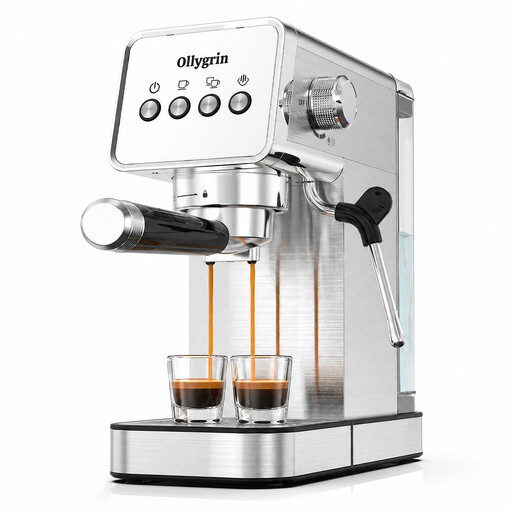 No image available
The steam wand described supports manual preparation of espresso and frothed milk.
Listed in the product name: removable water tank and drip tray.
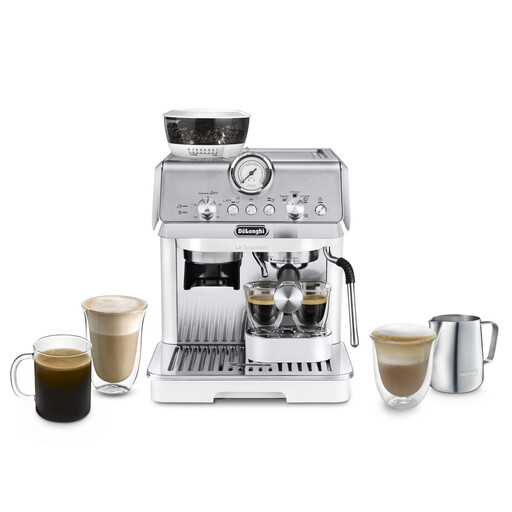 No image available
With its built-in grinder and steam wand, this model may be a good fit if the group is going to practise several hands-on steps in preparing coffee and milk.
Listed in the product name: 8 grind settings, 3 temperatures, 1,7-l tank and barista accessories.
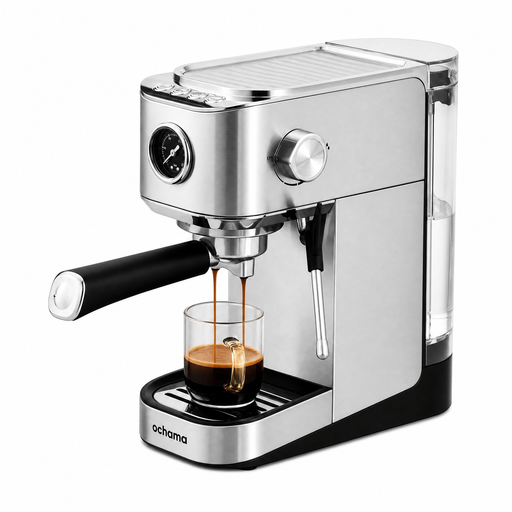 No image available
Semi-automatic preparation may suit your class if you don’t want espresso and milk served as fully automatic drink options.
Listed in the product name: steam milk frother, pressure gauge and cup warming function.
Perfect Daily Grind suggests around 20–30 ml of espresso and 40–60 ml of steamed milk in a small glass. Recipes and glass sizes vary, so it’s best to choose a glass and target serving before the class, then practise preparing those quantities.
Not necessarily. Check which type of coffee the specific model takes and what’s included. Gaggia says the Classic E24 takes ground coffee and pods. If you want to use freshly ground beans, include a grinder when planning your overall setup.
Follow the instructions for the steam wand or milk system you choose. Philips also recommends regularly cleaning the removable brew group on the EP2220/10 bean-to-cup machine.
It depends on how the class is organised. The European Commission distinguishes between preparing food at home for private consumption and operating a food business. If the class is run as a food business, the operator is responsible for food safety; section 4 of the LMHV covers specialist knowledge when handling highly perishable foods. Whether these rules apply to a particular class depends on how it is actually organised.
There’s no one-size-fits-all answer. The Rommelsbacher EKS 2010 manual describes typical domestic use. If you’re running a commercial class, check that the machine is suitable for its intended use and meets the relevant requirements before buying it.