
Lieferung heute & morgen

Qualitätsgarantie

Willkommens-Angebote freischalten: KOSTENLOSE Lieferung | Bis zu 80 % RABATT | Kostenlose 30-Tage-JoyPlus-Testphase
App herunterladen
The idea is tempting: beautify your garden or balcony with atmospheric lighting, all without laying cables and with no extra electricity costs. Solar lights for the garden promise exactly that. But the reality is often different. Many buyers are disappointed after a short time when the lights fail after the first heavy rain, the brightness is barely perceptible, or the battery doesn't even last until the middle of the night.
As a Joybuy Product Recommendation Officer, I see daily what features distinguish a durable product from a short-lived one. Before you make a decision, you should know the three most common pitfalls that lead to a bad purchase.
This guide will show you which technical details really matter so you can make an informed choice for your solar garden lighting.
Marketing terms can be confusing. Instead, focus on objective metrics that provide information about the quality and longevity of LED garden lights.
The term "weatherproof" is not standardised. Instead, rely on the IP rating (Ingress Protection). This two-digit number indicates how well a housing is protected against the ingress of foreign objects (first digit) and water (second digit).
Bottom Line: For reliable solar balcony lighting or a protected patio lamp, IP44 is often sufficient. For freestanding outdoor solar lights in the garden, a higher protection rating is a sensible consideration.
The performance of a solar light depends directly on the quality of its solar panel and the capacity of its battery.
A good set of outdoor solar string lights or a bright path light needs a balance between an efficient panel and a high-capacity battery to shine reliably even after less sunny days.
The type of light has a major impact on the mood of your decorative garden lighting.
Before buying, consider what atmosphere you want to create. Should the lighting remain subtle in the background or be an eye-catching feature?
Here are some product recommendations tailored to different needs and applications.
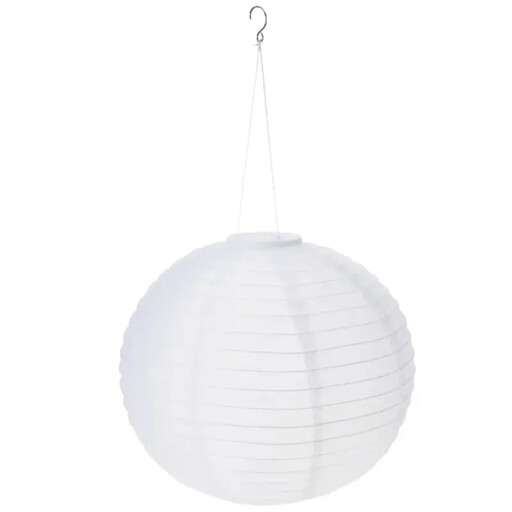
Why This Fits Their Persona: Perfect for users looking for a single, stylish design object. The spherical shape creates a diffuse, warm white light that fosters an elegant and calm atmosphere on modern patios or in gardens.
The weather-resistant nylon fabric is more durable than cheap hard plastic and dries quickly after rain. It avoids the pitfall of brittle materials.
Automatic dusk-to-dawn sensor for effortless operation; can be flexibly hung or placed thanks to its hook.

Why This Fits Their Persona: Ideal for anyone who wants to illuminate large areas like hedges, fences, or balcony railings easily and evenly. The net format makes installation significantly easier.
This product is mains-powered, thus avoiding the pitfall of weak solar batteries for large-area lighting. The IP44 certification ensures the weather resistance of the net itself (the power supply must be protected).
Large-area coverage (2x2 m) with 198 LEDs and 8 light modes for varied effects. The memory function saves the last setting.
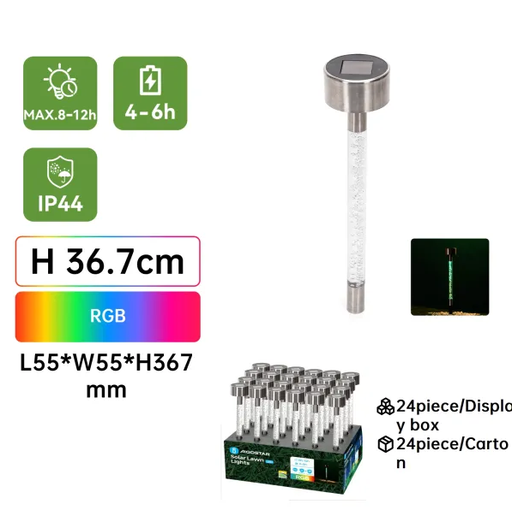
Why This Fits Their Persona: A cost-effective way to add points of coloured light along paths, in flowerbeds, or on a balcony without a major investment.
Offers an RGB colour-changing function, a feature often missing in the lowest price segment. The amorphous solar panel is designed to charge even in less-than-ideal light conditions.
Easy installation via a ground stake and a decorative bubble design. The IP44 rating provides sufficient protection for garden use.
We have compiled a complete, up-to-date list of products that fully meet these strict selection criteria and safety regulations.
Yes, but with limitations. Modern solar panels can generate energy even in diffuse light, but significantly less than in direct sunlight. On short, cloudy winter days, the illumination time can therefore be noticeably shorter, or the light may not turn on at all. Products with high-quality panels and large batteries have an advantage here.
The lifespan depends on the quality of the components. The LED bulb itself has a very long life (often 15,000 hours or more). The critical component is the battery. A built-in battery typically lasts 1-3 years. For models with a replaceable battery (often standard types like AA or AAA), the light's lifespan can be significantly extended by a simple battery replacement.
It is recommended. Although many lights with an IP44 rating or higher are designed for year-round outdoor use, persistent frost, snow, and ice can strain the materials and especially the battery. To maximise their lifespan, it is advisable to store the lights in a dry, frost-free place during the harshest winter months. Clean the solar panel before storing.