
Lieferung heute & morgen

Qualitätsgarantie
App herunterladen
Kategorien
Pickled mustard greens, an essential ingredient in Chinese cuisine, come in various processed forms, each designed for specific dishes. Selecting the correct type is crucial for achieving authentic recipes. The primary distinction lies in the preservation method: lactic-acid fermented, moist greens (Suan Cai) and salted, sun-dried greens (Mei Gan Cai). Each variety possesses a distinct flavour profile and texture, which determines its culinary use. This guide breaks down the technical differences to help you identify the right product for your project, whether it's a sour fish soup or a braised meat dish.
To buy Chinese pickled vegetables that meet your recipe's requirements, you should consider three technical criteria: processing method, cut style, and the ingredient list.
Processing Method and Consistency:
Cut Style:
Ingredient List and Salinity:
Based on the criteria above, we present three distinct varieties of pickled mustard greens, each optimised for specific culinary applications.
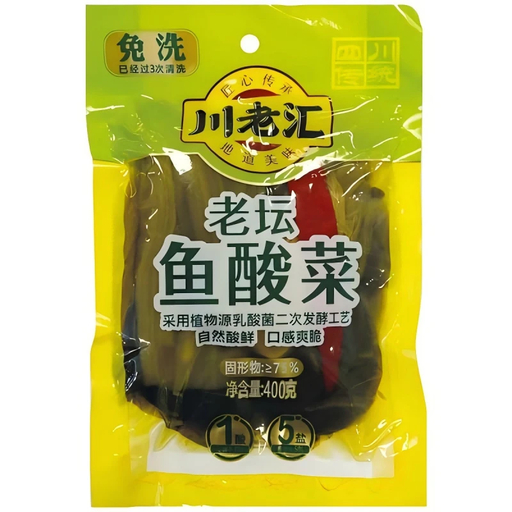
Why We're Featuring This Product: This product is explicitly designed as an ingredient for Suan Cai Yu, the classic Sichuan sour greens fish soup. The formula is engineered to deliver a balanced, appetising acidity that harmonises perfectly with fish. It is a lactic-acid fermented Suan Cai.
Pros:
Best For: Chefs who want to prepare an authentic Sichuan fish soup (Suan Cai Yu) and are looking for a reliable, flavour-matched ingredient.
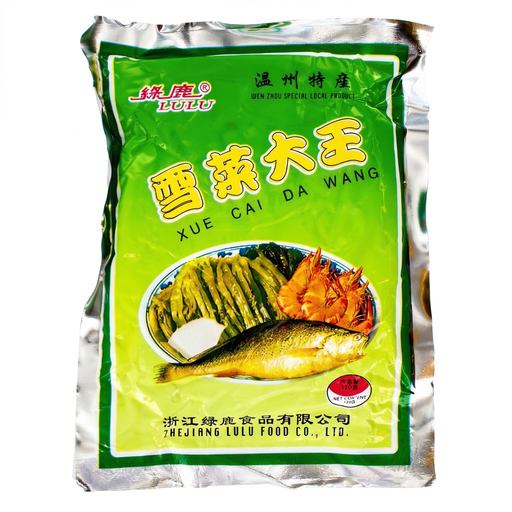
Why We're Featuring This Product: These finely chopped mustard greens are designed for maximum convenience. They can be used as a condiment or garnish without further preparation, quickly adding a salty-sour note to dishes.
Pros:
Best For: Individuals looking for a straightforward ingredient to quickly and easily add more flavour to everyday meals.
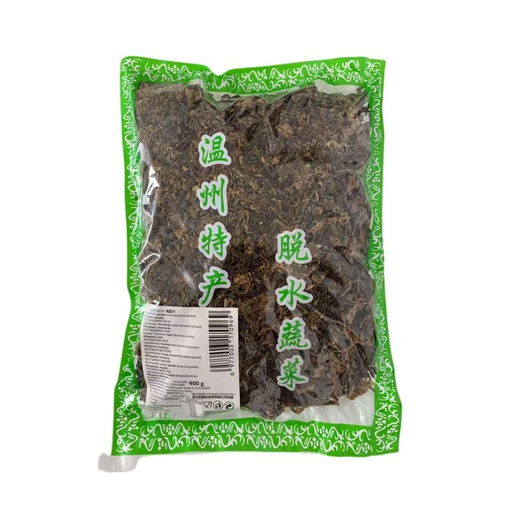
Why We're Featuring This Product: This is the traditional, sun-dried variety known as Mei Gan Cai. It is the essential ingredient for the classic Meicai Kourou (steamed pork belly with mustard greens) and other braised dishes.
Pros:
Best For: Ambitious home cooks and professionals who want to authentically prepare classic Chinese braises like Meicai Kourou and appreciate the deep, concentrated flavour of dried mustard greens.
If the Pickled Mustard Greens varieties featured here don't exactly meet your needs, or if you'd like to explore other types of Asian vegetables, our main category offers a broader selection.
Here you can find an overview of our range of Leafy Greens.
1. What is the difference between Suan Cai and Mei Gan Cai? Suan Cai is a lactic-acid fermented, moist mustard green with a crisp texture and a primarily sour taste. It is mainly used for soups like Suan Cai Yu. Mei Gan Cai is a heavily salted and sun-dried mustard green. It has a chewy texture and a deep, salty-sweet umami flavour. It must be soaked before use and is the key ingredient for braised dishes like Meicai Kourou.
2. How do you use dried mustard greens (Mei Gan Cai)? Mei Gan Cai must be rehydrated before preparation. First, rinse the greens under running water to remove excess salt and any impurities. Then, soak them in warm water for at least 30 minutes (or longer, depending on the recipe) until they are soft and pliable. Squeeze out the excess water well before proceeding with your recipe.
3. Do you need to wash pickled mustard greens before cooking? It depends on the product and its salinity. For products with very high sodium content, such as Mei Gan Cai or some Suan Cai varieties, a quick rinse or soak is recommended to control the salt level and prevent the final dish from being too salty. For ready-to-use products with a balanced flavour, this is often not necessary. A look at the declared sodium content on the packaging can provide guidance.
Authored by: Joybuy Product Recommendation Officer