
Lieferung heute & morgen

Qualitätsgarantie

Willkommens-Angebote freischalten: KOSTENLOSE Lieferung | Bis zu 80 % RABATT | Kostenlose 30-Tage-JoyPlus-Testphase
App herunterladen
Pickled mustard greens are a handy Chinese side dish to serve with rice, noodles, congee or steamed dumplings. Depending on the product, they may be made from mustard leaves, stems or roots. So products sold as Chinese pickled vegetables, Zhacai, Sichuan mustard greens or Chinese pickles can vary considerably in texture and seasoning.
If you’re shopping online, don’t rely on words such as “crunchy”, “authentic” or “traditional” alone. The key things to check are the ingredients, salt content, pack size and intended use.
Pickled mustard leaves are usually finer, softer and more aromatic. Pickled mustard stems and Zhacai are often made from the thickened parts of the mustard plant and can be much crunchier. So a product intended for fish soup won’t necessarily make a mild, flavoursome side for breakfast congee.
Check the specific product description:
Pickled vegetables are often preserved with salt, acid or fermentation. They may taste mild even when their salt content is relatively high. The product information available here, for example, ranges from 4.5 g to 12 g of salt per 100 g.
This is particularly important if you’re planning to serve the vegetables regularly as a ready-to-eat side with rice or noodles. A quick look at the nutrition table can stop a seemingly small sachet from dominating the meal in flavour and quantity.
Crunchy mustard greens may come in individual portions, multipacks or larger packs. A 70 to 80 g pack is handy for a single meal. If you regularly cook for several people, 280 to 400 g is usually easier to plan around. For larger packs, check the storage instructions after opening.
Start by checking the main ingredient, then look at the seasoning. Products with chilli oil, garlic and ginger taste different from sweetly seasoned mustard stems or mildly sour mustard leaves.
Look out for the following on the label:
Products labelled “ready to eat” are a good choice for a quick side. Serve them straight from the packet or stir them into rice, noodles or congee.
Dried pickled mustard leaves need preparation first. According to the product information, Fangjia Puzi should be soaked in water for 5 to 10 minutes and then rinsed. It must then be cooked. This option is better suited to soups, fillings and stir-fries than to eating straight away.
Individual portions are handy for eating on the go or packing in a lunchbox. With multipacks, each unopened portion stays sealed separately. Many products need to be refrigerated once opened; some should be eaten within a few days.
Also check the net weight and, for pickled vegetables, the drained weight if one is given. For products packed in brine, the amount of vegetables you actually get may be considerably less than the total weight.
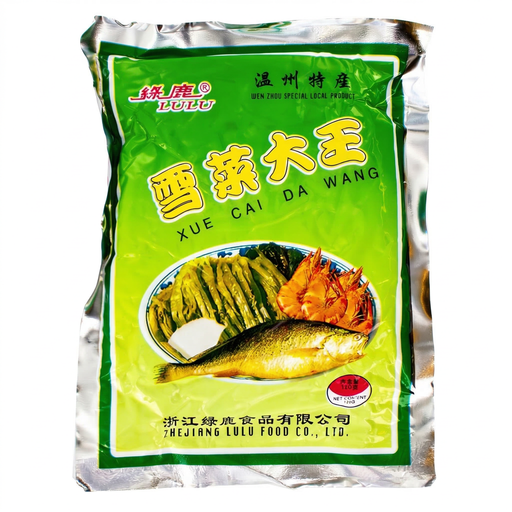
Why it suits this profile: The 150 g pack is a good fit for smaller households and anyone who wants to try a smaller amount of Chinese pickled vegetables first. The product is finely chopped and ready to eat.
The manageable pack size reduces the risk of buying more than you need. According to the product information, you can briefly rinse the vegetables to reduce the saltiness if you prefer.
Finely chopped and ready to eat, with a clearly stated salt content of 12 g per 100 g.
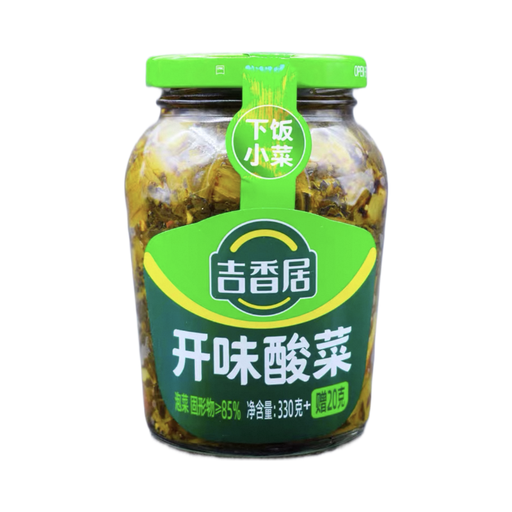
Why it suits this profile: This recipe combines pickled mustard leaves with chilli oil, ginger, garlic and spices. It’s a good match for rice, steamed dumplings and noodles when you’re after a sour, spicy kick.
The product information clearly lists the ingredients, allergens, net weight and storage instructions. That makes it easier to judge how spicy the seasoning will be before you buy.
350 g net weight, ready to eat and with a clearly described sour, spicy flavour profile.
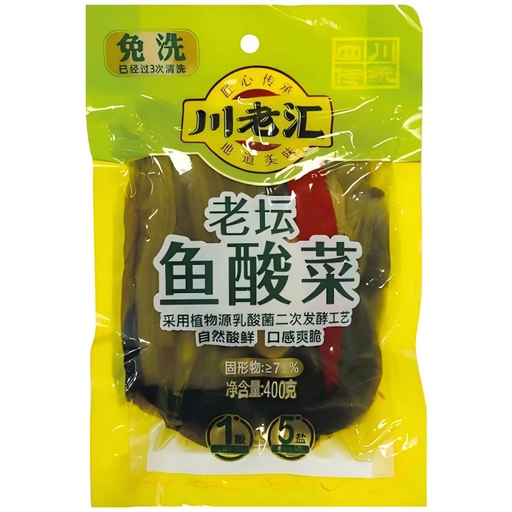
Why it suits this profile: The 400 g pack is designed for Sichuan fish dishes such as Suan Cai Yu. You can also chop the vegetables and serve them with rice or congee.
Its stated use in fish dishes makes it clear that this specially seasoned product shouldn’t be mistaken for a mild everyday side.
400 g net weight, specifically described for Suan Cai Yu, with sodium clearly listed as 3.628 mg per 100 g.
We’ve put together a complete, regularly updated list of products that meet these strict selection criteria and fully comply with the safety regulations in force in the EU.
Ready-to-eat products can generally be served straight from the pack if the packaging says so. Briefly rinsing very salty varieties can change the flavour. Dried pickled vegetables, on the other hand, usually need to be soaked and then cooked.
It depends on the instructions on the individual pack. Opened products often need to be refrigerated and eaten within a few days. Products in brine should be transferred to a suitable container after opening. Always follow the instructions from the manufacturer.
Both make good finely chopped, flavoursome sides. Zhacai, or pickled mustard root, is often crunchier and available in small individual portions. Pickled mustard leaves can be softer and are often a better fit for soups, fish dishes or stir-fries. Check the ingredients list before buying to find out about the specific recipe and level of heat.