
Lieferung heute & morgen

Qualitätsgarantie

Willkommens-Angebote freischalten: KOSTENLOSE Lieferung | Bis zu 80 % RABATT | Kostenlose 30-Tage-JoyPlus-Testphase
App herunterladen
A Pikler Triangle is a popular choice for parents looking to encourage their child's motor skill development and independent play. However, the market is flooded with models that look great at first glance but quickly prove to be impractical or unsafe. Before you make a decision, it's crucial to understand the common pitfalls that can lead to disappointment.
This guide will help you identify the essential features and make an informed choice that you'll be happy with for years to come.
Many products promise more than they deliver. Pay close attention to these three points to avoid a bad purchase:
To avoid the problems mentioned above, you should check three key aspects before buying. These define the quality, safety, and long-term value of a climbing frame for the playroom.
The choice of material is fundamental. A wooden climbing triangle should ideally be made from solid wood, as it is more robust and durable than many plywood alternatives. Pay attention to the following details:
Stability is the most important safety feature. A good indoor climbing triangle stands firmly on the ground and won't tip over, even during active play.
A motor skills toy for ages 2 and up should be able to grow with your child. The ability to expand the climbing triangle significantly increases its play value.
Instead of presenting an overwhelming list, we've matched a few products to different user profiles.
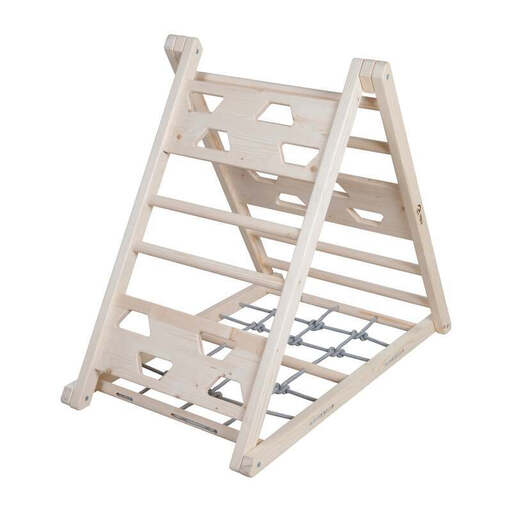
Why this model is a great fit: Ideal for children who love variety. It combines classic rungs with a climbing rope and a side with climbing holds, which engages different motor skills and ensures long-lasting fun.
It counters the "limited play value" problem by offering three different climbing experiences in one unit right out of the box.
3-sided system (rungs, rope, climbing holds); promotes motor skills and balance; compatible with the roba slide board.
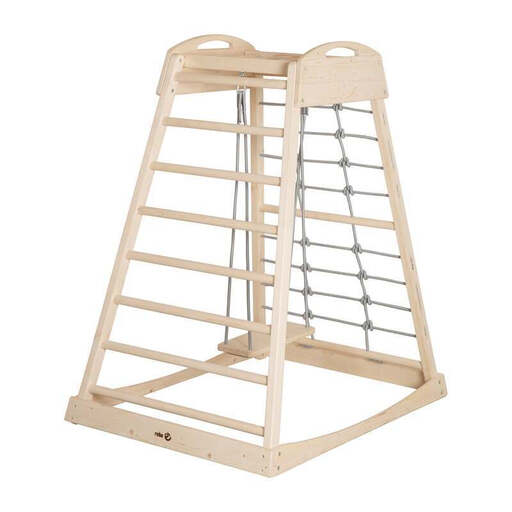
Why this model is a great fit: For active children looking for more of a challenge. This play tower is more than just a triangle, integrating gymnastic rings and a swing. It provides a more comprehensive play environment for the playroom.
Addresses the "unstable construction" issue with a robust build from solid natural wood and a high load capacity of up to 70 kg.
High load capacity (70 kg); includes a swing and gymnastic rings; promotes strength and coordination; made from solid natural wood.
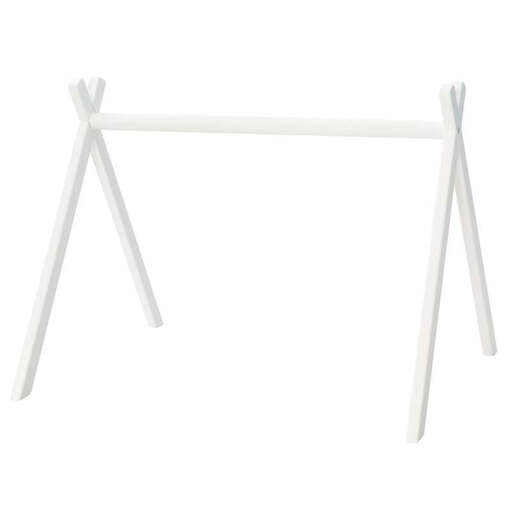
Why this model is a great fit: For babies who can't climb yet, this play arch is a gentle introduction to Montessori principles. It encourages grasping and hand-eye coordination before the child is ready for a real climbing triangle.
Prevents the purchase of a toy that is too advanced and goes unused. It is specifically tailored to the developmental stage of infants.
Promotes motor skills from birth; easy assembly and easy-to-clean, wipeable surfaces; expandable with various play sets.
We have compiled a complete, up-to-date list of products that fully meet these strict selection criteria and rigorous safety standards.
Most manufacturers recommend their climbing triangles for children from around 24 months old. However, the child's individual developmental stage is more important than their age. As soon as a child starts to pull themselves up and attempts to climb on furniture, a Pikler triangle can offer a suitable and safe alternative. Always start with a low height and under supervision.
Safety is the top priority. Always place the climbing triangle on a level, non-slip surface. A soft play mat or rug underneath can cushion falls. Maintain a safe distance from walls, furniture, and other hard objects. The most important rule is: Never let your child climb unsupervised. Additionally, regularly check the equipment to ensure all screws are tight and to look for any signs of damage.
The amount of space required depends on the specific model. The dimensions are listed in the product descriptions (e.g., 85 × 63.5 × 97.5 cm H×W×D). Measure the available space in your playroom before purchasing. Some models are foldable and can be stored to save space when not in use. This is a practical feature for smaller apartments or rooms.