
Lieferung heute & morgen

Qualitätsgarantie

Willkommens-Angebote freischalten: KOSTENLOSE Lieferung | Bis zu 80 % RABATT | Kostenlose 30-Tage-JoyPlus-Testphase
App herunterladen
Taking medication or vitamins regularly requires organization. A pill box seems like a simple solution, but the market is flooded with models whose flaws only become apparent with daily use. An unreliable clasp that pops open in your bag, or compartments too small for larger capsules, can quickly lead to frustration.
As your Joybuy Product Recommendation Officer, I'll help you identify the features that truly matter. This guide focuses on the practical aspects that define a quality pill box and highlights the three common design flaws you should avoid when making your choice:
To avoid a bad purchase, you should focus on three objective criteria. These determine the durability, safety, and practical utility of your pill box.
The material is the foundation for safe storage. Look for the BPA-free label. This means the plastic was manufactured without the plasticizer Bisphenol A. High-quality pill boxes are often made of PP (Polypropylene) or ABS (Acrylonitrile Butadiene Styrene). These materials are odor-neutral, robust, and suitable for contact with food and medication. A waterproof seal, provided by a silicone ring, is an additional feature that protects the contents from moisture—a key factor for a travel pill case.
The size of the compartments is crucial. Measure your largest tablets or capsules (e.g., fish oil or vitamins) and compare the dimensions with the manufacturer's specifications. A large pill box is designed not only for many pills but also for bulky supplements. For daily needs, a small pill box is often sufficient, while a weekly pill dispenser or even a monthly one simplifies planning for a longer period.
The clasp must meet two conflicting requirements: it should close securely but still be easy to open. This is especially important for seniors or people with motor impairments. Models with sliding mechanisms or ergonomically shaped snap-lock clasps often offer a good balance here. For a 7-day pill box that is used daily, a durable and reliable mechanism is essential. Look for deeply engraved or etched labels, as they won't wear off like simple prints.
Based on these criteria, we have identified a few products that are particularly well-suited for specific user groups.

Why This Fits Their Persona: The drawer design eliminates the need to forcefully pry open individual compartments. The entire tray simply slides out, making it significantly easier to handle for individuals with arthritis or low grip strength.
Solves the problem of stiff clasps with a smooth sliding mechanism. The deeply engraved day markings won't fade.
Innovative drawer design for effortless access; secure fit of the compartments prevents accidental opening.
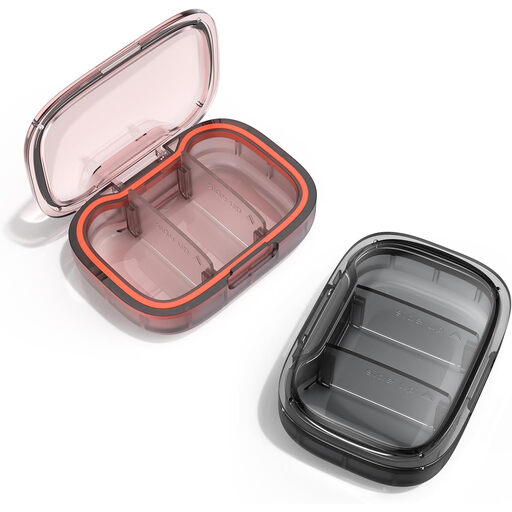
Why This Fits Their Persona: This small pill box is designed to be carried in a pocket or purse. Its compact size and secure clasp make it a reliable companion for day trips or short journeys.
The moisture-proof construction and tight clasp prevent the two biggest problems with portable cases: moisture ingress and accidental opening.
Very compact and discreet; moisture-proof design protects the contents.
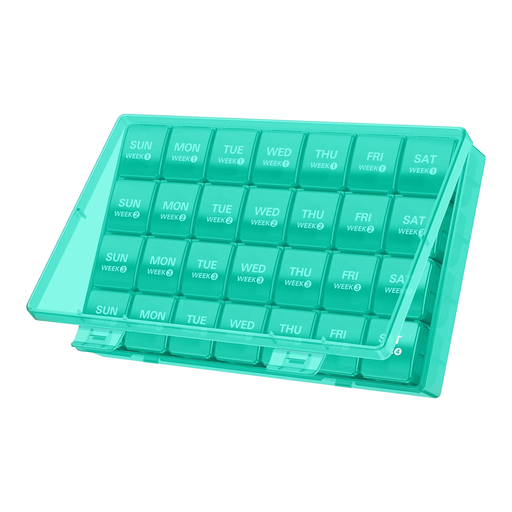
Why This Fits Their Persona: Ideal for users who want to organize their medications or vitamins for an entire month in advance. According to the manufacturer, the large compartments can hold up to 9 fish oil capsules or 10 large vitamin tablets.
The large capacity solves the problem of compartments being too small. The dust-proof outer container provides additional protection for the individual weekly trays and keeps the contents clean.
28-day organization; removable weekly trays for added flexibility; dust-proof protective case.
We've compiled a complete, up-to-date list of products that fully meet these strict selection criteria and comply with current safety regulations.
Most pill boxes should be cleaned with a damp cloth and mild soap. Avoid harsh detergents or the dishwasher, as high temperatures can warp the plastic and damage prints. Let the compartments air dry completely before refilling them to prevent moisture buildup.
BPA (Bisphenol A) is an industrial chemical used in the manufacturing of certain plastics. There is concern that BPA can seep from containers into food or beverages. A "BPA-free" label means the product was made without this chemical, making it a safer choice for storing medications and supplements.
To find the right size, use your largest tablet or capsule as a reference. Many manufacturers list the internal dimensions of the compartments in the product description. If you're unsure, choose a model that is explicitly advertised as a large pill box or for large vitamins and fish oil capsules. This ensures that all your supplements will fit without issue.