
Lieferung heute & morgen

Qualitätsgarantie
App herunterladen
Kategorien
Taking medications or supplements correctly and on time is essential for any treatment or supplement routine to be effective. A pill organizer is a practical tool that helps you manage your doses, reduce the risk of mistakes, and stay on top of complex medication schedules. The right choice of model depends on individual needs, from dosing frequency and pill size to portability requirements.
This guide analyzes the technical criteria to consider when selecting a pill organizer and presents a curated selection of models for various use cases.
Choosing a pill organizer should be based on an analysis of objective product characteristics. The following criteria are crucial for functionality and safety.
The material quality is a key factor, as the container comes into direct contact with your medication.
The size of the compartments must match your personal needs.
The organizer's structure must align with your medication schedule.
Everyday usability is a decisive criterion.
Based on the technical criteria above, we present three models designed for different user needs.
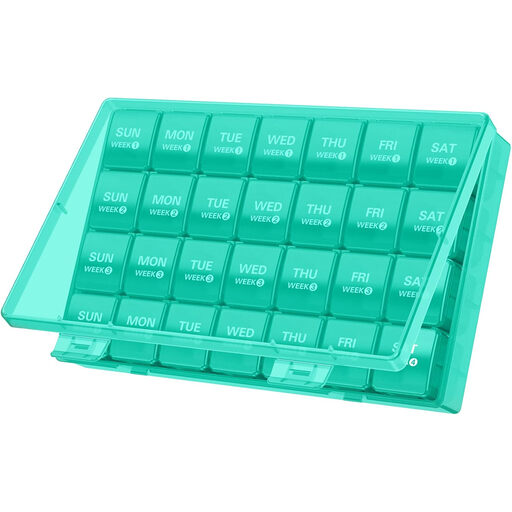
Why We Chose It: This model is designed for long-term planning, allowing you to organize medication for 28 days. The dust-proof outer case and removable weekly trays combine at-home organization with travel-ready flexibility.
Pros:
Best For: Individuals with a stable, long-term medication schedule who want to prepare their medication or vitamin organizer just once a month.
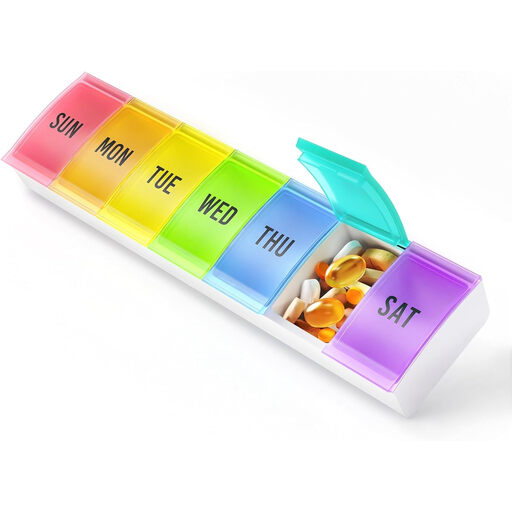
Why We Chose It: This model's primary focus is on ease of use. The ergonomic lids are specifically designed for simple handling, making it an excellent option for users with limited finger dexterity.
Pros:
Best For: Seniors, individuals with arthritis or motor impairments, and users looking for a durable and easy-to-use weekly pill box.
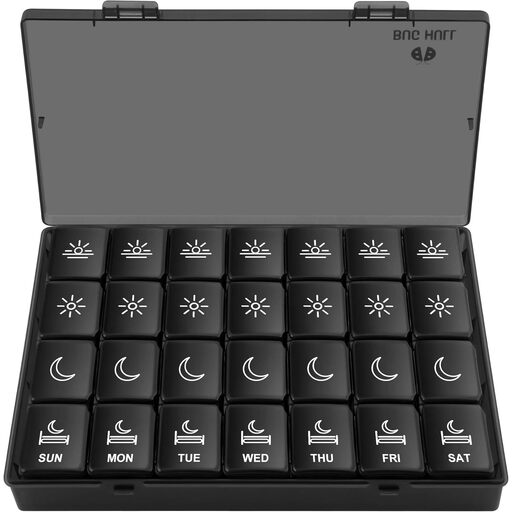
Why We Chose It: This model addresses the needs of users with complex medication schedules and large storage requirements. The division into four daily doses and the extra-large compartments make it a solution for demanding needs.
Pros:
Best For: Individuals with a complex medication schedule requiring up to four doses per day, as well as users who take very large pills or a high number of supplements.
The models featured here cover specific use cases. However, the market offers a wide variety of other solutions tailored to different needs. For a more comprehensive overview, you can find additional organizational aids in our Boxes and Containers category.
1. How do you clean a pill organizer properly? Most plastic pill organizers should be cleaned with a damp cloth. If the compartments are removable, they can often be washed with mild soap and lukewarm water. It is important to let the compartments dry completely before refilling them to avoid compromising the quality of the medication. Harsh cleaning agents or dishwashers should be avoided, as they can damage the material or the labels.
2. What does "BPA-free" mean for a pill box? "BPA-free" means the product was manufactured without the chemical Bisphenol A. BPA is a plasticizer found in some plastics that can potentially leach into food or medication upon contact. Using BPA-free materials, such as food-grade PP plastic, is an established safety standard for products used to store consumables.
3. Which is better: a weekly or a monthly pill organizer? The choice depends on your personal routine and the complexity of your medication plan. A weekly organizer offers flexibility if your medication changes frequently and requires less initial time to fill. A monthly pill organizer is efficient for people with a stable, long-term medication plan, as it only needs to be prepared once a month, reducing weekly effort.