
Lieferung heute & morgen

Qualitätsgarantie

Willkommens-Angebote freischalten: KOSTENLOSE Lieferung | Bis zu 80 % RABATT | Kostenlose 30-Tage-JoyPlus-Testphase
App herunterladen
A pill organiser is designed to keep your medication, vitamins or supplements neatly arranged. In practice, though, problems often arise when the compartments are too small, the labelling is hard to read, or the lid pops open while you're out and about. A suitable pill box takes into account not just the price, but also the layout, ease of use, materials and where you'll be using it.
The Joybuy Product Recommendation Officer filters the key product features and highlights what adults, seniors and carers should look for when making a purchase.
A compact travel pill organiser is handy if you only need a few doses a day. However, if you take several medications or larger supplements, it can quickly become confusing. Pay attention to whether the product offers individual daily compartments, multiple dosing times, or just two to four general sections.
With a 7-day pill organiser, it should also be clear whether each compartment is assigned to just one day or to a specific time of day as well. If you take different preparations in the morning, at lunchtime and in the evening, you'll usually need a different structure from someone who only takes one dose a day.
A hard flip-top lid can close securely, but it isn't easy for everyone to open. If you have limited hand strength or joint problems, a sliding mechanism may be more comfortable. Conversely, loose lids can come open in a bag and mix up the contents.
So check whether the pill organiser has a snap-lock closure, a sliding lid or separate compartments. For travel, tightly sealing lids and a sturdy outer case are particularly important.
A pill cutter can be useful if a tablet can be split according to medical or pharmaceutical advice. However, not every tablet is suitable for cutting. Capsules, softgels and certain coated or delayed-release medications should not be split on your own.
A pill organiser with a built-in cutter is therefore no substitute for the patient information leaflet or a chat with your pharmacist. Dosages must not be altered without medical advice.
Compare the number and size of compartments with your actual needs:
When a product states "holds up to four large supplements" or "up to eight oval vitamins", this is the manufacturer's estimate. The actual capacity depends on the shape and size of your individual products.
Plastic is lightweight and practical for on the go. ABS plastic is used in some models for a sturdy build; other products use general plastic or PP material. What matters is whether the compartments can be dried completely and have no hard-to-reach gaps.
For cleaning: wash pill organisers with mild water, dry them thoroughly and avoid harsh cleaning products. Tablets should not be placed in damp compartments. Any integrated metal blade should be kept dry to prevent rust.
Deeply engraved day markers are less likely to fade than printed labels. For seniors or carers, high-contrast, easy-to-read markings and logically arranged compartments are helpful. Also check whether the box can be opened with one hand and whether the lids are clearly identifiable.
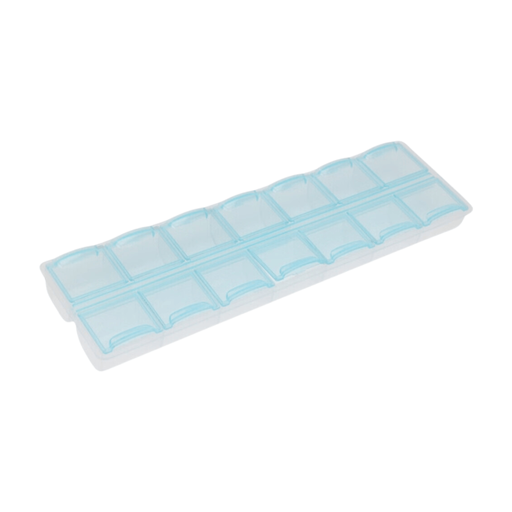
Why this product suits the profile: This simple compartment box is ideal for users who need basic medication storage without any extra features.
The compartment design prevents loose tablets from getting mixed together in one bag. Check the specific compartment size before buying.
PP material and multiple compartments; no assembly required.
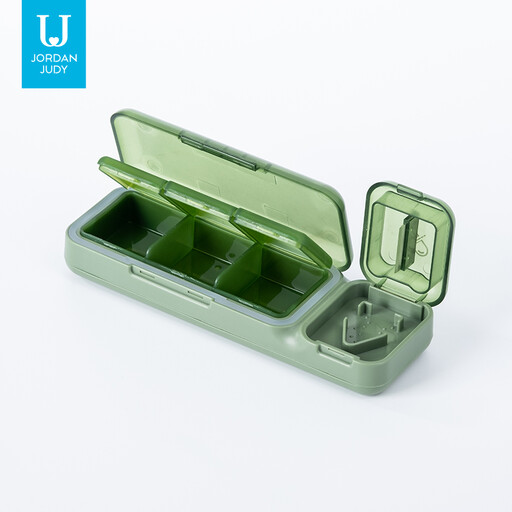
Why this product suits the profile: This compact model combines multiple daily sections with an integrated cutting function for tablets that can be safely split.
The compartments separate medication, vitamins or supplements. The pill cutter is sharp and is not intended for capsules or liquid preparations.
ABS plastic, stainless steel blade, compact design and snap-lock lid.
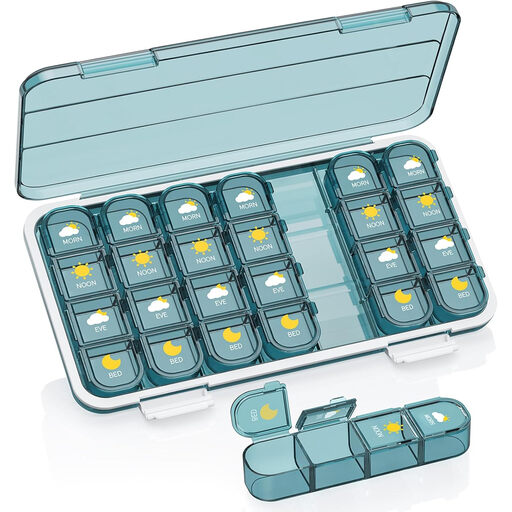
Why this product suits the profile: The weekly layout with four separate dosing times is designed for people with a regular, detailed organisational routine.
Separation by day and dosing time reduces the risk of mixing up daily portions in a single compartment.
Seven-day structure, four time slots per day and separate compartments for vitamins, fish oil or supplements.

Why this product suits the profile: The drawer mechanism and compact shape make it suitable for daily use at home as well as for travel and transport.
Deeply engraved day markers are said to stay more visible than printed ones, according to the product description; the compartments should still be kept dry.
Seven compartments, sliding drawer mechanism and snug-fitting lids.
We've put together a full, regularly updated list of products that meet these strict selection criteria and comply with EU safety regulations.
If you are unsure about whether a tablet can be split, how to store it, or how to combine medications, ask your pharmacist or your GP.
The lifespan depends on the material, daily use, cleaning and the closure. Check the hinges, sliding lids and compartments regularly. If you notice cracks, a loose closure, faded markings or moisture inside, it's time to replace it.
A travel pill organiser is good for on the go if it's compact and closes securely. For longer trips, you should also carry your medication in its original packaging. For air travel and prescription medicines, you may need additional documentation or special transport conditions.
The price mainly depends on the number of compartments, the material, the type of closure and extra features such as a pill cutter. A budget model may be fine for a simple daily layout, but if you have multiple dosing times, the right structure matters more than the lowest possible price.