
Lieferung heute & morgen

Qualitätsgarantie

Willkommens-Angebote freischalten: KOSTENLOSE Lieferung | Bis zu 80 % RABATT | Kostenlose 30-Tage-JoyPlus-Testphase
App herunterladen
A pill organiser can make it easier to keep track of your daily medicines at home, at work or when you’re travelling. But not every organiser suits every medication schedule. Small compartments, hard-to-open lids or unclear day labels can quickly become frustrating in everyday use.
As Joybuy’s Product Recommendation Officer, I focus on clear, practical criteria rather than marketing claims. Before buying a pill organiser, it’s worth checking for three common pitfalls:
The compartment layout is the most important factor to consider. First, check how many times a day you need to take your medicines:
Also check whether the compartments can be removed. Separate daily organisers can make packing easier, while a single connected organiser is less likely to leave you with missing pieces.
A large pill organiser isn’t automatically practical. What matters is whether each compartment is big enough while still being easy to carry. If you take fish oil capsules or bulky vitamins, check the internal dimensions or the capacity stated by the seller.
If no measurements are provided, it can be difficult to tell how useful the organiser will be. For example, a 21-compartment model divides the week into three daily time slots. A 28-compartment version gives you four compartments for each day.
A snap-lock or flip-top closure should shut securely without needing excessive force. Wide tabs, clear labels and easy-to-reach lids can be helpful for older people or anyone with arthritis.
Read claims such as airtight, moisture-resistant or waterproof pill organiser carefully. They don’t automatically mean that the organiser can be kept underwater for extended periods. When travelling, it’s also a good idea to keep it in a sealable bag.
Many models can only be cleaned by hand. Make sure the compartments are completely dry before filling them again. Medicines should always be stored according to the instructions on the packaging. Depending on the medicine, moisture, heat and direct sunlight can cause problems. A pill organiser doesn’t replace the original packaging if that packaging is needed for storage or identification.
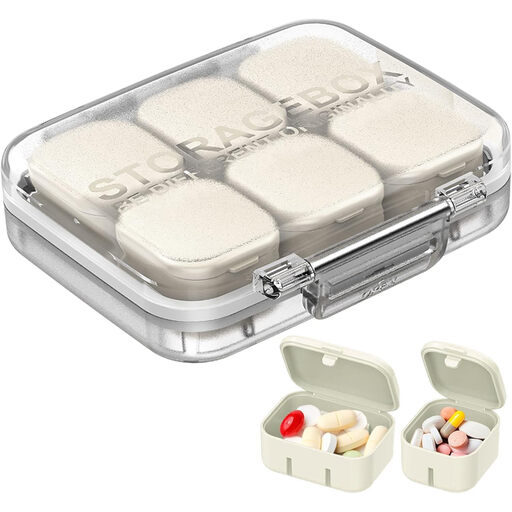
Why it suits this profile: The 4- or 6-compartment layout and capacity for up to ten days make this a flexible option for anyone looking to organise vitamins, fish oil or supplements.
The modular layout means you don’t have to use one large compartment for different daily doses. Buyers should still check the specific product details before relying on the “waterproof” claim.
Flexible 4/6-grid design; described as suitable for ten days and intended for vitamins, fish oil and supplements.
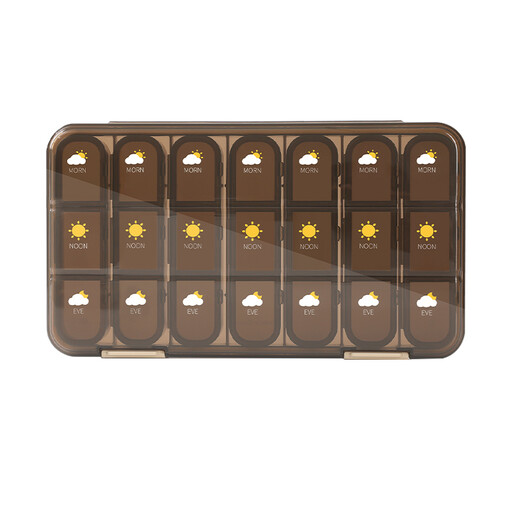
Why it suits this profile: The seven-day layout, with three compartments for each day, makes it easy to organise a regular morning, lunchtime and evening schedule.
The 21 clearly labelled compartments reduce the risk of mixing up doses for different times of day. Check the specific closure before use to make sure it seals as described.
21 compartments; three daily time slots; according to the product details, suitable for several tablets, vitamins and supplements.

Why it suits this profile: Four compartments per day make this a good option if you have several scheduled doses or need a generous organiser for vitamins and supplements.
The morning, lunchtime, evening and night-time compartments give you a more detailed daily layout. Before filling them, check that the labels match your medication schedule.
28 compartments; described as a large-capacity option; designed for daily medicines, vitamins and supplements.
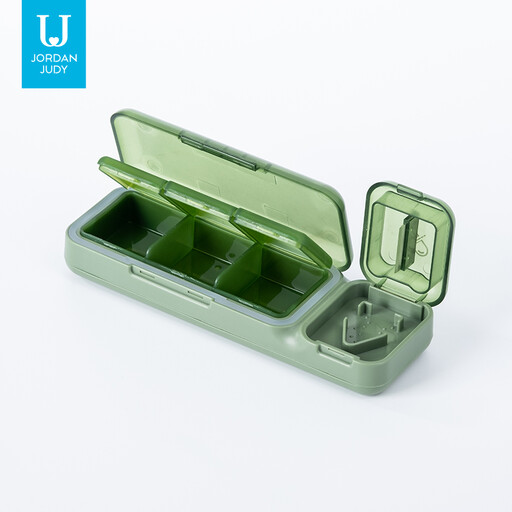
Why it suits this profile: This compact medicine organiser is designed for your bag, rucksack, office or short trips. It combines several compartments with a built-in tablet cutter.
Its compact size saves space when you’re out and about. Only use the tablet cutter if the patient information leaflet says your specific medicine can be split; capsules and liquid-filled capsules aren’t suitable.
Compact design; integrated stainless steel blade; several compartments for medicines, vitamins or supplements.
We’ve put together a complete, regularly updated list of products that meet these strict selection criteria and fully comply with the safety regulations in force in the EU.
Before filling a pill organiser, compare its labels with your current medication schedule. When you take several medicines, it’s easy to confuse tablets that look alike. Follow these steps:
If you’re unsure whether a medicine can be split, how it should be stored or whether it can be taken with another medicine, ask a pharmacist or your GP’s practice.
Its lifespan depends on the material, hinges, closure and how often it’s used. Check the lids, compartments and seals regularly for cracks. Replace any damaged pill organiser. Manufacturer claims about durability or flex cycles apply to specific products and aren’t a general guarantee of how long an organiser will last.
A travel pill organiser should be compact, close securely and have enough compartments for the length of your trip. For air travel or prescription medicines, you may also need the original packaging, your prescription and a letter from your doctor. Check the rules for your destination before you travel.
The price mainly depends on the number of compartments, material, closure, size and extra features such as a tablet cutter. Don’t just compare the price per item: check whether the organiser suits your medication schedule and whether a replacement or multipack would be useful. A budget model isn’t much use if the compartments are too small or the closure is awkward to use every day.