
Lieferung heute & morgen

Qualitätsgarantie

Willkommens-Angebote freischalten: KOSTENLOSE Lieferung | Bis zu 80 % RABATT | Kostenlose 30-Tage-JoyPlus-Testphase
App herunterladen
A pill organiser can keep medicines, vitamins, fish oil and food supplements neatly arranged. However, not every pill box is suitable for every routine. Small compartments, hard-to-read day labels or a lid that opens while you are out and about can make everyday use unnecessarily difficult.
The product name alone tells you very little. The key factors are the design, capacity, closure and intended use. This buying guide explains what adults, older people and those who take medication regularly should consider before making a purchase.
A medication box described as a waterproof pill box may offer better protection against everyday moisture. However, that does not automatically mean it is suitable for prolonged immersion, use in the shower or humid bathroom air. Compartments should be dry before filling. For temperature-sensitive or particularly moisture-sensitive medicines, always follow the manufacturer’s and pharmacist’s instructions.
A pill box with compartments can be useful for organising several doses throughout the day. However, if the compartments are very small or poorly labelled, sorting your medication becomes more difficult. For a set weekly schedule, a 7-day pill organiser with separate daily sections may be more suitable than a compact daily box.
A tablet splitter is only useful if the tablet may be split according to the patient information leaflet. Capsules, softgels and certain modified-release or gastro-resistant medicines should not simply be divided. The dosage must not be changed without professional advice. If you are unsure, consult your doctor or pharmacist.
First, consider how many times a day you need to organise your medication:
A label such as “10 days” or “7 days” does not automatically indicate sufficient capacity for everyone. Large food supplements require more space than small tablets.
A lid should close securely but open without excessive force. Clearly visible markings and easy-to-open lids are practical for older people or anyone with limited finger mobility. Check whether individual compartments can be opened separately and whether several sections could accidentally open at the same time during transport.
Details such as BPA-free plastic or a transparent lid can help when choosing a box, but they do not replace checking whether it is suitable for everyday use. The box should be easy to wipe clean. All compartments must be completely dry before the box is refilled. Medicines should, wherever possible, remain in their original packaging unless storing them in a box is consistent with the information in the patient leaflet.
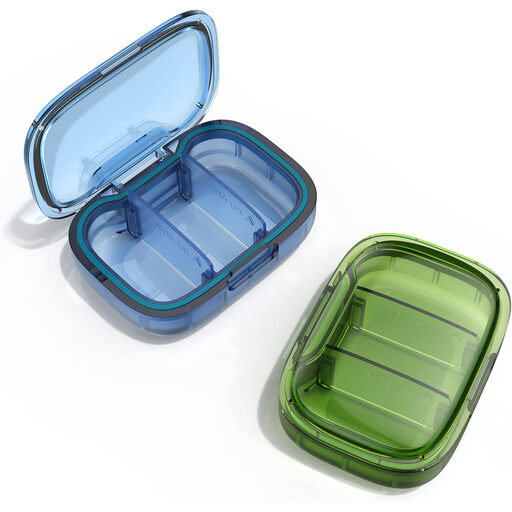
Why this product suits this profile: Two compact boxes with three sections each are ideal for anyone looking for a simple daily arrangement or a spare box for when they are out and about.
The clear limit of three compartments prevents a small box from becoming overloaded with too many dosing times. However, the moisture-protection claim should not be taken to mean that the box is watertight underwater.
Two boxes in the pack; three separate compartments per box for tablets, vitamins or supplements.
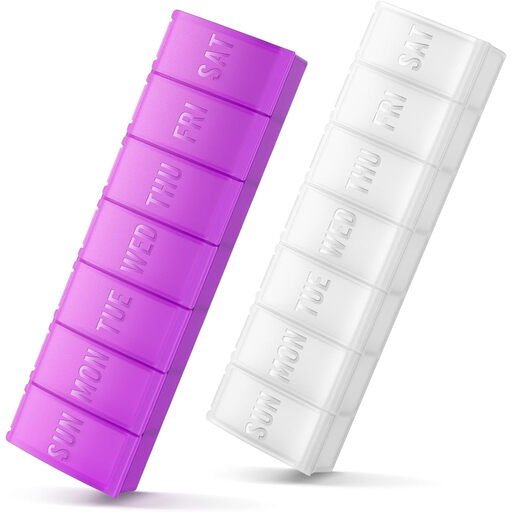
Why this product suits this profile: The seven daily compartments and permanently attached day labels support a consistent weekly routine involving larger vitamins or fish oil capsules.
Separate daily sections reduce mix-ups caused by storing everything in one shared compartment. The manufacturer states that it is made from BPA-free plastic and has easy-open lids; the box should still be stored in a dry place.
Seven daily compartments; two-pack; BPA-free material and permanently marked days according to the product description.
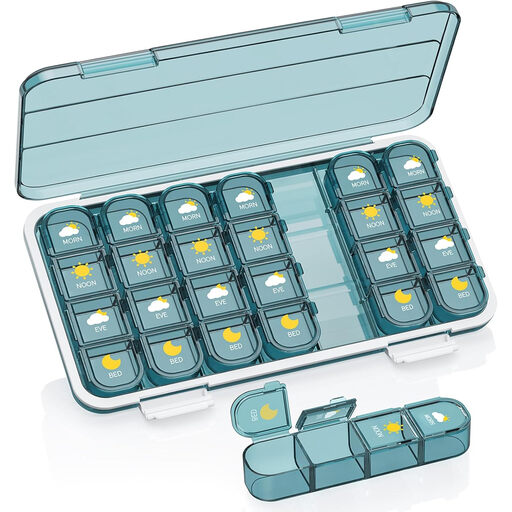
Why this product suits this profile: This model is designed for people who want to prepare medicines or supplements separately for several times of the day.
Four sections per day help prevent different dosing times from being mixed in one compartment. Before buying, compare the space needed in each compartment with the size of your tablets.
Seven days; four separate times of day; individual containers for transport.
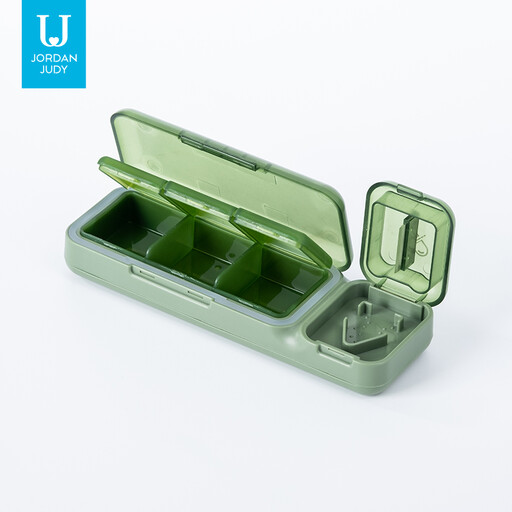
Why this product suits this profile: The compact daily box fits in a handbag, jacket pocket or travel bag and combines several small compartments with an integrated tablet splitter.
The small design avoids adding unnecessary bulk to your luggage. However, the splitter should only be used for suitable tablets; according to the product information, capsules and liquid medicines are excluded.
Compact design; integrated tablet splitter; several small storage compartments.
We have compiled a complete, regularly updated list of products that fully meet these strict selection criteria and the safety regulations applicable in the EU.
Do not label compartments only by day of the week; where necessary, add the time of day as well. Check the box regularly for damaged hinges, loose lids or moisture. A pill organiser should be kept out of the reach of children. For longer journeys, it may be advisable to carry medicines in their original packaging together with the patient information leaflet.
For sensitive medicines, the storage conditions stated on the packaging still apply. A medication box does not replace medical instructions on taking medicines or professional pharmaceutical advice.
Its lifespan depends on the material, hinges, closure and how heavily it is used each day. Clean the box gently and replace it if the compartments no longer close securely, the labels become illegible or cracks appear. Manufacturer details about load capacity or hinge cycles apply to the specific product and are not a general guarantee of durability.
Storing vitamins and food supplements separately is often straightforward. However, for medicines, you should follow the storage instructions and take account of their sensitivity to light and moisture, as well as your doctor’s or pharmacist’s advice. Not every medicine may be stored outside its original packaging.
A box with clearly legible day markings, sufficiently large compartments and easy-to-open lids can make it easier to use. If there are several dosing times, a weekly pill organiser with separate sections is easier to follow than a very small daily box. The user’s individual requirements and the size of the tablets remain the deciding factors.