
Lieferung heute & morgen

Qualitätsgarantie

Willkommens-Angebote freischalten: KOSTENLOSE Lieferung | Bis zu 80 % RABATT | Kostenlose 30-Tage-JoyPlus-Testphase
App herunterladen
A pill organiser can keep medicines, vitamins, fish oil and food supplements neatly organised. Even so, not every model suits every routine. Small compartments are handy when you’re out and about, while a larger medicine organiser with compartments divided by day and time may be more practical if you take different things at several times of the day.
Before you buy, it’s worth taking a closer look at how the organiser is made. Marketing terms such as ‘waterproof’, ‘large capacity’ or ‘easy to open’ don’t always tell you what a pill organiser is actually like to use.
The label ‘weekly medicine planner’ doesn’t tell you much about the actual capacity. Large tablets, capsules and fish oil capsules need considerably more room than small coated tablets. If you’re choosing a pill organiser with compartments, check the internal dimensions or look for a specific capacity figure.
A 7-day pill organiser with one compartment per day isn’t necessarily suitable if you take different medicines or supplements in the morning, at midday, in the evening and at night. In that case, several compartments per day or a four-compartment layout for each day may be more practical.
Day labels that are difficult to read increase the risk of opening the wrong compartment. Clear, high-contrast labels that are permanently fixed in place are therefore an important consideration for older people and carers.
The latch should also suit the person using it. Very firm lids may help prevent accidental opening when you’re out and about, but they can be awkward for anyone with reduced hand strength. So always consider claims such as ‘easy to open’ alongside the design, lid size and type of latch.
An organiser described as a waterproof pill organiser shouldn’t automatically be taken into the shower, left by the sink or packed where it could be exposed to a lot of water. Depending on the product, terms such as ‘waterproof’, ‘sealed’ or ‘moisture proof’ may simply mean that it has a better seal against splashes or humidity.
Always follow the storage instructions for the medicine in question. Some medicines need to stay in their original packaging or be kept dry, away from light and at a specific temperature. A pill organiser is no substitute for professional storage advice.
First, think about how many times a day you’ll need to sort your medicines or supplements:
A daily medicine organiser is especially useful if you only need to carry a limited supply. If you take several medicines or supplements each day, a larger organiser with a clear time-based layout is usually easier to manage.
Many models are made from plastic. What matters isn’t just whether the product is described as ‘robust’ or ‘high quality’, but whether there’s clear information about the material, lid design and cleaning. Some products are specifically described as BPA-free. Make sure the organiser is completely dry before refilling it, so no moisture gets trapped inside.
For a travel pill organiser, a secure latch, light weight and a shape that fits in your handbag, rucksack or washbag are also important. A set of two can be useful if you want to keep one organiser at home and take the other with you.
A tablet splitter can be handy for certain tablets. However, it isn’t suitable for capsules, liquid medicines or every type of medicine. Whether a tablet can be split depends on its shape and how its active ingredient is released. Check with your doctor or pharmacist before changing how you take a medicine. A built-in blade is an extra feature, not a substitute for the information on the packaging.
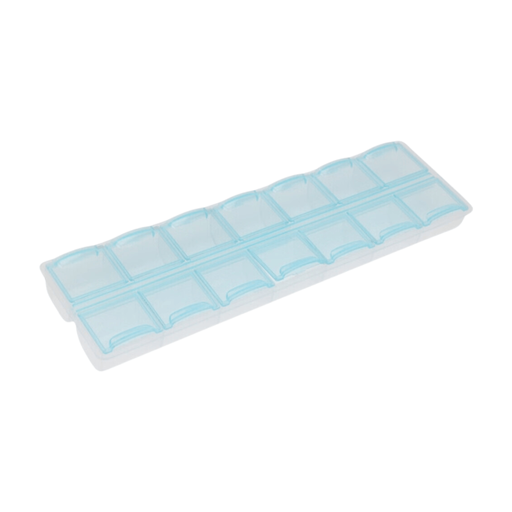
Why this product suits you: This simple compartment box is a good choice if you’re looking for a basic way to organise medicines or food supplements and don’t need any extra features.
You can check the number of compartments against your needs before buying, rather than choosing an unnecessarily complicated organiser.
Compact compartment layout made from PP; ideal for simple everyday organisation.
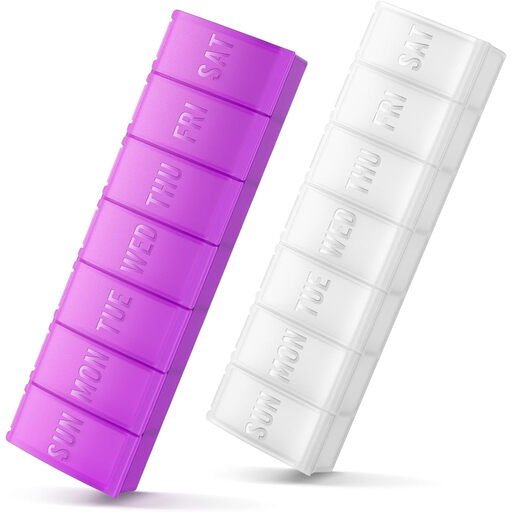
Why this product suits you: According to the product description, the permanently marked days and large compartments make this organiser suitable for planning a week’s supply of larger vitamins, food supplements and medicines.
The product details specify BPA-free plastic, reinforced hinges and moisture protection. Even so, the organiser shouldn’t be left wet for long periods.
7-day layout, large compartments and a 2-pack; according to the supplier, the days are permanently engraved.
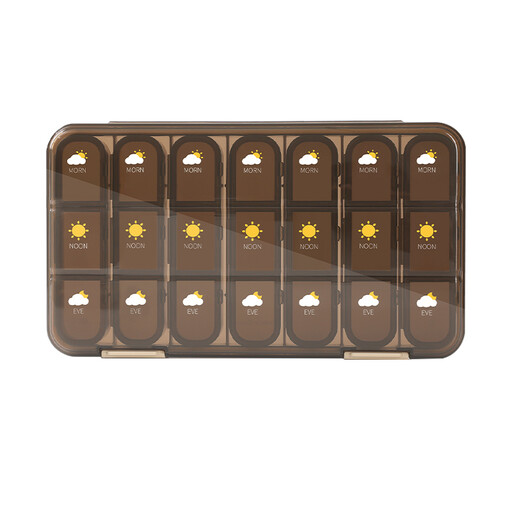
Why this product suits you: The 21 compartments are useful if you need several sections per day as part of your weekly routine, or want to organise a larger supply.
Having more compartments makes it less likely that you’ll need to mix medicines or supplements taken at different times in the same compartment. Check the actual size before filling it.
21 separate compartments and, according to the product name, a sealed design; suitable for structured weekly planning and carrying with you.
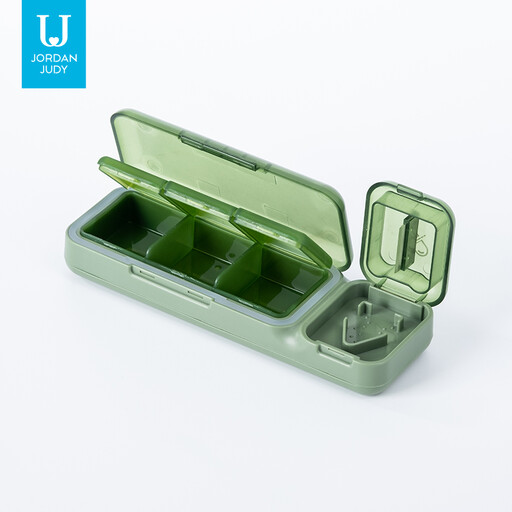
Why this product suits you: Its compact design fits in a bag or jacket pocket. The built-in tablet splitter is an extra feature for suitable tablets, provided they can be split.
The compact organiser saves space when travelling. The product information also specifically warns that the blade is sharp and the splitter isn’t suitable for capsules.
Compact design, several small compartments and a built-in stainless steel blade, according to the product description.
We’ve put together a complete, regularly updated list of products that meet these strict selection criteria and fully comply with the safety regulations in force in the EU.
Make sure the compartments are clean and dry before filling them. Only put medicines or supplements in the organiser if they can be stored outside their original packaging. If you’re unsure, check the patient information leaflet or ask your pharmacist.
To help you stick to a reliable routine:
How long your organiser lasts depends on its material, latch, cleaning and everyday use. Damage, sticking hinges or lids that no longer close securely are all signs that it’s time for a replacement.
No. Some medicines need to stay in their original blister packaging or require protection from light, moisture or temperature changes. Check the patient information leaflet or ask your pharmacist.
It depends on how often you use it. Regular cleaning with a suitable cloth or mild cleaning product is a good idea. The organiser must be completely dry before you fill it again. Always follow the manufacturer’s instructions.
Moisture or splash protection can be useful when you’re out and about. However, check the specific product details before relying on the term ‘waterproof’. For air travel, longer trips or medicines with special storage requirements, you should also consider the original packaging and follow the relevant storage instructions.