
Lieferung heute & morgen

Qualitätsgarantie

Willkommens-Angebote freischalten: KOSTENLOSE Lieferung | Bis zu 80 % RABATT | Kostenlose 30-Tage-JoyPlus-Testphase
App herunterladen
A pill organiser keeps medicines, vitamins and food supplements neatly organised and protected when you’re out and about. In practice, though, it quickly becomes clear that not every pill box suits every routine. A small model may not have enough room if you take medication several times a day, while a large medicine organiser can take up more storage space than necessary if you only use it occasionally.
As Joybuy Product Recommendation Officer, I’ve organised the available information around practical selection criteria. This can help you avoid common buying mistakes and find a pill organiser that suits your routine, how you’ll carry it and how much you need to store.
Terms such as “waterproof pill box” or “airtight seal” often refer to protection against everyday moisture. They don’t automatically mean the box can be submerged, put in the dishwasher or stored in the bathroom.
So check the specific care instructions:
A snap-lock lid can help prevent the contents from mixing. Even so, medicines should be stored in accordance with the patient information leaflet and advice from your doctor or pharmacist.
A daily pill box with two or three compartments can suit a simple routine. But if you take different products in the morning, at lunchtime, in the evening and at night, you’ll need a weekly pill organiser with several time slots.
Before you buy, check:
A pill box with compartments is only useful if each one has enough space and is clearly labelled.
A particularly small pill box is easy to carry in a bag or jacket pocket. But small lids and narrow compartments can be awkward for people with limited finger mobility. For older people or carers, clearly visible day labels, easy-to-open lids and clear organisation matter more than the smallest possible size.
For a simple daily routine, a compact pill box with two to four compartments is often enough. If you take medication several times a day, consider a pill organiser with 21 compartments for seven days and three time slots. For more complex routines, 28 compartments with four sections per day make it easier to stay organised.
Always compare the stated capacity with the size of your medicines. Manufacturers’ capacity claims for fish oil capsules or large vitamins are product-specific guidelines, not a universal standard. Don’t split, crush or transfer tablets to another container without first seeking medical advice.
A snap-lock lid helps stop compartments from opening during normal carrying. For models described as sealed, check whether the product information explains a specific sealing mechanism or simply uses a general marketing term.
Important: A medicine organiser is not normally designed for liquids or hazardous substances. Replace it if the lid is damaged, there are cracks or the mechanism is difficult to operate.
Product information may list materials such as ABS, PP and TPE, as well as BPA-free plastic options. These details describe how the product is made, but don’t confirm that it’s suitable for every medicine. Depending on the model, hand-washing or wiping with a damp cloth may be recommended. The box must be completely dry before you fill it again.
An integrated tablet cutter can be useful for tablets that are suitable for splitting. It isn’t intended for capsules or liquid-filled products. Check the patient information leaflet or ask a pharmacist or doctor whether a tablet can be split.
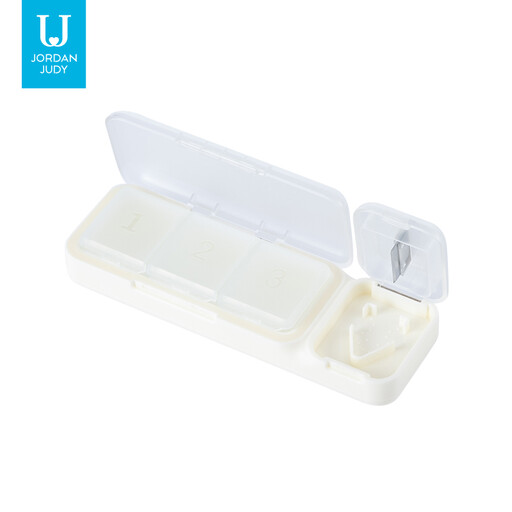
Why this product suits this profile: This compact daily pill box is designed for a single day’s supply of medicines, vitamins or food supplements. It’s easy to carry in a bag or rucksack.
Its manageable size means a simple daily routine doesn’t become unnecessarily cumbersome with an oversized weekly organiser.
Compact design, several compartments and an integrated tablet cutter, according to the product description.

Why this product suits this profile: Its seven-day layout, with three time slots per day, helps you plan your week at home, at work or while travelling.
The 21 clearly labelled compartments help you tell the days and dose times apart.
Snap-lock lid, 21 compartments and a sealed or airtight design, according to the product description.

Why this product suits this profile: Four compartments per day suit people who take medicines at several different times or need more space for vitamins and food supplements.
The extra compartments mean you don’t have to combine several dose times in one section.
28 compartments, four sections per day and a portable sealed design, according to the product description.
We’ve put together a complete, regularly updated list of products that meet these strict selection criteria and fully comply with the safety regulations in force in the EU.
Fill your pill organiser in a calm setting where possible, then check every day of the week and each time slot. For prescription medicines, the original packaging, patient information leaflet and storage instructions remain the most important references.
Also remember to:
There’s no set lifespan that applies to every pill organiser. The condition of the lid, hinges, labels and material all matter. Replace the pill box if a lid no longer closes securely, the compartments are damaged or the labels become illegible.
Compact models with a secure snap-lock lid are handy for everyday use and travel. However, medicines should still be protected according to their storage instructions. When flying or travelling with prescription medicines, it’s a good idea to take the original packaging and your medication plan with you.
A weekly pill organiser with 21 compartments may suit you if you take medicines three times a day. If you take them four times a day, consider a model with 28 compartments. If you only have a few products to organise, a daily pill box with two to four compartments is often enough.