
Lieferung heute & morgen

Qualitätsgarantie

Willkommens-Angebote freischalten: KOSTENLOSE Lieferung | Bis zu 80 % RABATT | Kostenlose 30-Tage-JoyPlus-Testphase
App herunterladen
Regularly taking medication or dietary supplements requires organisation and reliability. A well-chosen pill organizer can be an invaluable aid, helping you keep track and simplifying your routine. However, the market offers a bewildering array of options, and not every product delivers on its promise. Many users find that their pill case proves to be impractical or unreliable after only a short time.
This guide highlights the most common pitfalls to avoid when buying a pill organizer and explains the crucial features you should look for to find a durable, functional solution that perfectly fits your needs.
A low price can be tempting, but it often comes with functional weaknesses that make the product unusable in daily life. Pay special attention to these three common problems:
To avoid a bad buy, you should base your decision on objective product features. The following three parameters are crucial for the functionality and safety of a pill organizer.
The material is the foundation for safety and durability. Look for products made from food-grade PP plastic (Polypropylene) that are declared BPA-free. This material is odourless, stable, and does not leach unwanted substances into the stored pills.
The locking mechanism must suit the user. Simple flip-top lids are common, but for a pill dispenser for on-the-go use, models with a securely locking slide mechanism or an additional latch are often the safer choice. For individuals with limited dexterity, such as those with arthritis, special easy-to-open systems that still close securely are ideal.
The right size depends on your individual needs. Ask yourself the following questions:
Permanently legible labelling is essential. Simple printed letters and symbols are prone to rubbing off. Engraved or deeply embossed markings are significantly more durable. These remain clearly recognisable even after long-term use and repeated cleaning, thus ensuring reliable organisation.
Based on the quality criteria mentioned, we have compiled a selection of products for different use cases.
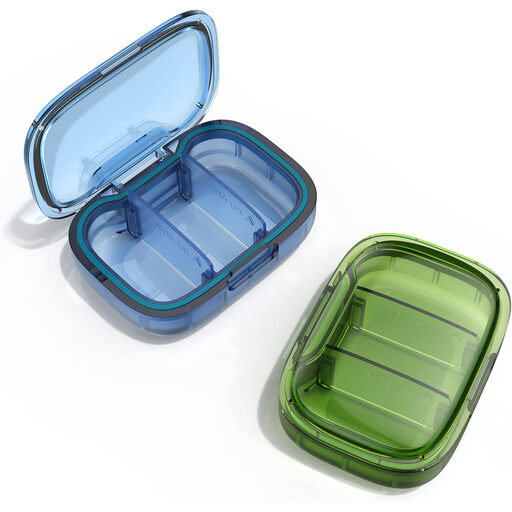
Why it's a match: Ideal for those who only need a few pills for the day and want to carry them securely in a pocket or handbag. The compact design and moisture-proof seal make it a reliable companion.
The secure locking mechanism prevents accidental opening in a bag, effectively countering the most common annoyance (Pitfall 1).
Compact size for maximum portability. Comes in a convenient 2-pack.

Why it's a match: This pill box for seniors is specifically designed for ease of use. The drawer system can be opened without much effort, making it ideal for users with arthritis or weaker hands.
The deeply engraved day markings resist abrasion, solving the problem of fading labels (Pitfall 2). The slide mechanism is also more secure than simple flip-top lids.
Smooth-gliding drawer design. Permanently legible, engraved labelling.
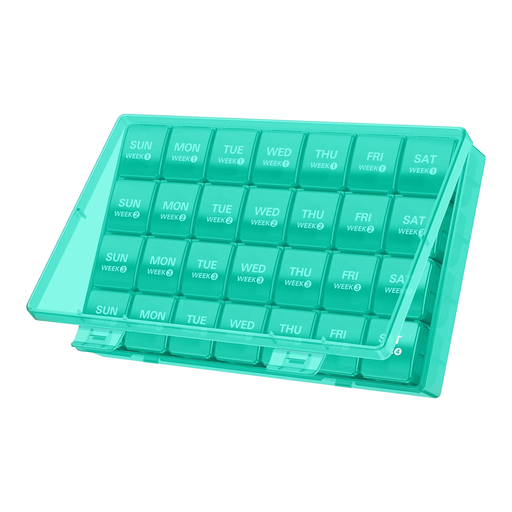
Why it's a match: For users with a complex medication schedule who prefer to plan four weeks in advance. The removable weekly trays allow you to take just one week's or one day's worth of pills with you if needed.
Made from BPA-free PP plastic, this model addresses concerns about unsuitable materials (Pitfall 3). The dust-proof outer container provides additional protection for the pills.
Large capacity for 28 days. Removable weekly units for greater flexibility.
We have compiled a complete, up-to-date list of products that fully meet these strict selection criteria and safety regulations.
Most pill organizers can be easily cleaned with lukewarm water and a mild dish soap. Rinse the box thoroughly with clean water and let it air-dry completely before refilling. Residual moisture can affect the efficacy of medications. Avoid harsh cleaning agents or abrasive sponges, as they can damage the material and the labelling.
Look for the BPA-free label and the use of PP plastic (Polypropylene). This material is considered food-grade, is robust, and does not leach chemical substances into the stored contents. It is the standard choice for high-quality medication organizers.
The ideal size depends on three factors: the number of pills to be taken daily, the size of the individual pills, and the desired planning period (daily, weekly, monthly). If necessary, measure your largest pills and compare the dimensions with the compartment sizes in the product description to ensure everything will fit.